

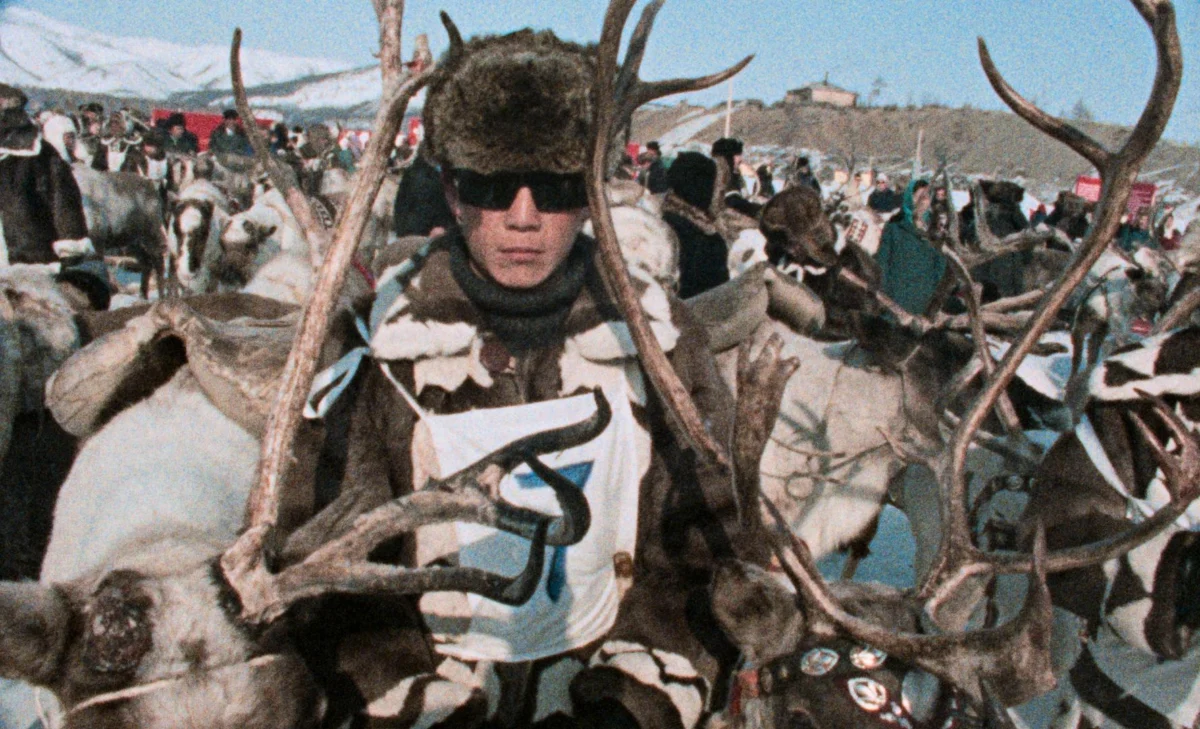
In the early 1970s, a team of Italian cinematographers embarked on an ambitious, continent-spanning expedition that would ultimately become a forgotten footnote in the history of Cold War visual documentation. Armed with cameras and official Kremlin permission, these crews traversed the vast, sprawling geography of the USSR. They sought to document a multicultural empire that, in the Western imagination, had been flattened into a gray, monolithic bloc of state-mandated collectivism.
Decades later, master documentarian Sergei Loznitsa has unearthed this lost treasure—nearly 60 hours of 16mm footage—to construct Imperium. The film serves as a poignant, haunting, and meticulously restored window into a world that existed behind the Iron Curtain, capturing the friction between Moscow’s centralized dictates and the stubborn, persistent pulse of regional identity.
A Forgotten Archive: From Italian Television to the Cutting Room
The origins of the footage are as intriguing as the content itself. Originally conceived as a monumental, multi-chapter television series for Italian broadcasters, the project was plagued by bureaucratic indifference and shifting political tides. After a solitary, limited broadcast, the reels were consigned to the dusty silence of archives.
For Sergei Loznitsa, whose career has been defined by his unparalleled ability to transmute found footage into profound historical inquiry, this was the ultimate cinematic reclamation project. Loznitsa does not seek to impose a new narrative; rather, he acts as an archivist of memory. By restoring the original 16mm footage and subtly integrating period-accurate ambient sound and music, he allows the images to speak for themselves. The result is a nearly three-hour immersive experience that strips away the layers of propaganda to reveal the raw, human, and often contradictory texture of Soviet life.
Chronology of an Empire: A Geographic Odyssey
Loznitsa organizes the vast archive along a geographic trajectory, creating a rhythm that mimics a slow, inexorable train ride across the Eurasian landmass.
Moscow: The Heart of the Monolith
The film commences in the epicenter of power: Red Square. We are treated to the spectacle of the 24th Congress of the Central Committee of the Communist Party. Banners flutter, slogans repeat the same hollow promises of production quotas met ahead of schedule—a script that had remained largely unchanged for four decades. Loznitsa then pivots to the GUM department store, where the juxtaposition of luxury goods—tuxedos, beaded handbags, and patent leather shoes—against the reality of the average citizen’s life prompts an uncomfortable question: For whom was this facade of prosperity built? Even the glimpses of commercialized religion, specifically the trade in Christmas ornaments, highlight the absurdity of a state that preached rigid atheism while quietly tolerating the persistence of human tradition.
The Eastward Migration: From Suzdal to Siberia
As the camera moves east, the facade of the capital thins, replaced by a stark, sometimes brutal reality. In Suzdal, the footage captures an elderly woman washing clothes in a hole cut into the ice—a scene of domestic endurance that feels centuries removed from the industrial rhetoric of Moscow. As the crew reaches the Sakha Republic and the Mongolian border, the cultural distinctiveness of the Soviet republics becomes impossible to ignore. We see Bactrian camel races and traditional reindeer sledding, vivid reminders of indigenous cultures that the Soviet machine had failed to fully homogenize.
Perhaps most striking is the footage in Siberia, where a group of young Caucasian Russians play guitars, singing Slavic folk songs while local Yakut populations watch from the periphery. In these moments, the lens captures something far more complex than mere state unity; it captures the casual, systemic reality of internal colonialism.
Supporting Data: The Persistence of Tradition
The primary value of Imperium lies in its visual proof that the Soviet project was never truly the monolithic entity the West—or the Kremlin—claimed it to be. Despite decades of Stalinist collectivism and Brezhnev-era stagnation, the regional identities remained remarkably resilient.
- Religious Continuity: Footage from Bukhara and Etchmiadzin illustrates that mosques and churches remained centers of community life, existing in a parallel reality to the official state dogma.
- Economic Disparity: The stark contrast between the curated window displays of Moscow and the frozen, manual labor required for basic survival in the east serves as a powerful indictment of the Soviet planned economy.
- Cultural Resistance: The film highlights how local festivities and winter carnivals—roots of which predate the Revolution—served as quiet, annual acts of cultural preservation.
Official Responses and Historical Context
The film invites a necessary reflection on how the West viewed the Soviet Union. In the 1970s, the dominant Western perspective was heavily colored by Cold War tropes. It wasn’t until later in the decade, with publications like the 1977 National Geographic feature "Journey Across Russia," that the Western public began to grasp the diversity within the Soviet state.
However, the Italian perspective was uniquely complex. With a powerful Communist Party at home, many in Italy were often loath to acknowledge the realities of the Politburo’s abuses. Imperium acts as a silent witness to the truths that were often censored or obscured by political partisanship. As seen in the 2013 documentary The Train to Moscow: A Journey to Utopia, early attempts to reveal the reality of the USSR by party-affiliated travelers were often suppressed by their own colleagues. Loznitsa’s film serves as the final, long-delayed correction to these decades of willful ignorance.
Implications: The Legacy of Homogenization
As the film reaches its conclusion—ending in what was then Leningrad—the audience is left to grapple with the fragility of the "Imperium." Loznitsa’s work invites us to consider the irony of the Soviet collapse. The very state that exerted immense energy to force its diverse population into a singular mold of the "Soviet man" ended up fracturing along the lines of the same identities it had suppressed.
Today, the landscape of the former Soviet Union has been reshaped by forces that Lenin and Brezhnev could never have predicted: the internet and rampant global capitalism. The populations that once clung to their unique traditions in the face of Soviet uniformity are now, in many ways, being homogenized by a different, perhaps more pervasive, influence: the global consumer market.
Imperium is a demanding film. Its three-hour duration is felt, particularly when compared to the propulsive, history-defining nature of Loznitsa’s earlier works like Maidan or State Funeral. Yet, this deliberate pace is the point. By forcing the viewer to sit with the mundane, the repetitive, and the hidden, Loznitsa challenges us to look past the "Evil Empire" caricatures and see the individuals trapped within the gears of history.
In the final analysis, Imperium is not just a film about the Soviet Union; it is a film about the inherent futility of empires. It serves as a stark reminder that while regimes can dictate slogans and control borders, they are ultimately powerless to erase the deep, idiosyncratic currents of human culture. Whether it is a mosque in Bukhara or a winter carnival in the provinces, the human spirit’s refusal to be "collectivized" remains the most enduring theme of this extraordinary archival journey. As we watch the footage, we are forced to confront a timeless question: Why do we continue to believe in the utopias that empires sell, even when the reality is plainly visible for those willing to look?










