Basiran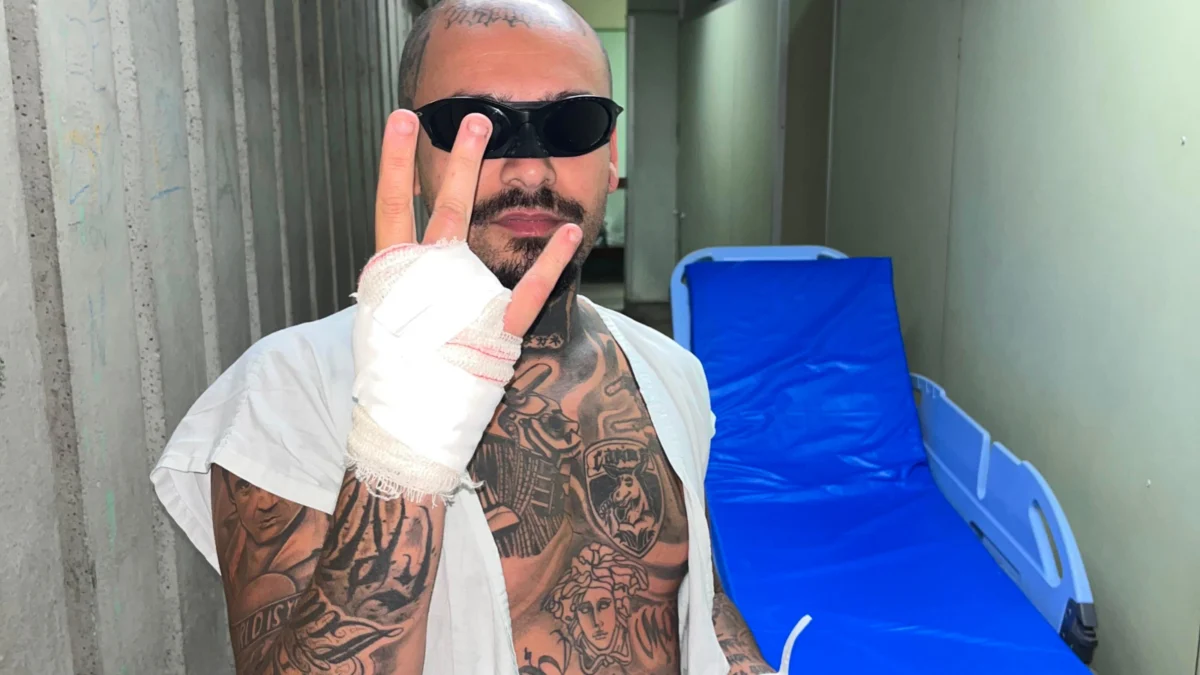
In an era where digital creators are under constant pressure to push boundaries and provide "viral" moments for their audiences, the line between ambitious content and life-altering recklessness has become increasingly blurred. This week, that reality manifested in a gruesome incident at one of the world’s most prestigious music events: Rock in Rio.
Adalton Rodrigues, a 31-year-old Brazilian Twitch streamer known to his 17,900 followers as "Lodk," suffered a traumatic injury that resulted in the amputation of his finger while attempting to bypass festival security. The incident, which occurred despite Rodrigues possessing a legitimate ticket for entry, serves as a grim cautionary tale regarding the lengths to which some influencers will go in search of engagement.
A Calculated Risk Gone Wrong: The Chronology of the Incident
The events leading up to the injury began on a day that was supposed to be a standard content-creation outing. Rodrigues, accompanied by a friend, arrived at the sprawling "Cidade do Rock" (City of Rock) venue in Rio de Janeiro well ahead of the official opening hours.
According to reports, the streamer’s motivation was not necessity—he had already purchased his entry ticket—but rather a desire to "stress test" the festival’s security perimeter. He believed that exposing a vulnerability in the event’s fencing would generate significant buzz for his channel.
"The idea was to see if I could find a security flaw," Rodrigues later explained. "I got there early, walked around the Cidade do Rock a few times, looking around and checking things out."
The search for a "weakness" became increasingly obsessive. Rodrigues reportedly surveyed the perimeter for an extended period, even jokingly considering the logistics of renting a canoe to access the venue from the water. Eventually, he settled on a section of fencing near a local gas station. Despite the presence of warning signs and the clear intent of the barrier, he decided to climb.
As he attempted to scale the structure, a ring on his right hand snagged on a protruding piece of metal. The weight of his body, combined with the momentum of the jump, resulted in a catastrophic avulsion injury.
"I looked at my hand and it was just bone, because the whole finger hadn’t been ripped off, but all the skin had come off," he recounted in a chilling description of the immediate aftermath. His companion, horrified, pointed out that the finger remained caught on the fencing structure.
Emergency responders were called to the scene, and Rodrigues was rushed to the Hospital Municipal Lourenço Jorge in Barra da Tijuca. Despite the best efforts of the surgical team, the trauma to the digit was too severe to allow for reattachment. To prevent necrosis and systemic infection, doctors performed an emergency amputation.
The Digital Fallout and Aftermath
Following his discharge from the hospital, Rodrigues faced the difficult reality of his decision. While he initially documented his journey to the festival, he made the executive decision to purge the footage of the incident from his social media channels.
He cited fears that the graphic nature of the video—and the fact that it depicted a clear violation of festival safety protocols—would lead to a permanent ban from Twitch, a platform that maintains strict Community Guidelines regarding self-harm and illegal acts.
For a creator with a growing audience, the injury represents a significant setback. Beyond the physical pain and permanent disfigurement, the incident has sparked a debate within the Brazilian streaming community about the "content-at-all-costs" culture. Rodrigues himself has expressed profound regret, admitting that the stunt was not only dangerous but entirely unnecessary given that he held a valid ticket.

Security Protocols at Rock in Rio
The incident has forced Rock in Rio organizers to reiterate the scale and sophistication of their security operations. In an official statement, the festival organizers clarified that the fence in question was part of the internal perimeter, located in a highly restricted, non-public area.
"The location was monitored and only accessible to authorized workers with specific credentials," the organizers noted.
The scale of security at a festival like Rock in Rio is massive. The organizers employ a multi-layered approach to safety, utilizing:
- Human Capital: Over 2,000 security guards stationed across the venue.
- Technological Surveillance: 152 high-definition surveillance cameras.
- Aerial Monitoring: Constant drone surveillance to detect unauthorized movement.
- Advanced Analytics: Radar systems and body cameras on key personnel to ensure rapid response times to any perimeter breaches.
Organizers emphasized that these measures are not merely to prevent ticketless entry, but to protect the integrity of the event and the safety of the thousands of fans inside. They issued a stern warning that any attempt to bypass these systems is treated as a security threat and poses extreme physical danger to the individual attempting it.
The Broader Implications: The "Influencer Effect"
The injury of Adalton Rodrigues is not an isolated event but rather the latest in a string of controversies involving streamers and public figures causing disruption at high-profile events.
Just days prior, another streamer at the same festival became the subject of a police investigation following a confrontational encounter with a Brazilian actor, highlighting a growing trend of streamers using "IRL" (In Real Life) content to provoke reactions from the public. Furthermore, the incident follows a separate, highly publicized controversy involving a Kick streamer who faced widespread backlash after filming himself posing near the wreckage of a fatal plane crash in the Amazon.
These incidents highlight a growing crisis in the streaming industry: the monetization of reckless behavior. When "clout" is converted into revenue through donations, sponsorships, and ad-reads, the incentive to perform increasingly dangerous stunts becomes stronger.
Ethical Considerations for the Creator Economy
The question now facing platforms like Twitch and Kick is how to curb this behavior without stifling the creative freedom of their users. Critics argue that these platforms have, for too long, prioritized the engagement metrics brought in by controversial figures over the safety of the community and the public.
When a creator can film a dangerous stunt, gain thousands of views, and only face consequences after a permanent physical injury occurs, the platform’s moderation policies are arguably failing.
Industry analysts suggest that we may see a shift toward:
- Stricter Terms of Service: Explicit clauses banning content that involves trespassing or unauthorized entry into restricted areas.
- Demonetization of Risky Content: Automated systems that flag and demonetize videos showing illegal activities, even if they aren’t explicitly violent.
- Creator Liability: A shift toward holding creators legally and financially responsible for the resources expended by emergency services when they intentionally court disaster.
Conclusion
The story of "Lodk" is a sobering reminder that digital content is not worth the physical toll of human life or limb. In the pursuit of a viral moment, Rodrigues lost a part of himself—a permanent consequence that will last far longer than any spike in channel viewership.
As the lines between private lives and public content continue to vanish, both creators and their audiences must engage in a more critical dialogue about what constitutes acceptable entertainment. Until then, the "City of Rock" and other major venues will likely continue to tighten their security, not just to stop intruders, but to protect those who would—literally—give a finger for a few more clicks.


 Sagoh
Sagoh
 Jia Lissa