

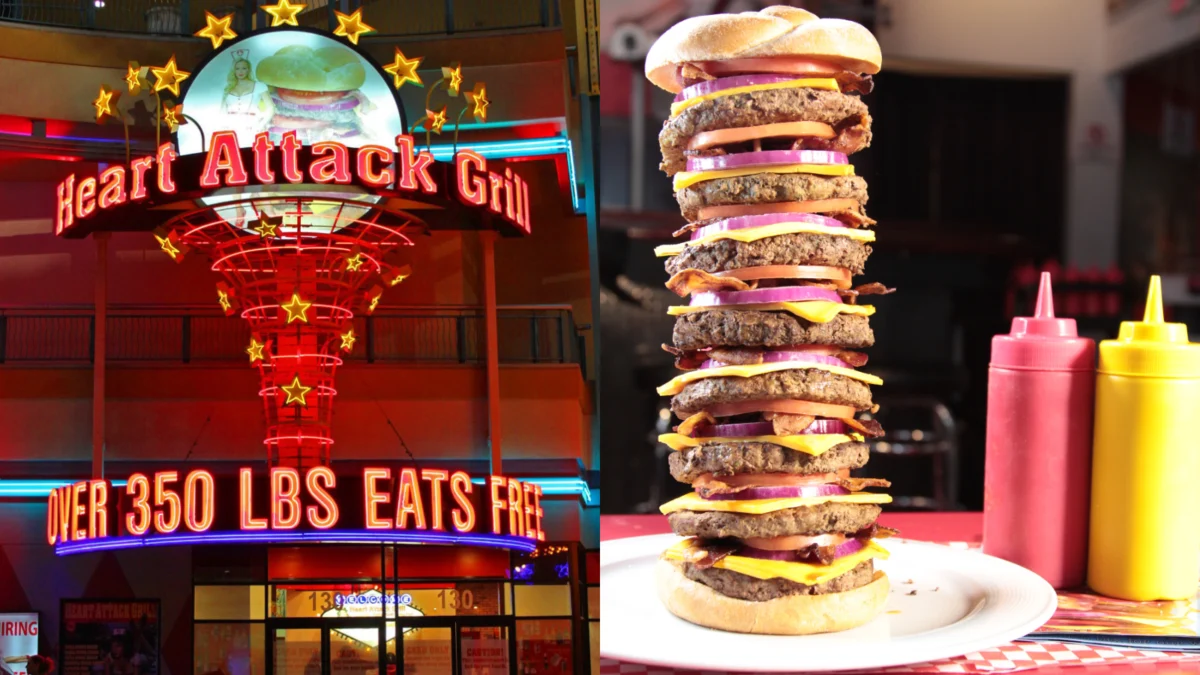
For over two decades, the neon-drenched streets of Las Vegas have played host to some of the world’s most eccentric culinary experiments. Yet, few establishments managed to capture the city’s inherent absurdity quite like the Heart Attack Grill. Known for its medical-themed decor, calorie-laden menu, and controversial disciplinary measures, the restaurant has served its final “bypass” burger. As the doors on Fremont Street shutter for the last time, the closure marks not just the end of a business, but the symbolic passing of a specific, unabashedly “old school” era of Las Vegas tourism.
The Final Curtain: Facts of the Closure
The Heart Attack Grill, a fixture of the Fremont Street scene since its 2011 arrival in its current location, has officially ceased operations. The closure, which follows a 15-year run at the downtown site—and a 21-year history in total—has been framed by its founder, Jon Basso, as a casualty of shifting economic tides.
According to a blunt and provocative statement posted to the restaurant’s official website, the decision was not a result of declining popularity, but a strategic exit. “The Heart Attack Grill will not be renewing its long-term lease,” the statement read. “This decision stems from the reality that major casinos have intentionally priced the average person out of the quintessential American experience of affordable indulgence. The soul of Las Vegas has been replaced by corporate greed.”
While the restaurant maintains that this is merely a “new chapter,” the physical space on Fremont Street is being vacated, ending a tenure that saw the establishment become a mandatory stop for tourists seeking a surreal, high-cholesterol brush with Las Vegas notoriety.
A Chronology of Caloric Infamy
The history of the Heart Attack Grill is a masterclass in aggressive marketing and deliberate shock value. Founded in 2005 by Jon Basso, a former nutritionist turned entrepreneur, the concept was designed to mock the health-conscious trends of the early 2000s.
The Early Years (2005–2011)
Basso originally launched the concept in Tempe, Arizona. From the outset, the branding was crystal clear: customers were “patients,” waitresses were “nurses,” and the menu was a series of “bypasses.” The concept was an immediate lightning rod for criticism, which Basso successfully leveraged into national media coverage. By 2011, the restaurant moved to the heart of downtown Las Vegas, capitalizing on the high foot traffic of the Fremont Street Experience.
The Peak of the Spectacle (2012–2020)
During its prime, the restaurant became a global phenomenon. It was featured in documentaries, reality television shows, and across the burgeoning landscape of social media. The ritual of the “Octuple Bypass Burger”—a monstrous creation featuring eight half-pound beef patties and 40 strips of bacon—became a rite of passage.
The restaurant’s disciplinary tactics also became legendary. Customers who failed to finish their meals were publicly scolded by staff and subjected to a ritualistic spanking with a wooden paddle. This theater reached a fever pitch in the age of the influencer; a notable incident involved the viral Twitch streamer Tyler1 being spanked during a visit with League of Legends icon Faker, bringing the restaurant’s brand to millions of younger, digital-native viewers.
The Sunset Years (2021–2026)
Post-pandemic, the economic landscape of Las Vegas began to shift. As major corporate entities on the Strip and in Downtown pivoted toward high-end luxury, fine dining, and premium pricing models, the “affordable indulgence” that defined the Heart Attack Grill began to feel increasingly out of place. The closure announced in May 2026 is the culmination of these rising pressures.
The Business Model: A Study in Excess
The Heart Attack Grill’s business model was predicated on radical transparency regarding its own unhealthiness. While most fast-food chains attempt to market themselves as “fresh” or “balanced,” the Grill leaned into the opposite.
The "Patients" and the Menu
The menu was designed as a satirical take on medical charts. The “Single Bypass Burger” served as the baseline, escalating through the “Octuple Bypass.” Caloric counts were not just listed; they were celebrated. The restaurant famously offered free meals to any customer weighing over 350 pounds—provided they were willing to weigh themselves on a medical scale in the middle of the dining room. This policy served as a potent, if controversial, marketing tool that ensured the restaurant remained a constant topic of conversation.

The Cultural Impact
The restaurant was never just about food; it was about the performance of excess. The waitstaff, dressed in hyper-sexualized nurse uniforms, provided a form of immersive theater that challenged the boundaries of professional hospitality. By treating customers with a mixture of contempt and care, Basso created an environment that was both repulsive and magnetic to the average tourist.
Official Responses and the "Greed" Narrative
Jon Basso has been vocal regarding his grievances with the current state of the Las Vegas hospitality industry. In an interview with SFGate, Basso emphasized that his decision to close was rooted in a fundamental philosophical disagreement with the direction of the city.
“The honest, heavy-duty calories that built our reputation are now considered gauche by a city that has excluded the middle class and lost its swagger in the process,” Basso stated. He argued that the rise of “resort fees” and the exorbitant pricing of basic services at major casinos have effectively purged the “Average American” from the city’s core.
Basso’s rhetoric serves as a broader critique of the “gentrification” of the Las Vegas experience. Where the city was once defined by its blue-collar appeal and budget-friendly entertainment, it is now dominated by high-end luxury retail and celebrity-chef-driven restaurants. Basso, who still operates the Snappy’s Burger drive-thru and a local drive-in theater, maintains that he will continue to serve his specific niche, but that the Fremont Street location no longer aligns with his brand’s populist mission.
Implications: What Does This Mean for Las Vegas?
The closing of the Heart Attack Grill serves as a bellwether for the evolution of the Las Vegas Strip and Downtown areas.
The Shift Toward Luxury
The closure suggests a permanent shift in the tourism demographic. As casinos and hotel operators move toward revenue-per-customer models that prioritize high-spending individuals, the "cheap and kitschy" attractions that once defined the downtown experience are increasingly being squeezed out by rising rent and corporate pressure.
The End of "Shock Value" Tourism
For years, the Heart Attack Grill was the ultimate destination for those looking for a "bucket list" experience that defied conventional social norms. Its disappearance leaves a void in the market for this type of extreme, performative tourism. Whether another establishment will rise to take its place remains to be seen, though current trends suggest that Las Vegas is trending toward a more sanitized, high-end, and corporate-managed environment.
The Public Health Paradox
Basso’s commentary on the rising obesity rate in America—noting the climb from 30% in 2005 to nearly 45% today—highlights a strange irony. The Heart Attack Grill, for all its performative gluttony, was a mirror held up to American culture. By shuttering, the restaurant leaves behind a legacy of controversy. Supporters viewed it as a bastion of free speech and a satirical critique of the nanny state; detractors viewed it as an irresponsible monument to poor health.
Conclusion: A New Chapter or the Final Goodbye?
As the final lights on the Fremont Street sign go out, the Heart Attack Grill leaves behind a complex legacy. It was a place where public humiliation was part of the service, where the menu was a literal health hazard, and where the owner made no apologies for the excess.
While Jon Basso insists that this is merely a pivot and that the “Heart Attack” brand will continue to exist in other forms, the specific lightning-in-a-bottle energy of the downtown location will be difficult to replicate. The closure is a stark reminder that even in a city built on the ephemeral and the artificial, nothing—not even the most brazen displays of American indulgence—is truly permanent. The soul of Las Vegas, it seems, is still being negotiated, and for now, the price of admission is simply getting too high for the “patients” that the Grill was built to serve.










No comments yet. Be the first to join the conversation!