In an era where the creative software landscape is increasingly dominated by subscription-based models and cloud-locked ecosystems, a quiet, grassroots revolution is taking place. For years, 3D artists have relied on industry-standard giants—most notably Adobe’s Substance 3D Painter—to bring their digital models to life. While these tools offer undeniable power, their recurring costs have left a segment of the independent creator community searching for alternatives.
The launch of ArmorPaint 1.0 marks a significant milestone in this search. Developed by Lubos Lenco and the team behind the open-source Armory3D game engine, this lightweight, high-performance texture painting application has officially graduated from its eight-year early-access phase. It is not merely a "free alternative"; it is a sophisticated, feature-rich powerhouse that promises to redefine how artists approach 3D texturing across diverse professional pipelines.
The Shift Toward Open-Source Professionalism
The creative industry has long viewed open-source software as a secondary option—capable, perhaps, but often lacking the polish required for high-end production. That perception has shifted dramatically over the past decade. Blender has become the industry standard for 3D modeling and animation, effectively silencing critics who claimed open-source couldn’t compete with proprietary giants.
With the recent emergence of tools like Maxon’s Autograph and Canva’s Cavalry providing free alternatives for motion design, the "open-source movement" is no longer just a hobbyist endeavor; it is a professional-grade ecosystem. ArmorPaint sits squarely at the heart of this shift, offering a specialized, non-subscription-based environment that allows artists to reclaim ownership of their workflow.
A Chronology of Development: From Concept to 1.0
The journey of ArmorPaint is one of persistence and iterative refinement. Since its inception, the project has been defined by a commitment to performance and accessibility.
- Initial Concept (2016): Lubos Lenco conceptualized ArmorPaint as a companion tool for the Armory3D engine, recognizing a need for a dedicated texture painting tool that could handle PBR (Physically Based Rendering) workflows with minimal overhead.
- The Early Access Era (2016–2024): For nearly eight years, the software evolved in the public eye. During this period, the development team focused on building a custom-built 3D engine that could rival the viewport performance of established competitors.
- The C Rewrite: A pivotal moment in the software’s history was the complete code rewrite in C. This transition was not merely a cosmetic update; it was a fundamental overhaul that optimized the program for modern hardware, allowing for interactive painting on significantly more complex meshes and higher-resolution texture layers.
- Official 1.0 Release (2024): The transition to a stable 1.0 release marks the maturation of the software. It now boasts a feature set that includes advanced mesh editing, generative AI integration, and cross-platform compatibility that spans from high-end desktop workstations to mobile tablets.
Technical Prowess: Why ArmorPaint Stands Out
ArmorPaint’s primary differentiator is its architectural philosophy. By utilizing a custom-built 3D engine and 2D drawing system, it bypasses the "bloat" often associated with monolithic creative suites.
Unrivaled Lightweight Performance
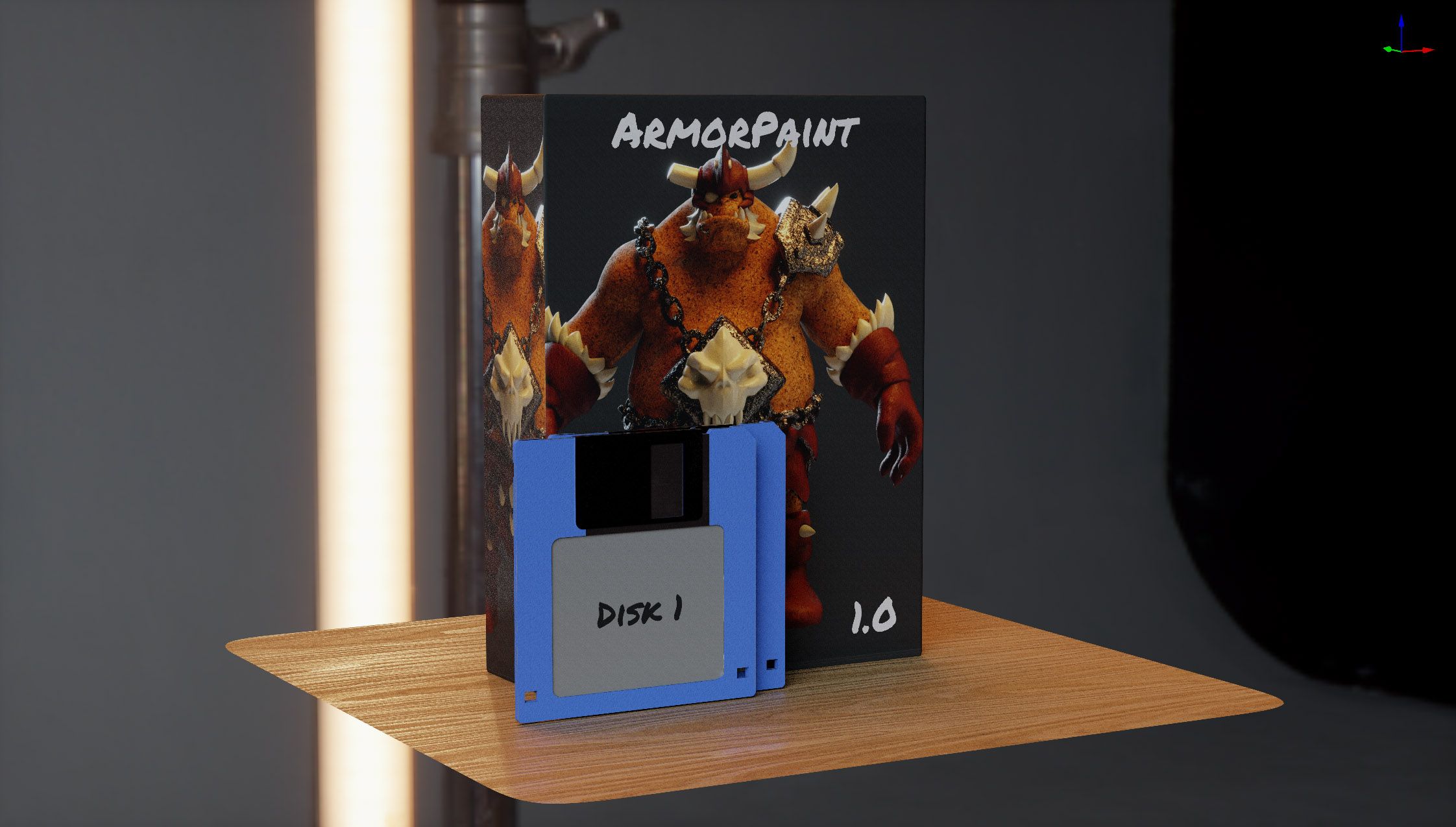
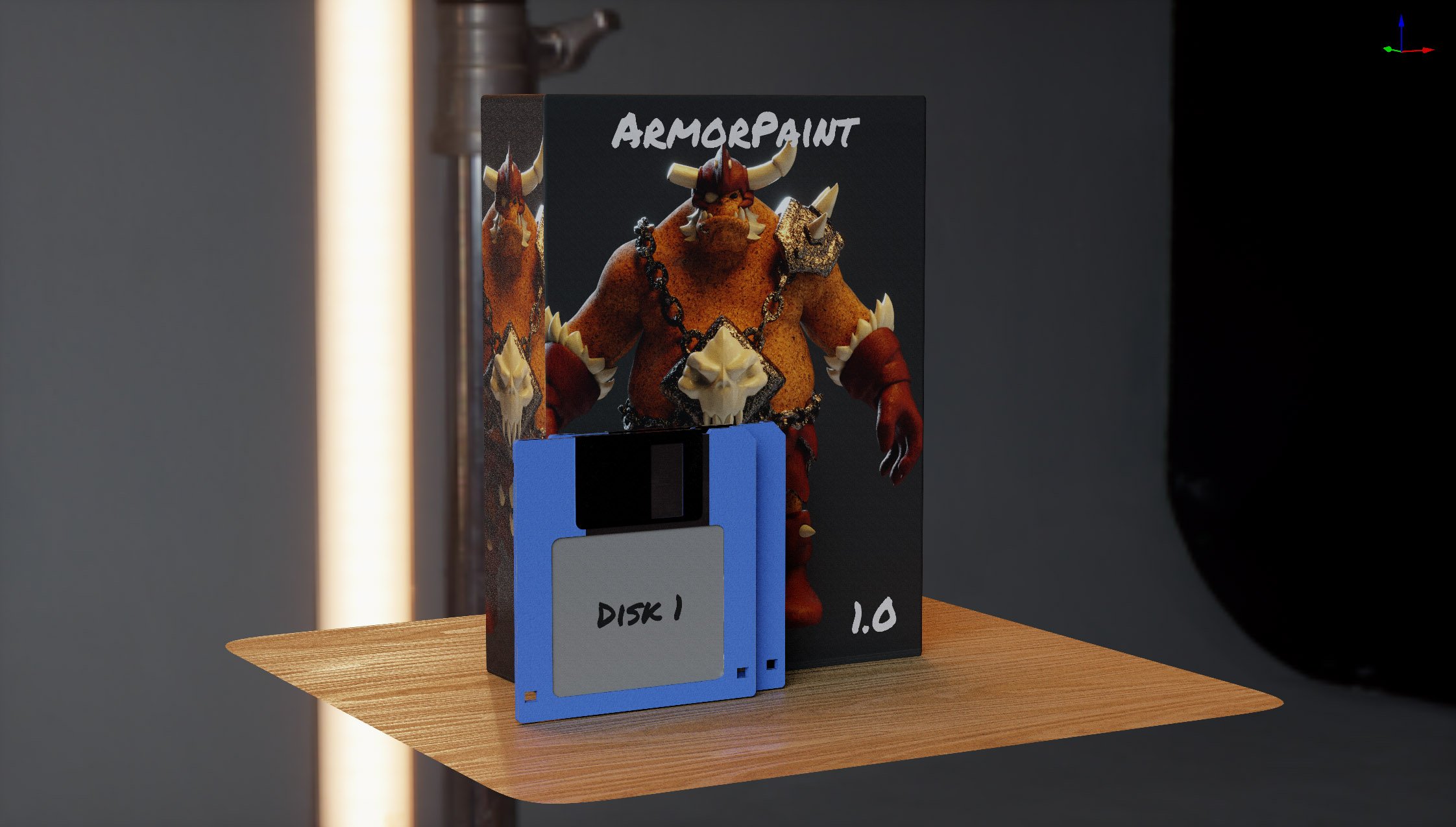
The most striking statistic regarding ArmorPaint is its footprint. Following a rigorous codebase cleanup, the entire program is remarkably compact—so small, in fact, that it could technically fit onto two 1.44MB floppy disks. On desktop systems, it functions as a sub-10MB portable application. This "zero-installation" approach ensures that artists can carry their workspace on a USB drive, launching it instantly on any machine without the need for complex licensing servers or cloud-verification protocols.
Graphics Interface Flexibility
ArmorPaint is designed for the modern era of computing. It leverages advanced graphics APIs, including Direct3D 12, Vulkan, Metal, and WebGPU. This ensures that whether an artist is working on a high-end Windows PC, a Linux workstation, or an Apple Silicon-powered Mac, the software utilizes the underlying hardware to its fullest extent. This hardware-agnostic design is a breath of fresh air in a market often fragmented by OS-specific limitations.
PBR and Node-Based Workflows
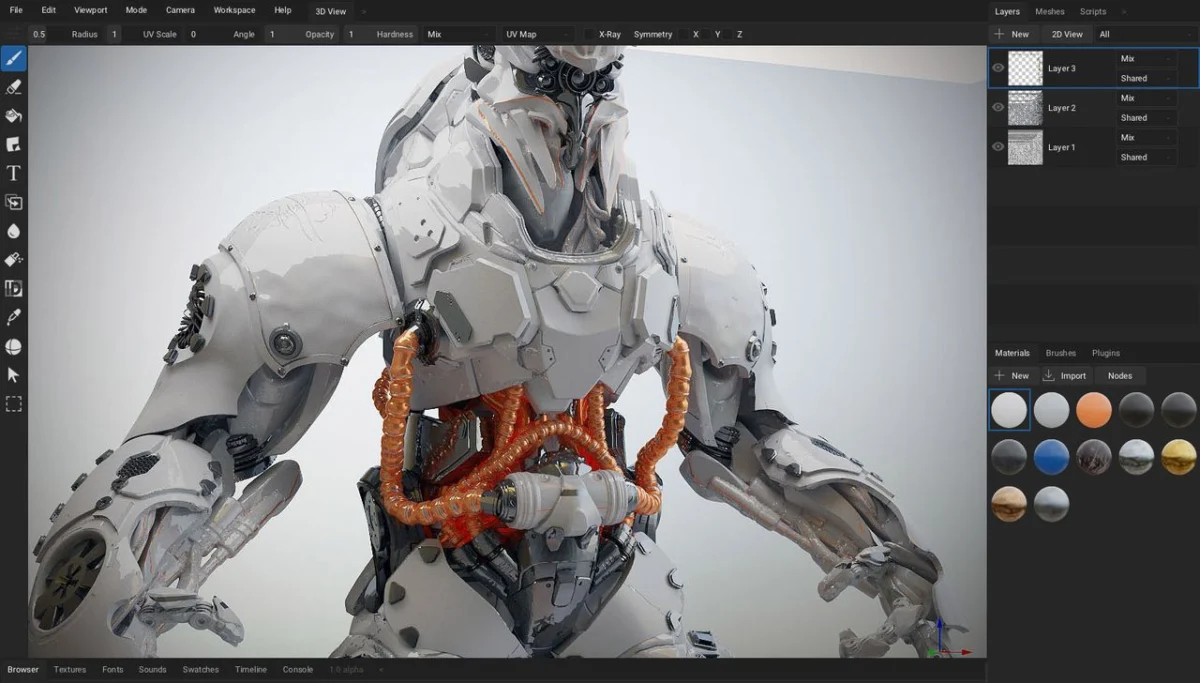
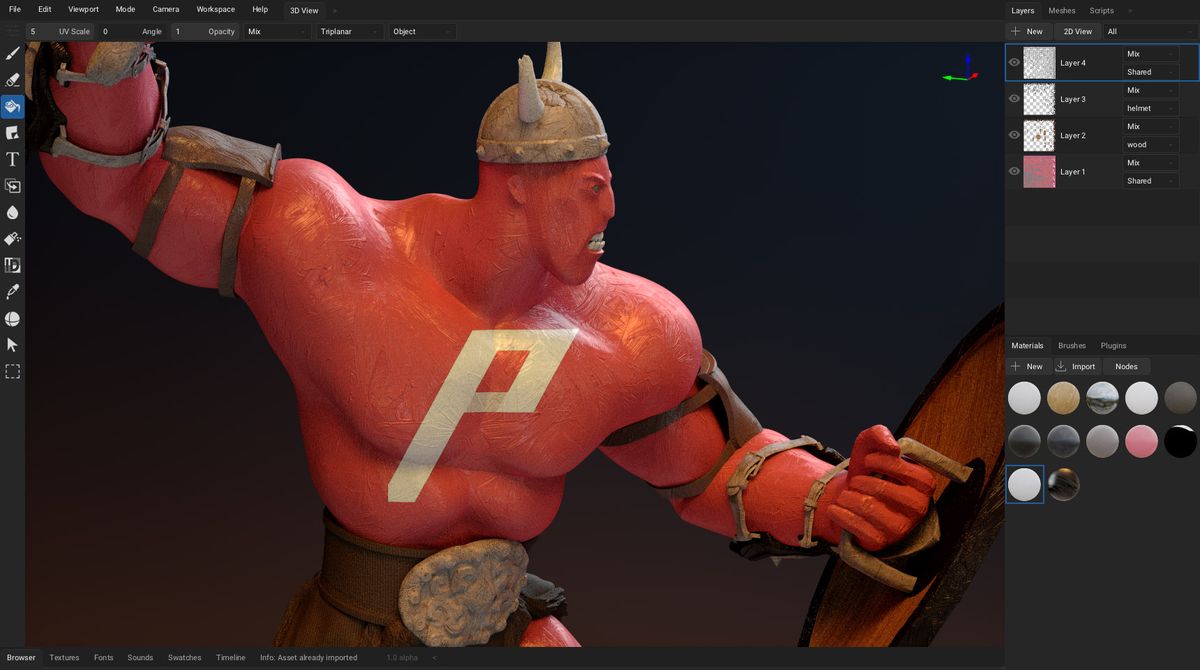
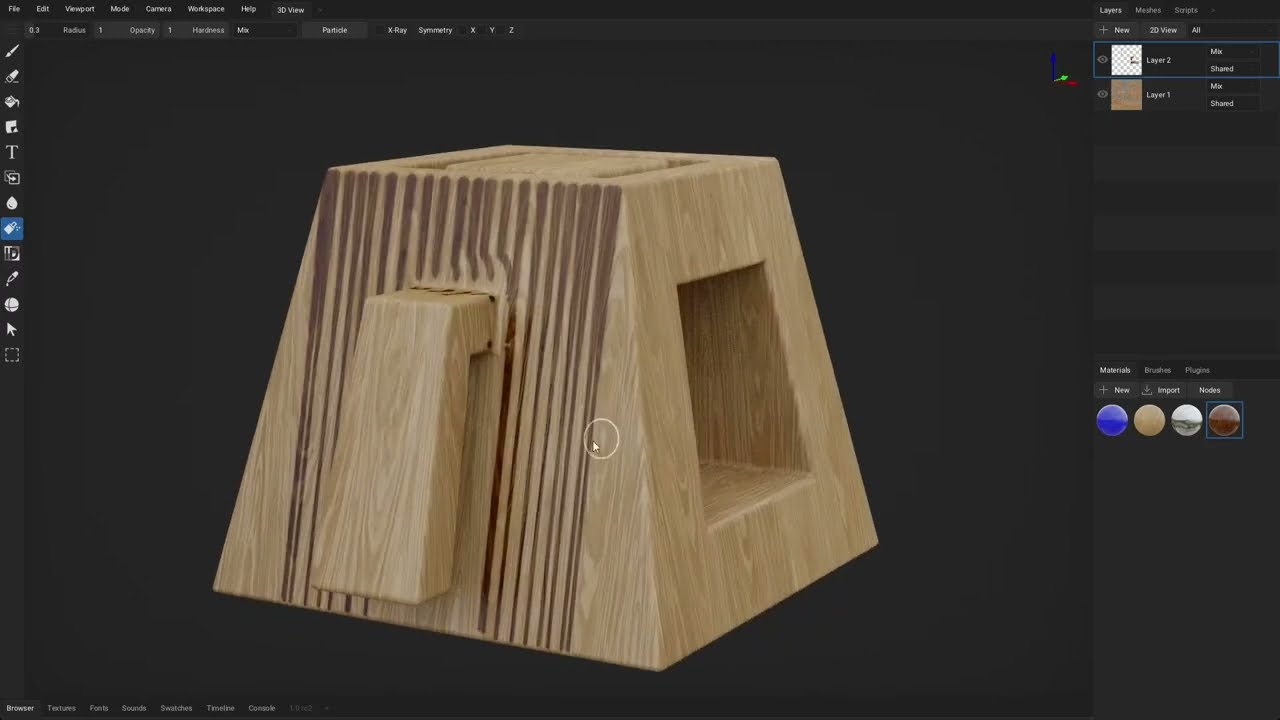
For the professional 3D artist, PBR (Physically Based Rendering) is non-negotiable. ArmorPaint provides a robust path-traced 3D viewport, allowing users to see their textures react to light in real-time. It supports the generation of standard texture maps (albedo, roughness, metallic, normal) that are fully compatible with industry-standard engines like Unreal Engine, Unity, and Godot. Furthermore, its node-based material editor allows for non-destructive, procedural texturing—a workflow essential for modern game and film production.
Feature Breakdown: More Than Just Painting
While the core of ArmorPaint is its painting capability, the 1.0 release introduces a suite of tools that make it a comprehensive asset creation hub.
Advanced Mesh Editing
Recent updates have transformed ArmorPaint from a "texturing tool" into a lightweight "mesh processor." The inclusion of modifiers such as Decimate, Smooth, Bevel, and Subdivide allows artists to make quick, necessary adjustments to their geometry without leaving the application to return to their primary 3D modeler. This reduces friction in the pipeline, allowing for a more fluid creative flow.
Generative AI and Automation
Embracing the current technological zeitgeist, ArmorPaint has integrated "Neural Nodes." These tools facilitate generative AI features, including photo-to-material generation. By analyzing photographic input, the software can automatically generate the necessary PBR maps, saving artists hours of manual work.
Animation and Rigging
The software now supports skinning animation playback and tween animations. While it is not intended to replace dedicated character animation software, the ability to preview how textures deform during animation within the viewport is a massive quality-of-life improvement for character artists.
Industry Implications: The Challenge to the Status Quo
The success of ArmorPaint carries significant implications for the creative software industry.
Democratization of High-End Tools
For freelancers, students, and independent studios, the barrier to entry for 3D art has historically been high. Adobe’s Substance 3D Painter, while powerful, requires a recurring financial commitment that can be prohibitive for those just starting out or working on low-budget projects. ArmorPaint removes this financial barrier, effectively "democratizing" the ability to create professional-grade 3D assets.
Pipeline Integration
Perhaps the most significant hurdle for any new tool is integration. ArmorPaint tackles this with dedicated plugins for Blender, Unity, and Unreal Engine. By ensuring that assets can be moved seamlessly between the texturing environment and the production engine, the developers have ensured that ArmorPaint is a "good citizen" in the broader professional pipeline, rather than an isolated silo.
The Rise of Portable Creative Workflows
ArmorPaint’s portability changes the nature of the "creative workstation." The fact that it is a sub-10MB, portable app that works on platforms as varied as Android, iOS, Linux, and macOS signals a shift toward a more nomadic, hardware-agnostic professional life. Artists are no longer tethered to a single desk or a single operating system.
Official Stance and Community Reception
The team at Armory3D has been vocal about their mission: to provide tools that are fast, accessible, and owned by the creator. Their commitment to open-source ensures that the software remains transparent and community-driven. While the developers provide support for commercial use, the open-source nature of the project means that the community can contribute to its growth, fix bugs, and implement new features, ensuring that the software stays relevant long after the 1.0 release.
Conclusion: Is It Time to Switch?
For the professional artist deeply entrenched in an Adobe-based pipeline, the transition to ArmorPaint might require a period of adjustment. However, for those looking to optimize their workflow, reduce overhead costs, or simply gain more control over their software, ArmorPaint 1.0 is a compelling, if not essential, addition to the digital toolkit.
As we look toward the future of 3D design, the divide between "free" and "professional" is rapidly narrowing. ArmorPaint proves that with a focused, performant codebase and a dedication to the needs of the user, the most powerful tool in an artist’s inventory might just be the one they didn’t have to pay a monthly subscription to access. Whether you are building an indie game, crafting assets for a film, or simply experimenting with 3D art, ArmorPaint 1.0 offers the performance of a heavyweight with the accessibility of a modern, lightweight application. The tools of the future are here, and they are open for everyone.