For years, the tech industry was defined by the relentless cycle of "planned obsolescence." Consumers were conditioned to expect their laptops to slow to a crawl within three years, incentivizing a constant turnover of hardware. Apple, once the target of intense scrutiny for its handling of aging iPhone battery performance, now finds itself in a bizarre, ironic predicament. The very technology that was meant to solidify its dominance—the M-series Apple Silicon—has become so exceptionally capable that it is cannibalizing the company’s own upgrade cycles.
As recent data suggests, the average MacBook lifecycle is lengthening significantly. In an era where a 2020 M1 MacBook Air can still handle professional creative workflows with ease, Apple is facing a unique "problem of perfection."
The Main Facts: A Shift in Consumer Behavior
The core of the issue is simple: the generational leap between M-series chips has been iterative rather than transformative, while the longevity of the base hardware has exceeded all industry expectations. Recent market analysis, including insights from Forbes, indicates that the urgency to upgrade from an M1, M2, or even M3 machine has evaporated for the average user.
Historically, the laptop market mirrored the smartphone market’s "tick-tock" upgrade cadence. However, today’s users are realizing that their six-year-old hardware is not just "good enough"—it is arguably still best-in-class for the vast majority of tasks. This has led to a significant cooling in retail demand for the latest MacBook Pro models. While the M5 MacBook Pro is, by all accounts, a "wonderful thing to use," the tangible benefits for a user transitioning from an M3 or even an M4 are increasingly granular, making the steep asking price difficult to justify for the average consumer.
A Chronological Look at the M-Series Evolution
To understand how we reached this point, we must look at the meteoric rise of Apple Silicon since its debut in 2020.
- 2020: The M1 Revolution. Apple shocked the industry by departing from Intel processors. The M1 offered a paradigm shift in performance-per-watt, effectively ending the era of the "hot, loud, and dying" laptop.
- 2021-2022: M1 Pro/Max and M2. Apple doubled down, proving that its architecture could scale for high-end professional needs. The 14-inch and 16-inch MacBook Pro redesigns became the gold standard for creative professionals.
- 2023-2024: M3 and M4. These iterations focused on ray tracing and refined neural engines. While impressive, these chips served to optimize existing workflows rather than unlocking entirely new categories of computing power.
- 2025-2026: The M5 and Beyond. With the release of the M5, the diminishing returns of annual updates have become glaringly obvious. The hardware has reached a plateau where software optimization and cooling efficiency matter more than raw clock speeds.
Supporting Data: Why Upgrades Are Slowing
The data is clear: the hardware is lasting longer because it is objectively better built.
Performance Retention
Unlike the Intel-based MacBooks of the past, which often suffered from thermal throttling and battery degradation after 24 months, the M-series chips remain cool and efficient under pressure. A benchmark test conducted on an M1 MacBook Air in 2026 shows that, six years post-launch, it maintains nearly 90% of its original day-one performance metrics.
The Cost-to-Value Ratio
With the price of entry for a high-performance MacBook Pro climbing, consumers are increasingly viewing their laptop as a "long-haul" asset rather than a disposable gadget. The resale value of used M1 and M2 models remains high, further incentivizing users to stick with what they have rather than trade in for a marginal 10–15% performance bump in the latest generation.
The AI Wildcard: A New Reason to Upgrade?
While the hardware performance of older chips remains adequate, Apple is preparing a potential "forced" upgrade cycle through software requirements. The announcement of Siri AI during the June 2026 WWDC event marked a pivotal shift in Apple’s strategy.
Apple explicitly stated that the most advanced on-device generative AI models—designed to handle privacy-sensitive tasks, local document analysis, and sophisticated creative assistance—will require an M3 chip or higher. This creates a hard cutoff for users with older hardware. If local AI integration becomes the industry standard for productivity, the M1 and M2 chips will, for the first time, feel genuinely obsolete.
This is a clever, if controversial, strategy: if users won’t upgrade for raw speed, Apple will force the issue through proprietary software features that older hardware simply cannot process due to limitations in the Neural Engine.
Implications: Can Apple Keep the Momentum?
The implications of this cycle are profound for both the company and the consumer.
For Apple
Apple faces a revenue challenge. If the "Pro" market is satisfied with their existing gear, Apple must pivot its marketing. We are already seeing a shift toward services, software subscriptions, and "AI-exclusive" hardware features. The company cannot rely on the annual upgrade cycle of the hardware alone to sustain the growth shareholders expect.
For the Consumer
We are entering a "Golden Age" of hardware longevity. Consumers should be empowered by the fact that a purchase made today is likely to remain relevant for half a decade. However, we must remain vigilant. The "AI-gate" strategy—whereby older, perfectly functional computers are locked out of new software features—is a sophisticated form of software-based obsolescence.
The Future of the MacBook Pro
Will the M6 MacBook Pro be a "must-have"? If the recent trajectory is any indication, it will be another iterative masterpiece—sleeker, perhaps slightly more efficient, and bolstered by deeper AI integration. But the market has matured. Users are no longer swayed by minor performance gains.
Conclusion: The New Reality
The era of planned obsolescence is fading, replaced by a reality where the hardware is so good that the manufacturer is struggling to convince the user to replace it. Apple’s success with its own Silicon has created a high bar that the company itself is struggling to clear.
While the allure of the "latest and greatest" remains, the reality is that for most creative professionals and casual users alike, the best MacBook on the market is often the one you already own. As we look toward the M6 and beyond, the question for Apple is no longer, "How do we make it faster?" but rather, "How do we make it essential?"
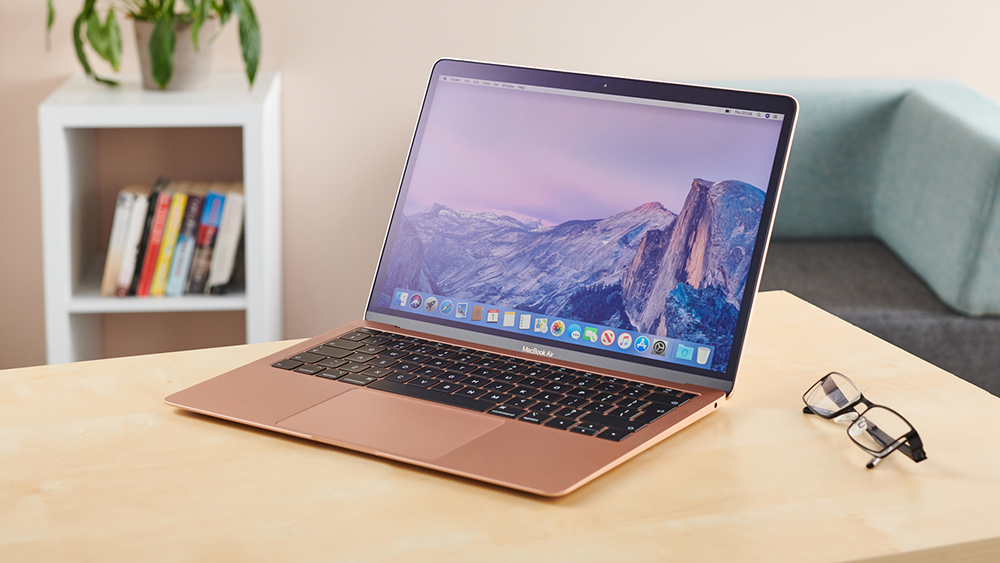
Until they can answer that, the M1 MacBook Air will likely continue to hold its place on desks and in backpacks around the world, standing as a testament to a moment in time when Apple built a product that was, quite simply, too good to be replaced.