Asro
Asro
In a move that marks a profound turning point for the global quantum computing landscape, NEC Corporation—a pioneer that helped lay the very foundations of the field—has officially ceased the development of physical quantum computing hardware. According to reports from Diamond Online, the Japanese technology giant quietly concluded its internal hardware research and development programs at the end of March 2026.
This decision, while subtle in its execution, sends shockwaves through the industry. NEC was not merely a participant; it was a progenitor. In 1999, researchers at NEC made history by demonstrating the world’s first superconducting solid-state qubit. This breakthrough provided the essential architecture that today serves as the bedrock for the quantum ambitions of industry titans like Google and IBM. Yet, despite this legacy, NEC has determined that the long-term capital requirements and the elusive timeline for commercial profitability no longer align with its corporate strategy.
A Legacy Built on Superconducting Foundations
To understand the weight of NEC’s departure, one must look back at the late 1990s. At the time, NEC was a global powerhouse, holding the crown for the world’s largest semiconductor manufacturer. Its R&D departments were centers of immense innovation, bridging the gap between theoretical physics and practical industrial application.
In 1999, the announcement of the superconducting qubit changed everything. By leveraging the principles of quantum superposition and entanglement in a solid-state circuit, NEC proved that quantum computation was not just a theoretical concept for academic labs, but a tangible engineering goal. This discovery essentially wrote the blueprint for the superconducting quantum processors that now drive the "quantum race." For decades, NEC maintained this technical prowess, fueling a deep internal expertise in solid-state devices that few companies in the world could match.
The Shift in Corporate Strategy: A History of Evolution
NEC’s decision to exit the hardware race is consistent with a long-term corporate pattern of divesting from capital-intensive, high-risk hardware ventures when the market landscape shifts.
The company’s decline in the semiconductor sector during the late 1990s and early 2000s serves as a historical parallel. Once the undisputed leader in semiconductor sales—outperforming giants like Intel and Toshiba—NEC faced the harsh realities of a maturing, hyper-competitive PC microprocessor market. Rather than doubling down on a declining share of a commoditized market, NEC systematically dismantled its semiconductor operations.
This was a phased exit:
- 1999: NEC spun off its DRAM operations into a joint venture with Hitachi, eventually becoming Elpida Memory.
- 2002: The company further divested its remaining semiconductor operations—including system LSIs and MCUs—into a new entity that eventually evolved into Renesas Electronics.
By effectively separating its identity from pure semiconductor manufacturing, NEC was able to pivot toward IT services, enterprise software, defense, and telecom infrastructure. The current withdrawal from quantum hardware follows this same strategic logic: it is an exit from a "hardware-heavy" business model that demands massive, perpetual capital expenditure, in favor of a model focused on software, algorithms, and practical industrial applications.
Implications for the Workforce and the Competitive Landscape
The human impact of this decision is perhaps the most immediate signal of the changing tides. With the cessation of hardware development, a significant cohort of NEC’s specialized researchers has transitioned to Fujitsu.
For Fujitsu, this represents a major acquisition of talent. Fujitsu has remained steadfast in its commitment to the "quantum-first" strategy. In partnership with Riken, the company has already demonstrated a 256-qubit superconducting quantum computer. Their roadmap is aggressive, targeting machines exceeding 1,000 qubits by the end of 2026 and scaling to 10,000 superconducting qubits by 2030. By absorbing the expertise of former NEC researchers, Fujitsu is positioning itself to become the primary custodian of Japan’s sovereign quantum hardware capabilities.
Official Stance: A Withdrawal, Not an Abandonment
It is crucial to distinguish between exiting "hardware development" and leaving the "quantum ecosystem" entirely. In its communications, NEC has been careful to avoid the word "withdrawal." When approached by Diamond Online, the company declined to comment on the specific closure of its hardware labs, choosing instead to emphasize its ongoing focus on the "practical applications and industrialization of quantum technologies."
This is a strategic pivot rather than a total retreat. NEC intends to remain a player in the quantum economy by focusing on:
- Software and Algorithms: Developing the applications that will run on quantum machines once they reach the necessary maturity.
- Customer-Centric Proof-of-Concepts: Helping enterprises explore how quantum algorithms can be integrated into their existing IT infrastructure.
- Systems Integration: Acting as a bridge between quantum hardware providers and industrial end-users.
By offloading the "cost and risk" of designing and fabricating quantum processors, NEC avoids the "valley of death" that often kills high-tech hardware projects before they reach commercial viability. They are effectively betting that the value in the quantum age will be found in the utility of the machines, rather than the ownership of the hardware.
The Broader Industry Context
NEC’s exit is particularly striking because it represents a rare departure among the pioneers of the 1990s. Companies like IBM, which also participated in the earliest experiments in quantum computing, have taken the opposite path, transforming themselves into the architects of the modern quantum hardware industry.
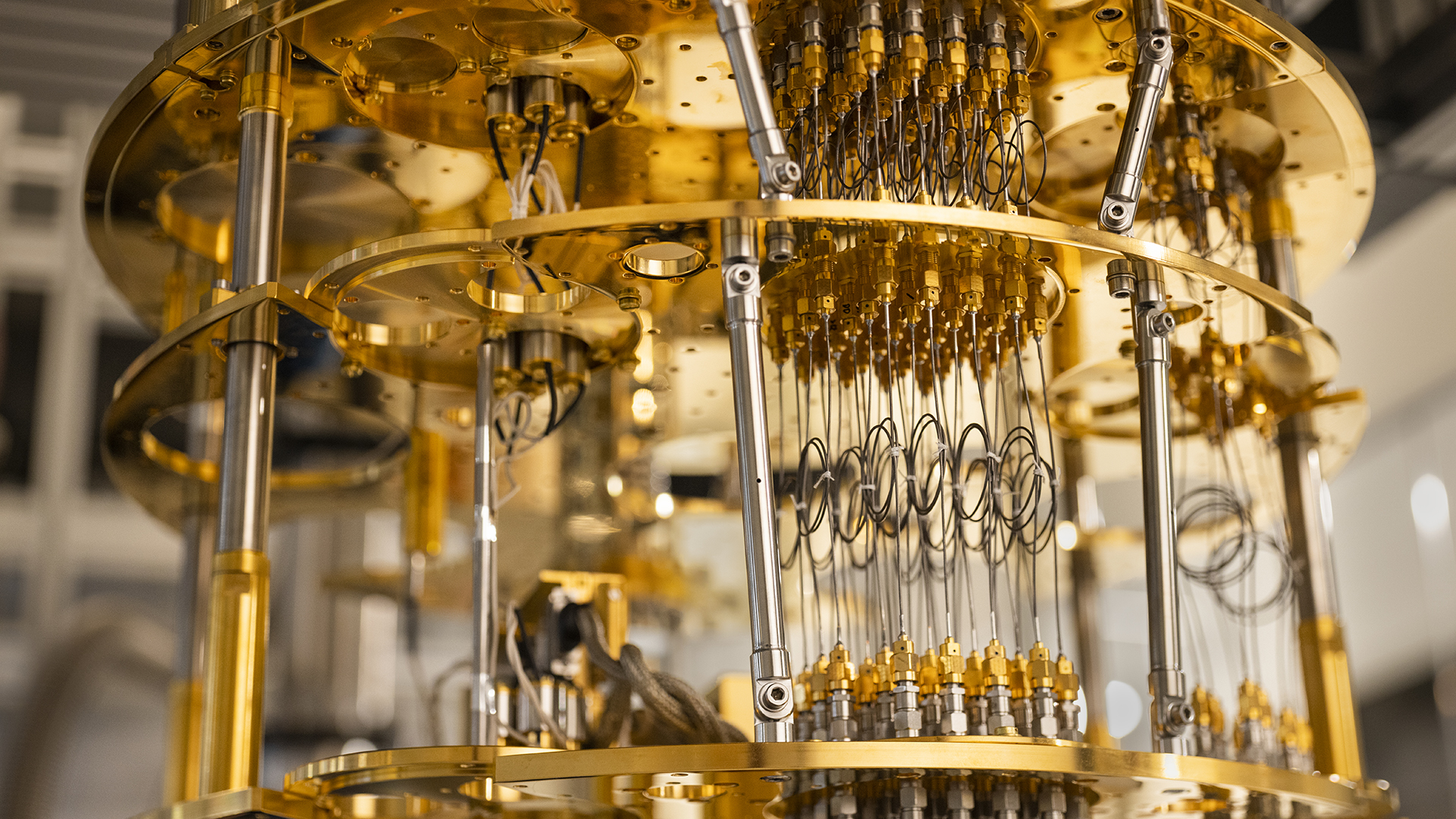
For the broader tech sector, this serves as a reminder that the quantum "hype cycle" is meeting the reality of high-barrier engineering. Building a reliable, fault-tolerant quantum computer is arguably one of the most difficult engineering challenges in human history. It requires extreme cryogenic infrastructure, precise microwave control, and massive, multi-decade funding.
Many firms that entered the space in the early 2000s are now reaching a "make or break" moment. With quantum hardware costs ballooning and commercial returns remaining speculative, boards of directors are increasingly asking whether the hardware route is sustainable for companies that are not primarily "deep-tech" focused.
Future Outlook: What Happens Now?
As NEC turns its attention toward software and services, the vacuum left in hardware development will likely be filled by specialized startups and the remaining mega-corporations like Fujitsu, IBM, and Google.
For the Japanese market, this consolidation of talent at Fujitsu could actually be a benefit. By concentrating resources and specialized researchers at a single, highly committed entity, the path toward a 10,000-qubit machine becomes more technically feasible than if resources were fragmented across multiple, competing firms with lukewarm internal support.
The story of NEC and quantum computing is far from over; it has simply changed genre. It has shifted from a story of "scientific discovery and hardware manufacturing" to a story of "software integration and industrial application." While the era of NEC building its own qubits has come to a close, the company is betting that its future, and the future of the quantum industry, lies in the practical utility that those qubits can provide to the rest of the world.
As the industry matures, we can expect to see more of this behavior: a transition from an "experimental hardware" phase to an "industrial application" phase. NEC is arguably the first of the old guard to recognize this transition and act upon it, potentially setting a precedent for other legacy tech firms that are currently struggling to balance the massive costs of quantum research with the demands of their shareholders.


 Nana Muazin
 Nana
Nana