Lina Hope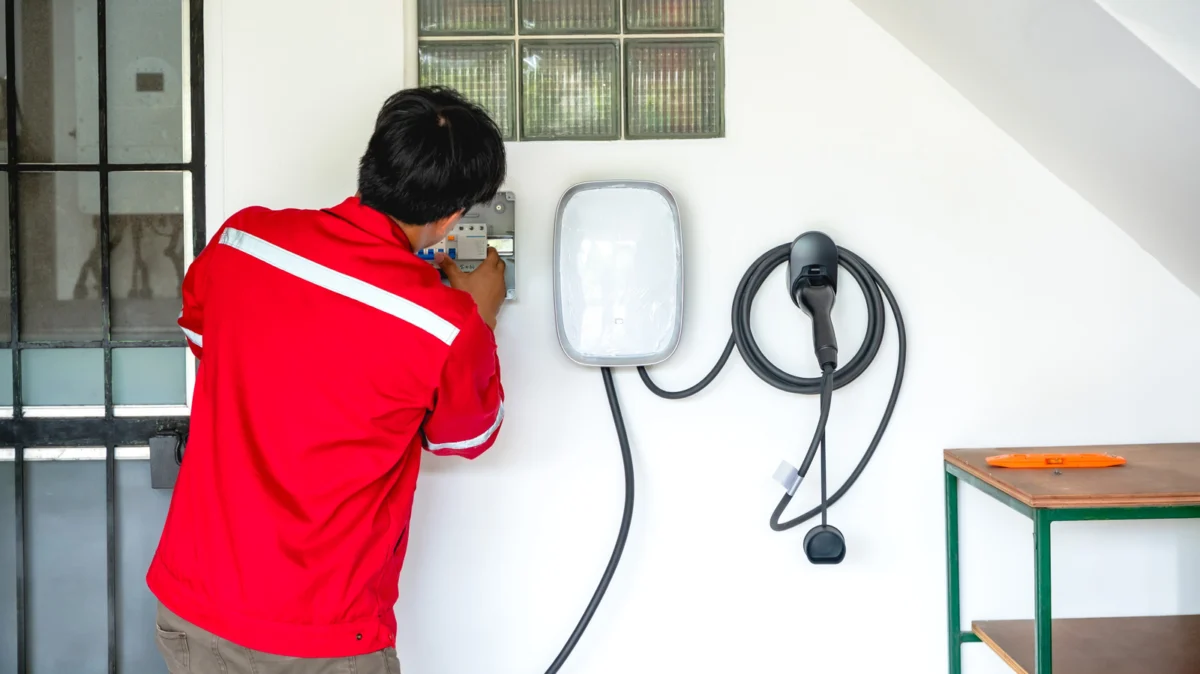
The transition to electric vehicles (EVs) represents one of the most significant shifts in personal transportation in a century. Beyond the environmental benefits and the reduction in reliance on fossil fuels, the financial argument is compelling: in many regions across North America, the cost of "fueling" an EV via household electricity is roughly one-third the price of gasoline or diesel. However, the convenience of EV ownership hinges largely on one critical factor: how you charge your vehicle at home.
While many new owners begin their journey relying on the standard 120-volt "trickle" charger that comes with their vehicle, a persistent question arises: is it time to upgrade to a dedicated Level 2 home charging station? The answer is rarely a simple "yes" or "no." It requires a nuanced understanding of your vehicle’s battery capacity, your daily driving habits, and the existing electrical infrastructure of your home.
The Core Facts: Understanding Your Charging Ecosystem
To determine if an upgrade is necessary, one must first understand the fundamental differences in charging hardware.
Charging levels are defined by the speed at which they deliver energy to the vehicle’s battery.
- Level 1 Charging (120V): This utilizes a standard household wall outlet. It is the slowest method, typically providing 1.8 kW of power. It is generally sufficient for Plug-in Hybrid Electric Vehicles (PHEVs) or owners with very short daily commutes.
- Level 2 Charging (240V): These systems require a dedicated circuit similar to those used by clothes dryers or electric ovens. They offer significantly higher power output, usually ranging from 3.3 kW to 11.5 kW.
The primary misconception is that an EV must be charged to 100% every night. Unlike a smartphone, which is often drained by the end of the day, an EV battery is a massive energy reservoir. Unless you are consistently depleting a large percentage of your range, a slow overnight trickle charge is often enough to top off the daily energy used for commuting.
Chronology: Assessing the Need for Power
The decision to invest in a Level 2 charger often follows a predictable arc for the modern EV owner:
- The "Honeymoon" Phase: The new owner plugs into a standard 120V outlet. Everything works fine, as the daily commute is short and the battery is rarely depleted below 70%.
- The Reality Check: A change in lifestyle occurs—perhaps a new, longer job commute, the acquisition of a larger-battery vehicle, or the realization that the vehicle is rarely reaching a full charge before a weekend road trip.
- The Bottleneck: The owner discovers that a full charge from near-empty could take three to four days on a standard outlet.
- The Investment: The owner consults an electrician, evaluates their home’s electrical panel, and moves to install a dedicated Level 2 charging station.
Supporting Data: Battery Capacity and Charging Rates
When analyzing your specific needs, the mathematical reality of your vehicle’s battery is the most important variable.
Consider the "Refill Time" based on a standard 120V outlet (1.8 kW):
- PHEV (e.g., Toyota Prius Prime, 14 kWh): Approx. 8–10 hours. Manageable.
- Small EV (e.g., Fiat 500e, 38 kWh): Approx. 21 hours. Stretching the limits of convenience.
- Long-Range EV (e.g., Tesla Model 3, 79 kWh): Approx. 43 hours. Impractical for daily use.
- Large-Battery Truck (e.g., GMC Sierra EV, 155 kWh): Over 86 hours (3.5 days). Effectively impossible to rely on for daily usage.
Furthermore, it is vital to account for the vehicle’s onboard charger (OBC) limit. Even if you install a 48-amp charger capable of delivering 11.5 kW, your car may not be able to accept it. For instance, many current models, such as the Nissan Ariya, are capped at 7.4 kW. Spending extra money on a high-amperage station for a vehicle that cannot utilize that speed is an inefficient use of your budget.
Safety and Infrastructure Implications
Beyond speed, there is the critical element of safety. Standard 120V outlets are not designed for the constant, high-draw load of an EV charger over several years. They are prone to wear and tear, and if your home wiring is older, it may lack the necessary grounding or modern safety protocols required to prevent overheating.
Dedicated Level 2 chargers are purpose-built for the sustained, high-current nature of EV charging. They often include:
- Ground Fault Protection: Preventing electrical shocks.
- Communication Protocols: Many modern chargers can "talk" to your local utility company, allowing you to schedule charging during off-peak hours when electricity rates are lowest.
- Thermal Monitoring: Sensors that detect heat at the plug interface, shutting down power if a connection becomes loose or begins to melt.
Installation Logistics and Financial Considerations
The installation process is where the project can move from a simple DIY task to a major home improvement project.
The Electrical Panel Audit
The most significant hurdle is the amperage of your home’s main electrical service. Most modern homes are built with 200-amp panels, which can comfortably handle the addition of a 50-amp or 60-amp circuit for an EV charger. However, older homes with 100-amp service may be at capacity. In such cases, an electrical service upgrade—which can cost thousands of dollars—might be required before a Level 2 charger can be safely installed.
Budgeting for the Setup
- The Hardware: Quality Level 2 chargers typically range from $250 to $700. Factors influencing price include cable length, smart features (Wi-Fi connectivity, app support), and weatherproofing for outdoor installations.
- The Labor: Electrician fees vary wildly based on your location and the distance between your electrical panel and your parking spot. A "simple" install might cost $300, while a complex run of conduit through a basement or garage can exceed $2,000.
- The "Plug-and-Play" Hack: If you already have a 240V outlet in your garage—such as a NEMA 14-50 outlet used for a welder or an electric clothes dryer—you may be able to simply plug in a compatible charger. However, always have an electrician verify that the circuit is rated for the continuous load of an EV, which is different from the intermittent load of a dryer.
Expert Consensus: When Do You Really Need It?
Industry experts generally agree on a rule of thumb: If you drive less than 50 miles per day, or if you primarily drive a plug-in hybrid, you likely do not need a Level 2 charger. The standard "trickle" charge will replenish your daily usage overnight.
However, a Level 2 charger becomes highly recommended if:
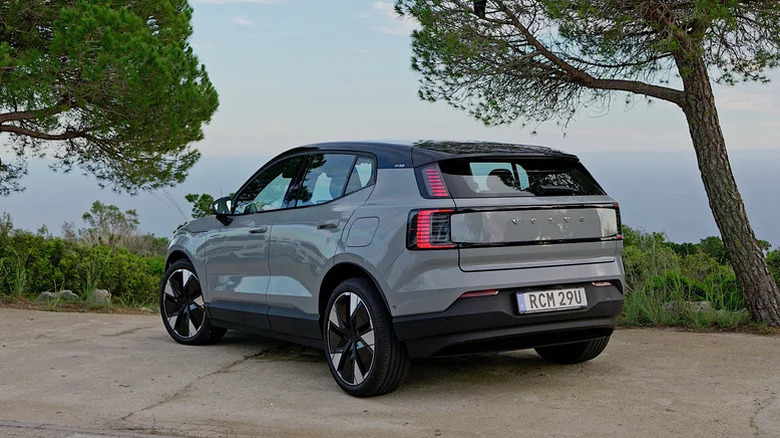
- You have a long daily commute: If your battery is depleted by 30% or more every single day, you will quickly find yourself behind the curve on a 120V outlet.
- You have multiple EVs in the household: Charging two vehicles on one household circuit is nearly impossible without a Level 2 station.
- You want to leverage time-of-use (TOU) rates: Many utility companies offer significantly cheaper electricity rates between 12:00 AM and 6:00 AM. A Level 2 charger allows you to capture that entire window of savings, whereas a Level 1 charger would barely make a dent in the battery during those hours.
Final Verdict
The decision to install a Level 2 charger is ultimately an investment in time and flexibility. It is not strictly about the "need" to charge quickly, but rather the desire to eliminate the friction of EV ownership. As the automotive market continues to skew toward larger battery packs for increased range, the 120V outlet will increasingly be viewed as a backup, rather than a primary fueling solution.
If you are planning to commit to the electric lifestyle for the long term, a Level 2 charger is an essential component of your home’s infrastructure—just as essential as the plumbing or the heating system. Before you commit, audit your electrical panel, check your daily mileage, and consult with a licensed professional to ensure your home is ready for the transition.



 Reynand Wu