Azzam Bilal Chamdy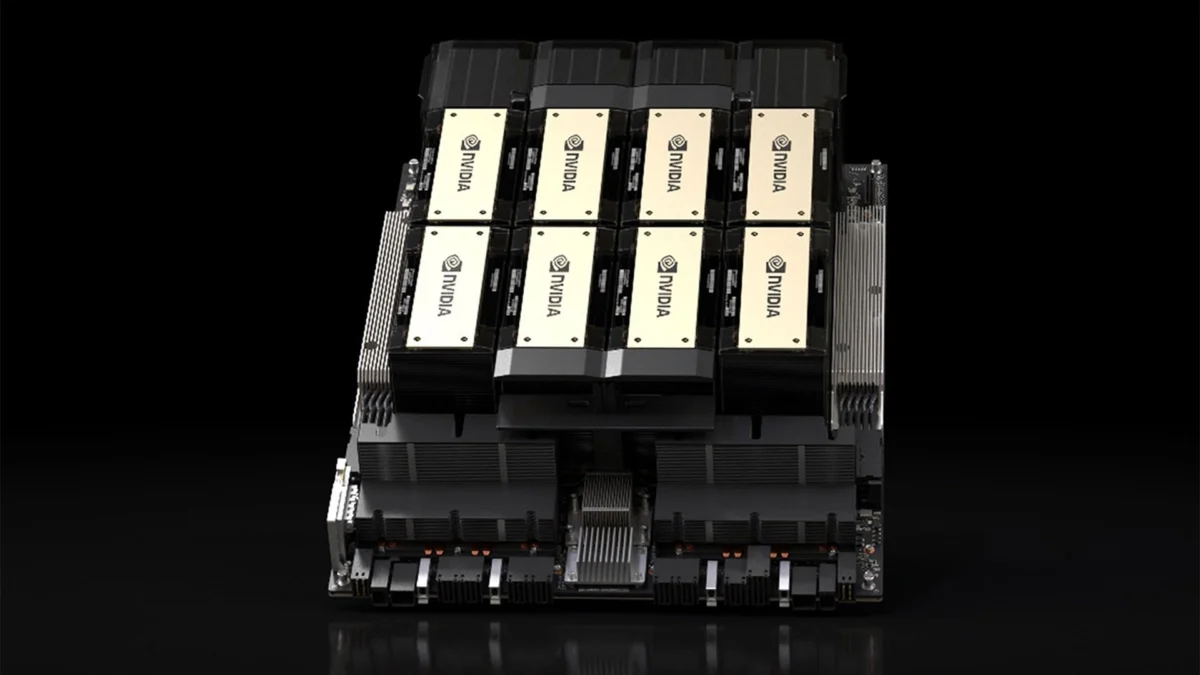
Despite a web of stringent U.S. export controls, high-end artificial intelligence accelerators—the critical "brains" powering the next generation of generative AI—are finding their way into Chinese data centers with alarming efficiency. A recent, exhaustive report from the Washington-based nonprofit C4ADS, which receives substantial backing from the U.S. government, has pulled back the curtain on a sophisticated, multi-layered illicit trade network. This report suggests that the global effort to throttle China’s technological ascent is being undermined by a "gray market" that operates with the complexity of a state-sponsored espionage operation.
The paradox is stark: Washington prohibits the sale of advanced AI hardware to China on national security grounds, citing fears of military advancement, while the Chinese Communist Party (CCP) has officially banned the purchase of such hardware. Yet, the reality on the ground—or rather, inside Chinese server farms—is that these chips are arriving in significant quantities, fueling a surge in domestic AI capabilities that many Western analysts assumed would be stifled by trade restrictions.
The Mechanics of Smuggling: A Three-Pronged Approach
The C4ADS report categorizes the illicit flow of high-end hardware, specifically NVIDIA’s H100 and A100 GPUs, into three distinct operational avenues. Each path represents a different level of sophistication, ranging from institutional exploitation to complex financial obfuscation.
1. The Institutional Backdoor
Research institutions and universities in China often serve as the first point of entry. By leveraging academic exchange programs and partnerships that ostensibly focus on "open science," these entities are sometimes able to procure hardware under the guise of research projects. Once the hardware clears customs, it is often diverted from university labs into larger commercial or military-linked data centers, effectively bypassing the end-user verification processes designed to track such high-value assets.
2. The Southeast Asian "Drop-Shipping" Route
Perhaps the most geographically fluid method involves the use of intermediary nations. Chips are legally exported from the U.S. to countries in Southeast Asia, where regulations may be more porous or where oversight is less stringent. Once the cargo arrives, it is repackaged and shipped to China, often via transit hubs that specialize in "re-exporting" high-tech components. This makes the trail difficult for U.S. regulators to follow, as the final destination is obscured by several layers of legitimate international trade documentation.
3. The Matryoshka Shell Game
The most complex mechanism identified by C4ADS is the use of shell companies. Borrowing a page from money-laundering playbooks, procurement networks establish layers of intermediary firms—often referred to as a "matryoshka-doll" structure. A shell company in a neutral jurisdiction purchases the chips, which are then sold to another shell company, and so on, until the hardware is finally transferred to an entity within mainland China. By the time the chips reach their final destination, the original chain of custody has been severed, leaving U.S. investigators with little more than a dead end.
Chronology of the Silicon War
To understand how we reached this point of systemic leakage, one must look at the escalation of the U.S.-China technology war over the past decade.
- 2018–2019: The Trump administration initiates the first major volley in the semiconductor war, placing Huawei on the Entity List and effectively cutting off its access to U.S.-designed chips.
- October 2022: The Biden administration issues a sweeping set of export controls, explicitly targeting the sale of high-end AI chips (NVIDIA A100/H100) and semiconductor manufacturing equipment to China.
- Late 2022–Early 2023: Early reports of a booming "underground" market begin to surface. Prices for smuggled NVIDIA chips in Shenzhen’s electronics markets skyrocket, sometimes doubling the official retail price.
- October 2023: The U.S. Bureau of Industry and Security (BIS) updates the controls to close loopholes, specifically targeting the "performance density" of chips, yet the flow continues.
- 2024 (Present): Reports from organizations like C4ADS and Epoch AI confirm that the illicit trade has not only persisted but matured into a professionalized logistics network.
Supporting Data: The Scale of the Leakage
The C4ADS report emphasizes that its findings represent only the "tip of the iceberg." Because they can only track hardware that is explicitly documented, the total volume of chips entering China is likely significantly higher.
Supporting this, a separate study by Epoch AI provides a sobering look at the composition of China’s total AI compute capacity. Their research estimates that approximately one-third—and potentially the majority—of the current AI compute power available in China is driven by smuggled or diverted hardware. This suggests that the impact of U.S. export controls on Chinese AI development has been, at best, a temporary friction point rather than a structural barrier.
Furthermore, the price premium for these chips—which can reach 200% or 300% of the market value—indicates a highly motivated buyer pool. The willingness of Chinese tech giants and military-linked labs to pay these astronomical prices proves that the strategic value of these chips outweighs the economic burden of smuggling them.
Official Responses and the Regulatory Dilemma
The U.S. Department of Commerce has consistently argued that its export control regime is the most effective tool for maintaining a "small yard, high fence" strategy. In response to the C4ADS findings, officials have noted that they are constantly updating their lists of restricted entities and tightening enforcement.
However, the challenge remains one of resource allocation. Monitoring the global movement of millions of individual chips is a logistical nightmare. The Department of Commerce relies on end-user certifications, but as the C4ADS report highlights, these documents are easily forged or bypassed by shell companies.
On the other side of the aisle, Chinese officials have maintained a public stance of defiance, claiming that U.S. "tech hegemony" will only accelerate China’s push for "indigenous innovation." While the CCP claims to prohibit the purchase of foreign chips to encourage domestic development, industry insiders suggest that the state quietly tolerates, and perhaps even facilitates, the gray market to keep its domestic AI sector competitive in the interim.
Strategic Implications: What Happens Now?
The persistence of this gray market creates several long-term challenges for U.S. national security and the global semiconductor industry:
1. Erosion of Deterrence
The primary goal of export controls is to delay China’s progress in AI-driven military applications, such as autonomous drone swarms and high-speed threat detection. If these chips are flowing into China despite bans, the "technological window" the U.S. hoped to maintain is effectively closing.
2. Market Distortion
Legitimate technology firms that comply with U.S. law are finding themselves at a competitive disadvantage. While they are restricted from selling to the Chinese market, their hardware is still arriving there via the gray market, enriching intermediaries while the original manufacturers lose control over their supply chains and risk brand reputation damage.
3. The Push for "Total Decoupling"
The findings from C4ADS may force the U.S. government to consider even more drastic measures. This could include mandatory tracking of all high-end chips through "digital passports" or blockchain-based supply chain verification, or even broader restrictions that punish intermediaries in third-party countries who are caught facilitating the trade.
4. Acceleration of Chinese Domestic Capability
By allowing the Chinese AI industry to remain functional with U.S. hardware, the gray market provides a bridge. It allows Chinese firms to continue training large language models and developing advanced software, which eventually creates the ecosystem necessary to support domestic chips once they eventually reach parity with Western designs.
Conclusion
The C4ADS report serves as a wake-up call to the reality that in a globalized economy, "hard" borders are incredibly difficult to maintain in the world of digital infrastructure. The silicon shadow market is not merely a collection of black-market merchants; it is a sophisticated, adaptive response to geopolitical pressure.
As Washington moves forward, the question is no longer whether they can stop the flow of chips entirely, but rather how much they can disrupt it to make the costs of acquisition unsustainable for even the most well-funded Chinese actors. Until the loophole of shell companies and secondary transit hubs is addressed with international cooperation, the "Silicon Shadow" will continue to cast a long, dark reach over the future of the global AI arms race.


 Reynand Wu
 Layla Zulfa