Evan Lee Salim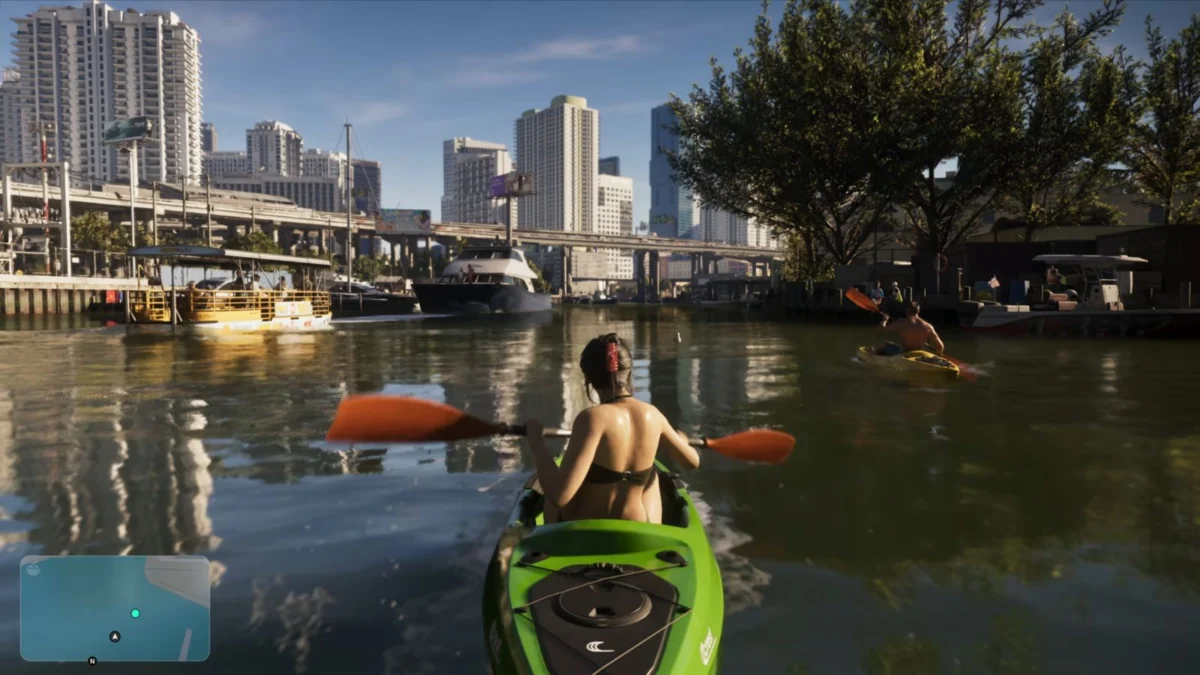
The anticipation surrounding Grand Theft Auto 6 has reached a fever pitch, with every frame released by Rockstar Games scrutinized by millions of fans worldwide. However, recent comments from Take-Two Interactive CEO Strauss Zelnick have shed new light on the company’s marketing strategy. Far from being a standard gameplay showcase, the 30-minute “Extended Look” broadcast on Netflix was, according to Zelnick, a calculated, unconventional "tutorial" designed to prepare players for the complexity of the upcoming title.
The Evolution of the Gameplay Showcase
On August 27, Rockstar Games deviated from industry norms. Rather than releasing a highly edited, voice-over-heavy trailer, the developer debuted a 30-minute, raw gameplay sequence. Broadcast first on Netflix, the video was entirely devoid of narration, allowing the sheer scale and mechanical depth of the Vice City landscape to speak for itself.
For the average viewer, the footage appeared to be a standard sneak peek. It highlighted the mechanics of mission initiation, the density of side activities, and the seamless transition between open-world exploration and narrative-driven objectives. However, for Take-Two’s leadership, this was a strategic move to socialize players with the game’s unique systems before launch.
Rockstar has previously noted that showcasing GTA 6 is an “extremely tough” challenge. The game possesses so much depth and so many emergent systems “under the hood” that traditional trailers struggle to capture the full scope of the player experience. By providing a long-form, unadorned look at gameplay, Rockstar opted to show, rather than tell, effectively conditioning the audience for the game’s mechanics.
Strauss Zelnick’s Perspective: A “Different Kind of Proposition”
Speaking at a recent GamesBeat Insider event, Strauss Zelnick elaborated on the philosophy behind this marketing shift. While acknowledging the immense global awareness surrounding the Grand Theft Auto brand, Zelnick emphasized that even a title as anticipated as GTA 6 requires a structured approach to conversion.
"Part of our marketing is to show people, ‘Hey, what’s up?’ And in certain cases, actually, we have to give something that’s actually called a tutorial to say to people, ‘This is how you play it before people are going to be willing to spend their money to try,’" Zelnick stated.
He lauded the Rockstar team for their innovative approach, noting that while the video didn’t feel like a traditional, sterile tutorial—the kind often found in the opening minutes of a game—it performed the same foundational work. "What Rockstar did was incredible, but there was an element of tutorial baked in there, right? It just was a different kind of proposition. If you look at Rockstar’s marketing previously for Grand Theft Auto titles, there are actual tutorials. This was just a different way of giving the same information, which I thought was really impressive."
By embedding these instructional elements into a high-octane gameplay preview, Rockstar successfully managed expectations and reduced the “barrier to entry” for players, ensuring they understand the game’s rhythm and complexity long before they reach the day-one loading screen.
Chronology: The Road to Vice City
The path to the November 19 release date has been marked by a series of deliberate, high-impact milestones:
- Initial Reveal: The first trailer shattered records, confirming the return to the neon-soaked streets of Vice City and introducing the protagonists, Jason and Lucia.
- The Netflix Partnership: The decision to broadcast the extended gameplay look via Netflix represented a massive shift in how gaming content is distributed, tapping into a broader entertainment audience.
- Viral Speculation and Teasers: Following the extended look, the community began analyzing every frame. Artists associated with the soundtrack began dropping subtle hints, and platforms like Spotify integrated interactive elements to maintain momentum.
- Public Awareness Campaigns: As of late August, the marketing has moved into the physical world. Miami has become the epicenter of the campaign, with the Kaseya Center—home to the Miami Heat—sporting prominent “Vice City” signage, signaling a total immersion strategy.
- Voice Talent Confirmation: The community’s investigative nature led to the confirmation of actor Stephen Root as the voice of Brian Heder. Root, known for his roles in Barry and King of the Hill, had attempted to keep his involvement under wraps, but the detective work of the fanbase eventually forced the truth into the light.
Supporting Data: Why the "Tutorial" Approach Matters
The gaming industry has shifted toward increasingly complex open-world systems. In the era of the PlayStation 2, tutorials were often relegated to a separate, skippable mission. In GTA 6, however, the systems are reportedly so interconnected that the user interface and the game world itself are designed to guide the player organically.

Data from the “Extended Look” suggests that the game’s economy, police AI, and mission branching systems are significantly more robust than those seen in GTA 5. By presenting these systems in a 30-minute block, Rockstar is effectively "pre-training" their player base. This is a vital strategy for a game that aims to be the most immersive simulation ever created by the studio.
Furthermore, the choice of Netflix as a distribution partner serves a dual purpose: it legitimizes the game as a piece of prestige entertainment rather than just a software product, and it reaches a demographic that may be familiar with the brand but requires a nudge toward the specific mechanical changes of the new installment.
Implications for the Future of Game Marketing
The strategy employed by Rockstar and Take-Two indicates a potential paradigm shift in how AAA games are marketed. For years, the industry relied on cinematic trailers that revealed very little about the actual "feel" of a game. Rockstar’s pivot to "educational gameplay" suggests a new confidence in the product.
1. Transparency as a Marketing Tool
By stripping away the polish of a cinematic trailer and showing raw gameplay, Rockstar has signaled that they are not afraid of how the game looks in motion. This level of transparency builds trust with the consumer, particularly in an era where “downgraded” graphics and over-promised features are common points of contention.
2. The Power of "Organic" Learning
If the "tutorial-as-marketing" model proves successful, we may see other publishers follow suit. Instead of forced, scripted tutorials at the start of a game, developers might release "gameplay primers" that allow players to learn mechanics through observation. This respects the player’s intelligence and allows them to hit the ground running upon release.
3. The Multi-Platform Integration
The use of streaming platforms like Netflix and audio platforms like Spotify shows that Rockstar is treating GTA 6 as a cultural touchstone. By leaking information across different media, they are ensuring that the game is not just a destination for gamers, but a focal point for the wider pop-culture zeitgeist.
The Final Stretch
As the November 19 release date approaches, the atmosphere in the industry is one of cautious, breathless anticipation. The collaboration between the developers and the marketing team has created a unique narrative arc for the game’s release.
From the subtle teasers dropped by musicians to the high-profile ads in Miami, every piece of the puzzle is falling into place. The confirmation of talent like Stephen Root and the active engagement of the developers in explaining their marketing philosophy—as Zelnick did—shows that the GTA 6 rollout is a masterclass in modern branding.
Ultimately, the “tutorial” approach is a testament to the game’s ambition. Rockstar isn’t just selling a game; they are inviting players into a world they have spent years meticulously crafting. By providing the tools to understand that world before the player even picks up a controller, they have ensured that when November 19 arrives, the world of Grand Theft Auto 6 will be ready to be inhabited, explored, and conquered by millions.
Whether this strategy will lead to the most successful launch in gaming history remains to be seen, but one thing is certain: Rockstar Games has once again rewritten the rules of the game—before the game has even begun.


 Nila Kartika Wati
 Nana Wu