Asep Darmawan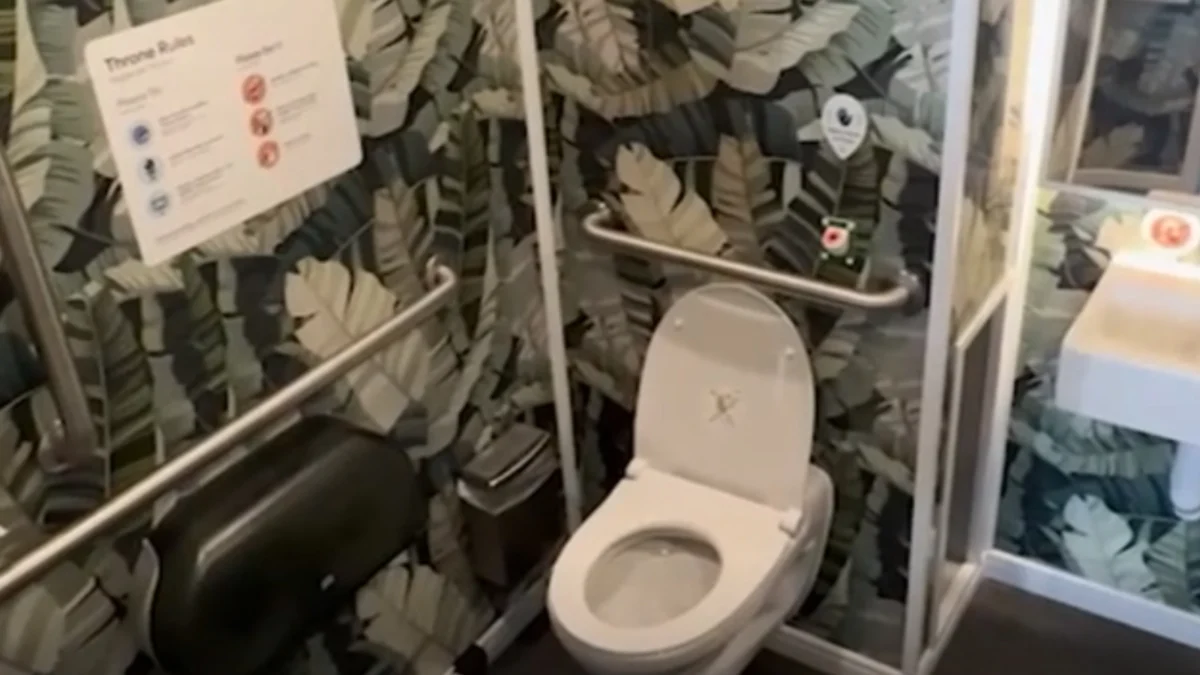
New York City, a metropolis defined by its relentless pace, is applying that same philosophy to one of the most fundamental human needs: the public restroom. In a bold, $4 million pilot program that merges urban infrastructure with Silicon Valley-style automation, the city has begun rolling out "Throne" units—futuristic, autonomous bathrooms that prioritize efficiency, hygiene, and strict time management.
As the first units debuted in September, they sparked immediate debate among urban planners, privacy advocates, and daily commuters. These aren’t your typical park bathrooms; they are high-tech, self-contained units that treat time as a precious commodity, enforcing a rigid 10-minute limit that, if exceeded, results in an automated eviction.
The Chronology of the Pilot Program
The journey toward the "Throne" initiative began as a response to a long-standing grievance among New Yorkers: the chronic shortage of accessible, sanitary public restrooms. With only approximately 1,000 public facilities serving a population of over eight million, the city has long been in the midst of a bathroom crisis.
- Initial Planning (2023–2024): City officials sought a solution that avoided the exorbitant costs and lengthy construction timelines associated with permanent, sewer-connected facilities. The partnership with Throne Labs was established to provide modular, rapid-deploy units.
- September 2026: The first two "Throne" units became operational. These initial sites were designed as testing grounds to evaluate user behavior, sanitation efficacy, and public reception.
- The Rollout Phase (Late 2026–2027): The city has committed to a total of 17 units to be distributed across all five boroughs. This phased implementation is intended to provide data-driven insights into which neighborhoods require the most support and how the automated systems hold up under heavy urban usage.
Engineering the Future: How the "Thrones" Work
The technology behind these units is a departure from traditional plumbing. Because the "Thrones" do not connect to the city’s aging subterranean sewer or water infrastructure, they are significantly cheaper and faster to install. This decoupling from the grid allows the city to place them in high-traffic areas where digging for pipes would otherwise be prohibitive.
Accessing a unit is an exercise in modern gatekeeping. Potential users cannot simply walk in; they must interact with the digital infrastructure. A user must text a specific phone number displayed on the unit to unlock the door, or utilize a pre-distributed tap card provided to community organizations.
Once inside, the user enters a touch-free environment designed for maximum hygiene. The interiors feature plant-themed wallpaper to provide a "softer" aesthetic, alongside amenities such as free menstrual products. However, the serenity is punctuated by the ticking of an invisible clock. As the 10-minute mark approaches, a speaker system issues a polite but firm warning. When the time expires, the system defaults to a blunt ultimatum: "Attention: Your use time has expired. The door is opening now."
The door then slides open automatically, regardless of whether the occupant has finished, effectively removing any sense of privacy for those who linger too long.
When Technology Becomes an Enforcer
The mechanism for ensuring compliance is perhaps the most controversial aspect of the program. If a user refuses to vacate the unit after the door has been forced open, the system triggers an alert to Throne Labs employees.
This creates a secondary layer of enforcement:
- Remote Monitoring: The system tracks occupancy and timer status in real-time.
- On-Site Intervention: If an occupant remains, staff members may be dispatched to the scene to investigate.
- Law Enforcement Escalation: In cases where an occupant refuses to leave or causes a disturbance, the manufacturer’s protocols allow for the involvement of the New York Police Department.
This chain of command highlights the shift from "public amenity" to "managed utility." The city is essentially outsourcing the oversight of public hygiene to a private entity equipped with the power to summon police if a user overstays their welcome.

Implications for Public Equity and Accessibility
While the city characterizes the "Throne" program as a breakthrough in public service, social advocates are sounding the alarm regarding equity. The primary hurdle is the "digital divide." By requiring a smartphone or a specific, hard-to-obtain tap card, the city is creating a barrier to entry that disproportionately affects the city’s most vulnerable populations.
"The very people who need these facilities the most—those experiencing homelessness or those without consistent access to data plans—are the ones being effectively barred from entry," noted one advocate. "A public bathroom should be a right, not an app-exclusive service."
Furthermore, the 10-minute limit ignores the reality of disability, chronic illness, or the needs of parents with young children. While the city claims the timer is necessary to prevent loitering and ensure a high turnover rate for the benefit of all, critics argue that such strict metrics are fundamentally at odds with the human reality of bathroom usage.
Global Context: The Rise of the Smart Restroom
New York City’s experiment does not exist in a vacuum. Globally, municipalities are grappling with the same tension between hygiene, maintenance, and public access.
In China, the technological approach to sanitation has taken even more drastic forms. Earlier this year, reports emerged of self-driving robotic toilets capable of moving to a user’s bedside and performing autonomous cleaning cycles. Additionally, some "smart" toilets in Chinese municipalities have made headlines for a more predatory model of service: forcing users to watch mandatory advertisements on a screen before the machine will dispense toilet paper.
These international examples suggest a growing trend of "sanitation as a service," where public infrastructure is increasingly mediated by data collection, advertising, or, as in New York, stringent time-management protocols.
Official Responses and Future Outlook
City officials defend the program by emphasizing the scalability and cleanliness of the units. "We are providing a clean, safe, and dignified option where previously there was nothing," a representative for the pilot program stated. They argue that the 10-minute limit is a necessary deterrent against the misuse of public facilities, which has been a primary reason for the closure of traditional public bathrooms in the past.
However, the pilot program will face significant scrutiny in the coming months. The success of the 17-unit rollout will depend on whether the city can balance its need for efficiency with the reality of its citizens’ diverse needs.
Key Metrics for Success:
- Utilization Rates: How many people successfully use the units daily versus those who are deterred by the registration process?
- Maintenance Downtime: How effectively do the non-sewer-connected systems handle long-term usage?
- Incident Reports: How frequently are employees or police forced to intervene due to the 10-minute timer?
As New York City continues to test the limits of urban technology, the "Throne" project stands as a testament to the city’s willingness to innovate at the risk of controversy. Whether these robotic restrooms become a fixture of the city landscape or a cautionary tale of "smart" city overreach remains to be seen. For now, New Yorkers are advised to keep their phone scrolling to a minimum—the door is watching, and it is ready to open.


 Layla Zulfa
 Laily UPN