Siti Muinah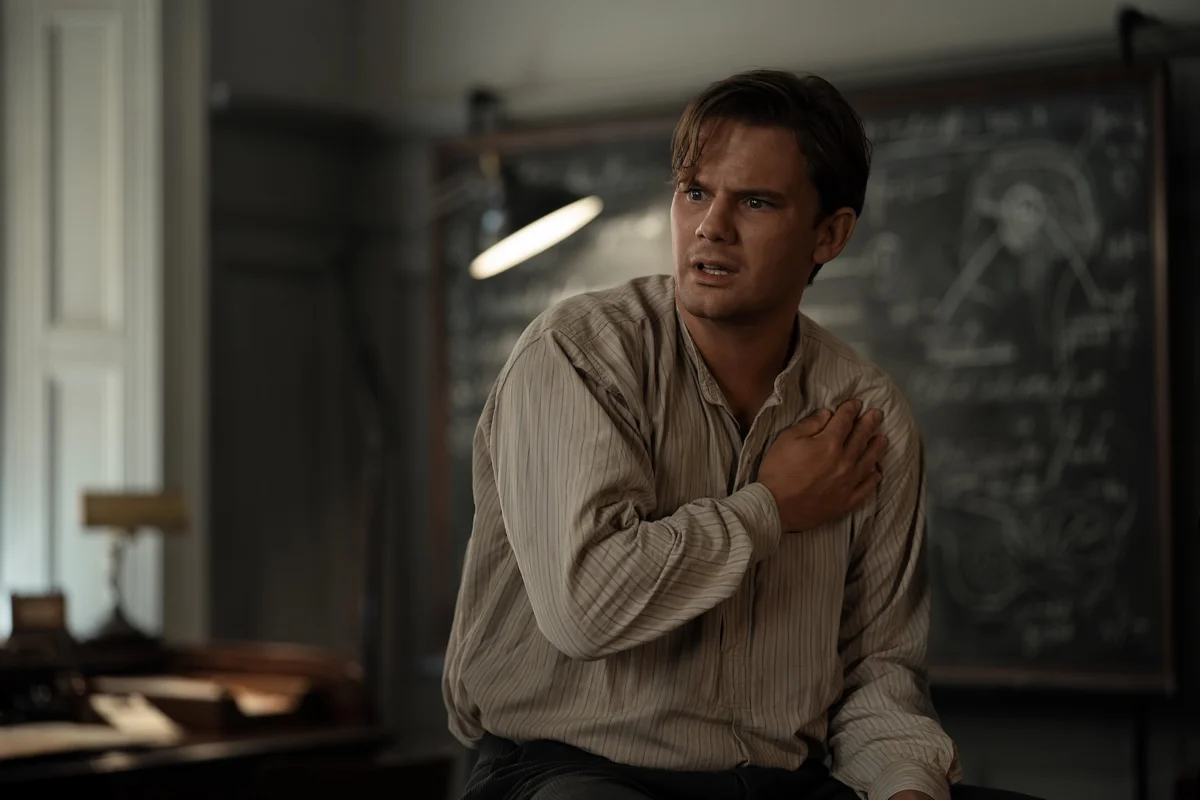
Warning: This post contains mild spoilers for Outlander: Blood of My Blood season two, episode one, titled "Remembrance Day."
The Outlander universe has always been defined by its intricate tapestry of time, fate, and the cyclical nature of human connection. As the prequel series Outlander: Blood of My Blood embarks on its second season, it has done more than simply expand the origin stories of Jamie Fraser and Claire Randall; it has masterfully bridged the gap between the 1920s and the 1940s, reintroducing beloved figures who were instrumental in the original series.
In the season two premiere, "Remembrance Day," audiences were treated to the return of two iconic figures from the "Mothership" show: the scholarly Reverend Reginald Wakefield and his ever-attentive, mystical-minded housekeeper, Mrs. Graham. Their appearance is not merely a nostalgic nod to the past but a calculated narrative maneuver that deepens the mythology of the Fraser-Mackenzie lineage.
Main Facts: A Convergence of Timelines
For those who have followed Diana Gabaldon’s literary saga or the television adaptation since its 2014 debut, the Reverend and Mrs. Graham are familiar fixtures of Inverness. In the original series, set primarily in the mid-20th century, the Reverend Wakefield served as a vital bridge between Claire’s modern sensibilities and the historical truths she desperately sought, while Mrs. Graham—a woman deeply in tune with the "old ways" of Scotland—provided the necessary, if cryptic, guidance that helped Claire navigate the temporal mysteries of the standing stones at Craigh na Dun.
The decision to feature younger versions of these characters in the 1920s timeline of Blood of My Blood provides a compelling narrative anchor. As the protagonist, Henry, finds himself ensnared within the cold, oppressive walls of an Inverness insane asylum, the presence of the Reverend and Mrs. Graham serves as an organic bridge. They are not forced cameos; they are woven into the very fabric of the location and the era, reflecting the consistent, almost predestined, gravity that Inverness holds in the Outlander lore.
Chronology: Mapping the Fraser Legacy
To understand the significance of these reappearances, one must look at the timeline established by the creative team. The Outlander franchise has always toyed with the concept of "the circle," where characters appear at different stages of their lives to influence events that ripple across centuries.
- 1920s (Blood of My Blood): We encounter a younger, perhaps more idealistic, Reverend Wakefield and a Mrs. Graham who is already beginning to sharpen her intuition regarding the supernatural elements of the Highlands.
- 1940s (Outlander Season 1): The characters have aged into their roles as trusted confidants. The Reverend is established as a local historian and academic, while Mrs. Graham is the steadfast keeper of the Wakefield household. Their role in researching Jack Randall and facilitating Claire’s understanding of the stones remains one of the foundational pillars of the entire series.
By placing these characters in the 1920s, the writers are effectively creating a "pre-history" that explains why these two individuals were positioned to help Claire two decades later. It implies a generational duty, suggesting that their involvement with time travelers—or those touched by the stones—is a vocation rather than a coincidence.
Supporting Data: The Creative Philosophy
The integration of these characters was a conscious choice by the production team, intended to reward long-term fans while maintaining the integrity of the prequel’s plot. During a recent roundtable discussion, Executive Producer Maril Davis offered insight into the creative process behind these cameos.
"Their story fit organically into the Henry story in a way," Davis explained. "Obviously, when we see them in Outlander or the Mothership, they’re older characters, so it naturally, age-wise, fit. And it was such a natural progression to have Henry interact with both of them, and it worked out so well."
This approach highlights a shift in how modern franchise storytelling is handled. Instead of relying on "fan service" that disrupts the narrative flow, the production team focused on "natural alignments." Davis emphasized that these "Easter egg moments" are designed to feel entirely enmeshed in the current storyline. They do not arrive out of the blue; they emerge from the logic of the world the writers have meticulously constructed. By grounding these appearances in the 1920s Inverness asylum arc, the series ensures that even a newcomer to the Outlander franchise understands the weight of these characters’ presence, while veterans are treated to a deeper layer of subtext.
Official Responses: The Weight of Destiny
The season two premiere concludes on a note that has sent ripples of speculation through the fan community. In a pivotal scene, Mrs. Graham confronts Henry with a profound realization: she acknowledges that he has traversed the veil of time, arriving via the stones.
This interaction serves as the catalyst for the remainder of the season. When Henry pleads, "Will you help me?" the response—or lack thereof, left as a cliffhanger—sets the stage for an exploration of the moral and metaphysical obligations of those who know the truth about time travel.
The production team has been tight-lipped about the exact nature of Mrs. Graham’s abilities, but the implications are clear. She is not merely a housekeeper; she is a gatekeeper. By establishing her as a character who has understood the "old ways" since at least the 1920s, the series confirms that the magic of the stones is not something Claire stumbled upon, but rather a constant, ancient presence that certain people are born to recognize.
Implications: The Future of the Prequel
What does this mean for the trajectory of Blood of My Blood? The inclusion of these characters suggests that the prequel is not just about the past—it is about the preparation for the future. By linking the 1920s characters to the 1940s events, the show is signaling that Outlander is becoming a cohesive, multi-generational saga where no character’s existence is accidental.
The implications for Henry’s journey are significant. If he is being guided by those who understand the mechanics of the stones, his path becomes one of intentionality rather than happenstance. This shifts the genre tone slightly, moving from a survivalist drama into something more akin to a high-stakes mystery where historical knowledge and mystical insight are the most potent weapons.
Furthermore, this narrative strategy invites the audience to re-examine the original Outlander series. Every time a viewer re-watches the early seasons, the presence of the Reverend and Mrs. Graham will now be viewed through the lens of their younger selves. We are no longer watching simple background characters; we are watching individuals who have lived through the turbulence of the 1920s, who have seen the impossible, and who have chosen to remain the silent, steady guardians of the truth.
As fans eagerly await the next episode, the central question remains: To what extent will Mrs. Graham influence Henry’s fate? If history—or perhaps, the Outlander timeline—is any indication, her involvement will be pivotal. The stones do not just move people through time; they move them through lives, linking souls across the decades in a grand, Scottish design that defies the boundaries of death and age.
In the coming weeks, as we watch the mystery of the asylum and the potential for time travel unfold, we are reminded of why this series remains so compelling. It is a story about the threads that connect us all—the teachers, the housekeepers, the travelers, and the legends. And in the misty hills of Inverness, those threads are tighter than ever.
New episodes of Outlander: Blood of My Blood premiere on Starz every Friday.

 Basiran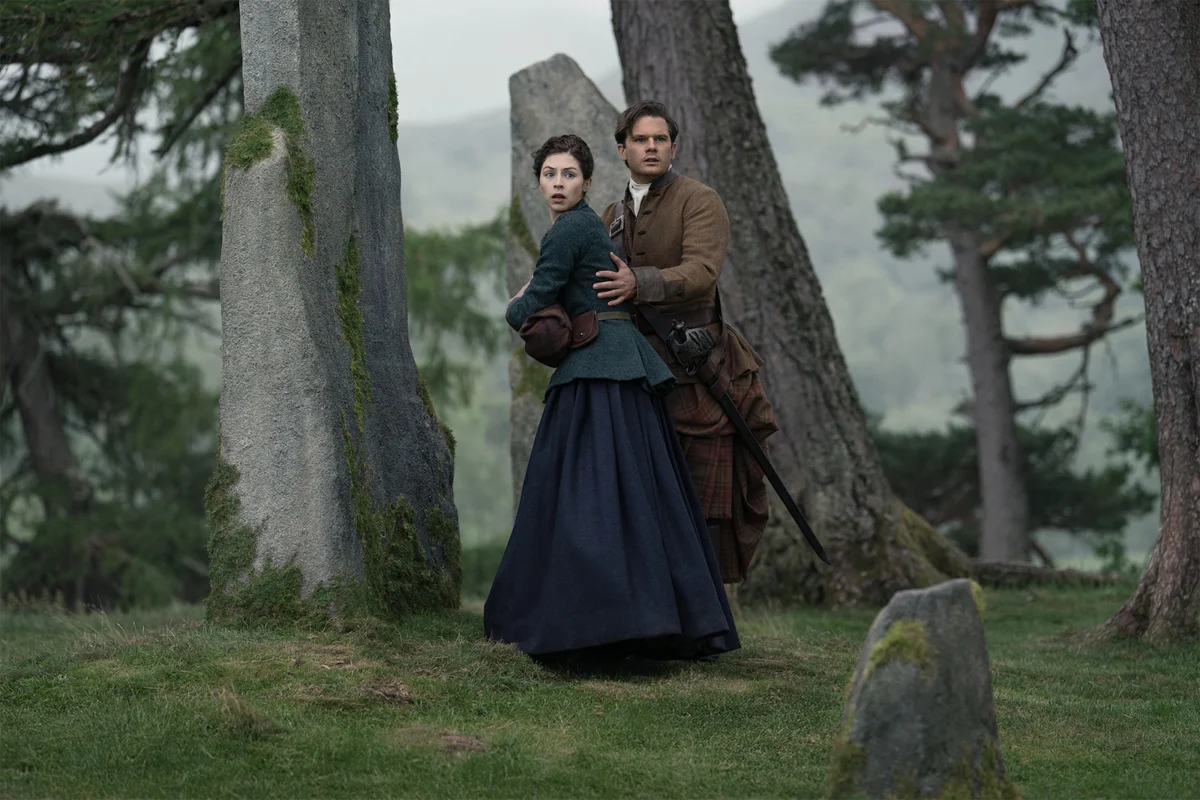
 Jia Lissa