Lina Hope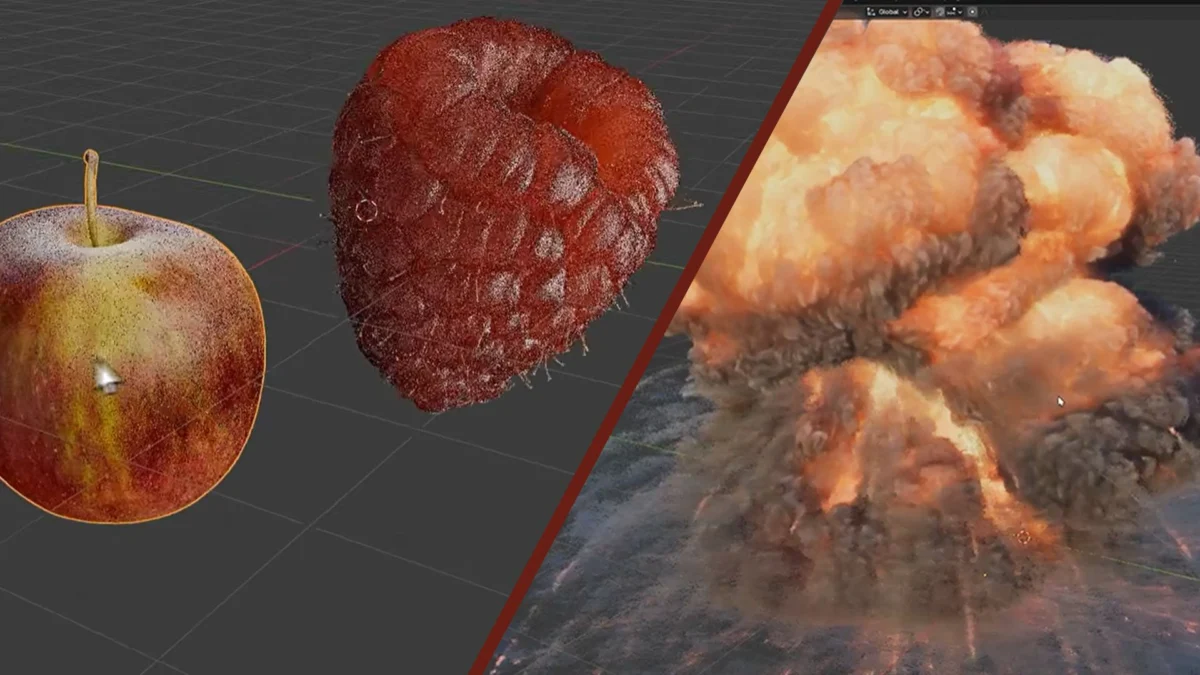
The landscape of 3D modeling and digital animation is currently undergoing a seismic shift, and the epicenter of this change is Blender. As the industry standard for open-source 3D creation, Blender continues to evolve, bridging the gap between traditional geometric modeling and cutting-edge machine learning-based reconstruction. The upcoming release of Blender 5.3, currently in the alpha phase and slated for a full public launch in November, promises to be a watershed moment for the software. Among its suite of new features, one in particular has captured the attention of the global creative community: native support for 3D Gaussian Splatting.
This integration represents a significant leap forward in how artists interact with real-world data, moving beyond the laborious manual process of polygon modeling into the realm of rapid, photorealistic volumetric capture.
The Core Innovation: What is Gaussian Splatting?
To understand the magnitude of this update, one must first understand the technology it introduces. Gaussian Splatting is a relatively recent innovation in computer vision that allows for the creation of photorealistic, interactive 3D scenes derived from a series of ordinary photographs or short video clips.
Unlike traditional 3D models—which are constructed from rigid meshes, vertices, edges, and polygons—a Gaussian splat is a "point-based" representation. It consists of millions of microscopic, overlapping 3D blobs (or "splats"). Each individual splat carries specific data attributes, including its precise position in 3D space, its orientation (rotation), scale, color, and transparency (alpha). When viewed together, these millions of points coalesce into a scene that is nearly indistinguishable from reality.
For 3D artists, the implications are profound. Traditionally, recreating a real-world object in 3D required hours or even days of "photogrammetry," a process where an artist captures hundreds of photos and uses software to generate a mesh that often requires extensive "cleanup" to remove artifacts and noise. Gaussian Splatting bypasses much of this friction, offering a faster route to high-fidelity, real-world digital assets.
Chronology of the Blender 5.3 Integration
The journey toward native Gaussian Splat support within Blender has been swift, driven by the rapid maturation of the technology in the wider research community.
- Early 2023: The research paper for 3D Gaussian Splatting was published, sparking a firestorm of interest in the computer graphics industry.
- Late 2023 – Early 2024: Third-party developers began creating "hacks" and specialized add-ons for Blender. Tools like Brush and COLMAP became the primary conduits for artists attempting to bring splats into their projects. However, these workflows were often clunky, requiring external processing and manual file conversion.
- Mid-2024: As the community demand for native support reached a fever pitch, the Blender Foundation officially committed to integrating Gaussian Splatting into the core software architecture.
- Q3 2024: The development branch for Blender 5.3 was opened, with initial commits surfacing in the repository to allow the direct import of
.PLY(Polygon File Format) and.SPZ(Splat Zip) files. - November 2024 (Expected): The full, stable release of Blender 5.3 is scheduled to go live, marking the first time native support will be available to the general public without the need for complex, third-party workarounds.
Technical Specifications and Implementation
Blender 5.3’s implementation is designed to be as accessible as possible, while acknowledging the inherent complexity of the format. Users can currently import Gaussian Splats directly into their workspace, where the software treats them as a distinct data type.
Rendering Capabilities
One of the most impressive aspects of this update is the broad compatibility with Blender’s existing render engines. Users are not confined to a single view mode; they can visualize and render their splats using:
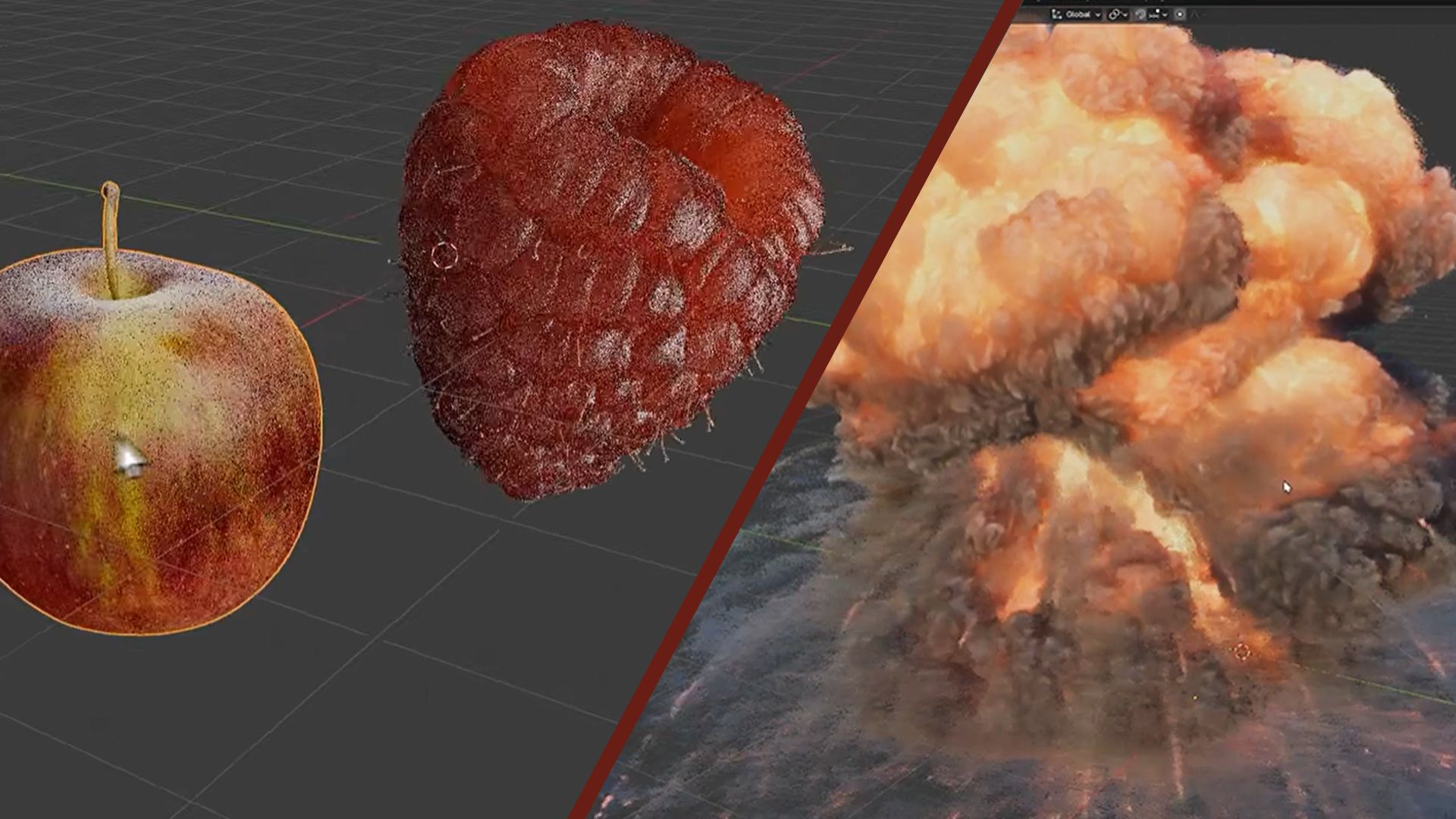
- Workbench: Ideal for real-time viewport manipulation and scene layout.
- EEVEE: The real-time engine, which provides a balance between speed and quality for viewing splats.
- Cycles: The production-grade path-tracing engine, which allows for high-quality final renders.
Current Limitations
While the excitement is palpable, the development team has been transparent about the current limitations of the system. As it stands in the alpha version, there are four key hurdles that users should anticipate:
- Performance Constraints: The rendering of millions of splats is computationally intensive. Users with older hardware or entry-level graphics cards may experience lag during viewport navigation.
- Color Space Issues: The current pipeline assumes an sRGB color space. Because Cycles and EEVEE operate in a linear color space, discrepancies in color fidelity can occur.
- Opacity and Radiance: Areas characterized by low opacity or high radiance—such as glass, water, or light sources—do not always render with 100% accuracy, often appearing "noisy" or inconsistent compared to standard geometric objects.
- Transform Limitations: The "Apply Transform" function currently fails to correctly account for the unique spherical harmonics and complex orientation attributes of the splats. If a user attempts to rotate or scale a splat using standard modifiers, the results may be unpredictable.
Implications for the Creative Industry
The inclusion of Gaussian Splatting in Blender 5.3 is not merely a feature addition; it is a signal of the industry’s changing priorities. By democratizing access to this technology, the Blender Foundation is positioning its software at the forefront of the "Reality Capture" revolution.
Efficiency for VFX and Archviz
For architectural visualization (ArchViz) and visual effects (VFX) artists, this could reduce the time required to create background environments from days to hours. A user could walk through a location with a smartphone, process the footage, and import the resulting splat into Blender to serve as a high-fidelity reference or even a final background asset.
The Problem of Relighting
While Blender 5.3 solves the import problem, a wider industry issue remains: relighting. A Gaussian Splat is essentially "baked" lighting; it contains the light information captured at the time of the photos. If you move a light source in your Blender scene, the splat itself does not react to the new lighting environment. However, companies like Chaos (the makers of V-Ray) are already working on solutions to this, suggesting that the industry is moving toward a future where splats will eventually be as malleable as traditional 3D objects.
Expert Insight: A New Frontier
Industry observers view this integration as the beginning of a hybrid era in 3D graphics. "We are seeing the convergence of traditional CAD-style modeling and AI-driven reconstruction," says Joe, a freelance journalist and creative technology analyst. "Blender is the perfect vessel for this. By integrating splats, they aren’t just adding a tool; they are acknowledging that the future of 3D content creation will be increasingly defined by how we translate the physical world into the digital one."
Conclusion
As we approach the November release of Blender 5.3, the creative community is bracing for a shift in workflow. While the current implementation of Gaussian Splatting is clearly an early-stage feature—replete with technical caveats and performance challenges—it offers a glimpse into a more efficient, photorealistic future.
For the freelancer, the studio artist, and the digital hobbyist, the message is clear: the barrier between the camera lens and the 3D viewport is dissolving. As Blender continues to refine this tool, we can expect that even the current limitations regarding lighting and transformation will be addressed, eventually turning Gaussian Splats into a standard, indispensable part of the digital artist’s toolkit. For those looking to stay ahead of the curve, now is the time to start experimenting with the alpha builds and familiarizing yourself with the nuances of this transformative format.

 Lina Irawan
 Laily UPN