Azzam Bilal Chamdy
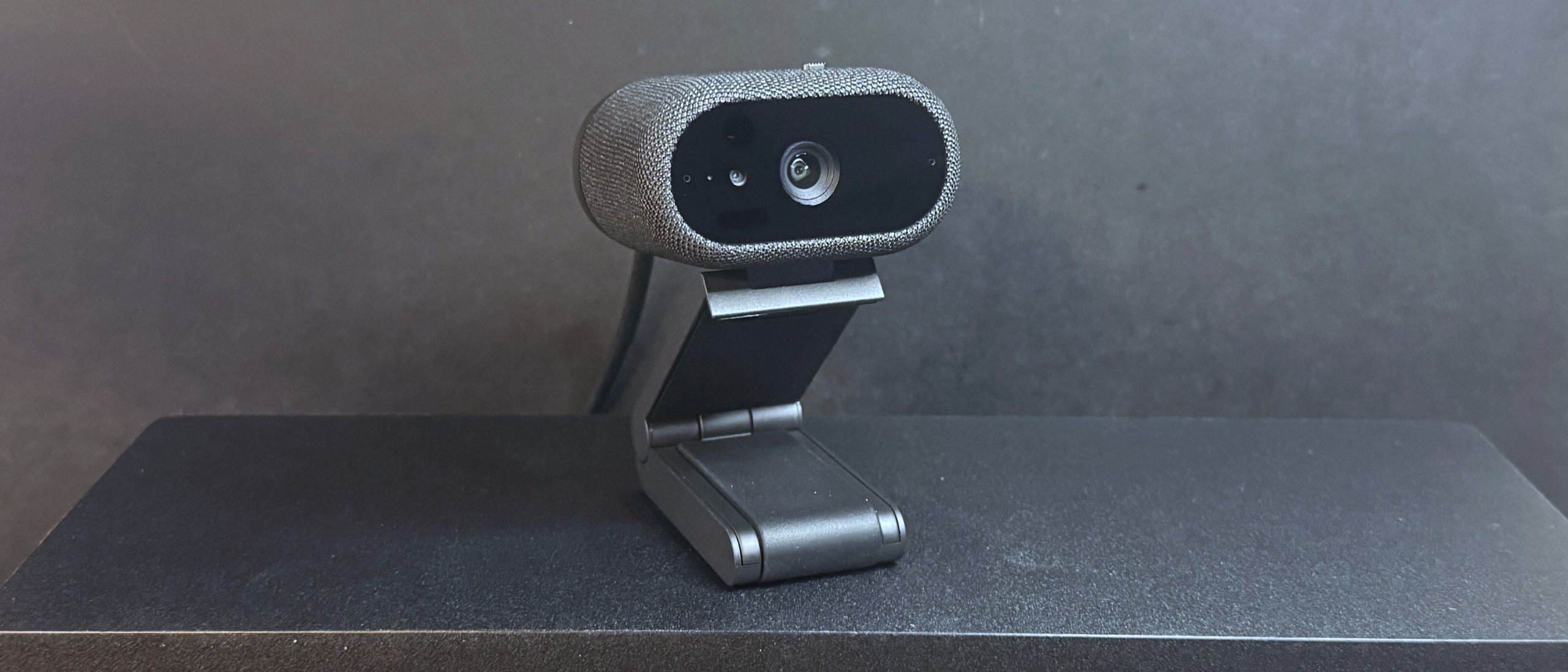
In the rapidly evolving ecosystem of remote work and high-fidelity digital communication, the webcam has transitioned from a grainy, afterthought peripheral to a critical piece of professional infrastructure. Dell, a perennial titan in the computing space, has recently expanded its portfolio with the Dell Pro 7, a premium webcam that promises to push the boundaries of what users can expect from a compact plug-and-play device.
At a retail price point of $199.99, the Dell Pro 7 enters a fiercely contested market. It arrives with a specification sheet that is as ambitious as it is impressive, touting native 4K resolution at 60 frames per second (fps). However, as many industry analysts point out, the real-world utility of such high-end specifications requires a nuanced examination of how these features translate into daily productivity and professional presentation.
Main Facts: A Technical Overview of the Dell Pro 7
The core selling point of the Dell Pro 7 is its uncompromising commitment to visual fidelity. By offering 4K at 60 fps, Dell is targeting not just the casual Zoom user, but content creators, streamers, and executives who require fluid, sharp video quality that remains stable under varying lighting conditions.
However, the hardware’s capabilities must be viewed through the lens of modern software limitations. Most enterprise-grade video conferencing platforms—including Microsoft Teams, Zoom, and Google Meet—typically cap outgoing streams at 1080p to conserve bandwidth. Consequently, the Pro 7’s 4K output is currently more advantageous for local recording or high-end streaming platforms that support ultra-high-definition ingestion.
Beyond the raw pixel count, the Pro 7 distinguishes itself through a suite of integrated "smart" features:
- Windows Hello Integration: Utilizing advanced facial recognition, the Pro 7 allows for secure, password-free login, turning the webcam into a security asset.
- Presence Detection: A sophisticated sensor array allows the camera to detect when a user is present, enabling automatic screen wake-up or lock features that enhance both productivity and security.
- Dual Beam-Forming Microphones: Perhaps the most surprising inclusion is the audio quality. While internal webcam microphones are historically poor, the Pro 7 utilizes noise-reduction technology that rivals dedicated entry-level headsets, providing clear, crisp audio capture.
Chronology: The Evolution of the Dell Webcam Line
To understand the positioning of the Pro 7, one must look at the trajectory of Dell’s peripheral strategy over the last five years.
Pre-2020: The Commodity Era
For years, Dell, like many OEMs, treated webcams as integrated, low-cost components. The focus was on "good enough" functionality—typically 720p resolution—suitable for the occasional check-in but insufficient for the modern remote-first professional environment.
2020–2022: The Remote Work Pivot
The global shift to remote work fundamentally altered the peripheral market. As the demand for high-quality video spiked, companies began treating webcams as essential productivity tools. Dell responded by releasing higher-tier external options, focusing on improved sensor sizes and light correction.
2023–2024: The Era of Smart Peripherals
The current phase, exemplified by the Pro 7, is characterized by "intelligence." It is no longer enough for a camera to provide a sharp image; it must now manage lighting, track subjects, secure the desktop, and provide high-fidelity audio. The Pro 7 represents the culmination of this trend, blending high-end optics with advanced AI-driven firmware.
Supporting Data: Competitive Benchmarking
The $199.99 price bracket is arguably the most competitive segment in the current webcam market. The Dell Pro 7 is forced to contend with heavyweights that have already established significant market share.
The Competition
- Logitech MX Brio: A perennial favorite among professionals, the MX Brio offers excellent color science and a robust software ecosystem (Logi Options+). Its strength lies in its consistency and color accuracy.
- Insta360 Link 2: This device is a marvel of motorized movement, offering gimbal-like tracking that follows the user across a room. For presenters who move around, the Link 2 remains the standard-bearer.
Comparative Metrics
While the Pro 7 matches its rivals in raw resolution, its advantage lies in its integration with the Dell ecosystem. For organizations already heavily invested in Dell monitors and workstations, the Pro 7 offers a seamless "plug-and-play" experience with Dell Peripheral Manager software, which allows for granular control over white balance, exposure, and field of view (FOV).
Official Responses and Industry Outlook
When asked about the design philosophy behind the Pro 7, Dell representatives emphasized that the goal was "reducing friction." By integrating Windows Hello and presence detection into the webcam, the company aimed to remove the "log-in tax" that workers pay every time they step away from their desks.
Industry analysts at Tom’s Hardware have noted that while the hardware is excellent, the market is approaching a saturation point for 4K webcams. "The challenge for Dell," notes one expert, "is not the image quality—which is top-tier—but the perception of value. Users need to be convinced that the extra features, like the beam-forming mics and presence detection, are worth the premium over a standard 1080p model."
Implications: Who is the Pro 7 For?
The release of the Dell Pro 7 has significant implications for both enterprise IT departments and individual professionals.
For the Enterprise
IT managers looking to standardize hardware across a remote workforce should consider the Pro 7’s security implications. By standardizing on a camera that supports Windows Hello, companies can ensure that employees are utilizing biometric security, thereby reducing the reliance on easily compromised passwords.
For the Content Creator
While the 4K/60fps capability is high, content creators may still opt for mirrorless cameras or dedicated cinema lenses if they prioritize depth-of-field and bokeh. However, for the "pro-sumer" who needs a "set it and forget it" solution that still provides a professional, sharp, and well-lit image, the Pro 7 is arguably the most convenient high-end solution available today.
For the Casual User
If you are merely attending internal meetings, the Pro 7 is likely overkill. Its sophisticated features are tailored for those who spend the majority of their day on camera, whether in client-facing sales roles, leadership positions, or professional streaming.
Final Verdict: The Verdict of Quality
The Dell Pro 7 is an impressive piece of engineering. It manages to cram sophisticated sensor technology, advanced audio arrays, and biometric security into a compact, sleek chassis. While it faces stiff competition from Logitech and Insta360, it holds its own by offering a cohesive software experience that benefits from Dell’s deep integration into the enterprise world.
As we look toward the future of remote communication, devices like the Dell Pro 7 suggest that the next frontier is not just about resolution, but about intelligence. The camera that can secure your PC, adjust your lighting, and capture studio-quality audio is no longer a luxury—it is a necessity for the modern professional.
Ultimately, if you are looking to upgrade your home office, the Dell Pro 7 stands as a robust, future-proof investment that delivers on its promises, provided you have the workflow to justify its premium feature set. The competition may be fierce, but Dell has clearly demonstrated that they are not just playing the game—they are looking to define the rules of the next generation of visual communication.

 Nana Muazin
 Raul Delapena Setiawan