Ammar Sabilarrohman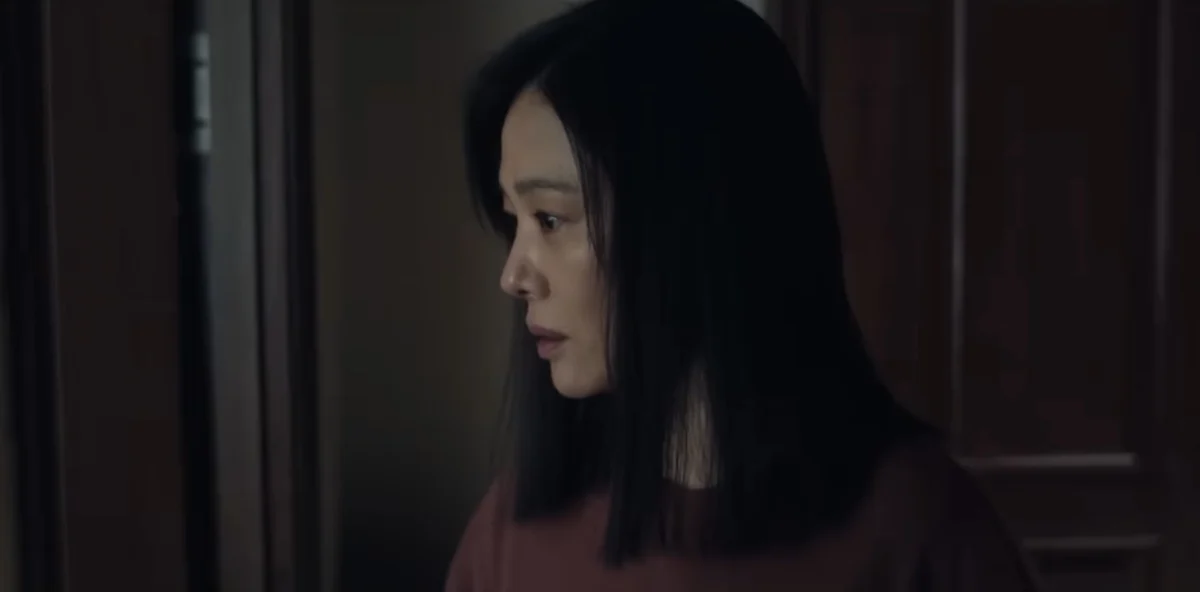
In the rapidly shifting landscape of contemporary global cinema, few directors have managed to balance the demands of commercial spectacle with profound existential inquiry as effectively as South Korean filmmaker Yeon Sang-ho. Best known to American audiences for his visceral, genre-defining zombie masterwork Train to Busan, Yeon has spent the last two years in a state of creative hyper-acceleration. Having written and directed four feature films in a span of just 24 months, his latest project, the haunting thriller Paradise Lost, serves as his most ambitious exploration of human identity yet.
Following its high-profile world premiere at the 2026 Toronto International Film Festival, Paradise Lost has ignited a firestorm of critical discourse. The film, which draws its narrative roots from an original concept by Yeon that was simultaneously developed into the novel Black Inferno by author Oh Seong-eun, presents a harrowing vision of technological grief. It follows the aftermath of a catastrophic school bus accident that leaves a community shattered. In the wake of the tragedy, the parents of the missing children are offered a controversial consolation: AI-generated video game simulations that serve as digital replicas of their lost loved ones. The story picks up nine years later, centering on Ryu So-young (played by the formidable Kim Hyun-joo), a grieving mother who receives the impossible news that her son, Ryu Sun-woo (Bae Hyun-sung), has been found alive. As she struggles to reconcile the boy’s return with the uncanny, "off" quality of his personality, So-young finds herself unable to abandon the comfort of her son’s AI avatar, sparking a desperate struggle between reality and a curated digital ghost.
The Genesis of a Digital Nightmare
The premise of Paradise Lost hits with the force of a premonition. Only a few years ago, the notion of "grief tech"—the use of machine learning to simulate the voices, likenesses, and personalities of the deceased—was the domain of speculative fiction. Today, it is an burgeoning, albeit ethically murky, industry.
When asked about the timeline of his development, Yeon admits that the rapid maturation of generative AI during the production process actually altered the film’s framing. "I think at large, the main story remains the same," Yeon explained during an interview following the premiere. "At first, I did think about setting it in the future. But while I was working on this project, AI has just really rapidly developed, so I realized it was okay to use the present day as the setting. I had to contemplate how to convince the audience that this technology could be that pervasive, but current events made that work for me."
The film operates as a mirror to modern anxieties. By grounding the narrative in the contemporary moment, Yeon forces the audience to confront the fact that we are already living in the era of digital resurrection.
Echoes of the Past: The Spielbergian Connection
During the post-premiere discussion, it was difficult to avoid drawing comparisons to Steven Spielberg’s A.I. Artificial Intelligence. Both films explore the harrowing intersection of parental loss and the synthetic replacement of children. However, Yeon is quick to delineate his thematic boundaries.
"Spielberg’s A.I. was probably the first time I experienced an AI-related film," Yeon noted. "His work contemplated the depth of the AI’s own existence—the mysterious presence and the desire of the machine to be real. My film is not really thinking about the depth of the AI itself. It is more about the human and the human identity. Living in this world where AI is rapidly developing and becoming part of our lives, the question I wanted to address is: what does it mean to be truly human?"
The Psychology of Obsession: Why So-young Stays
A central tension in the film is why Ryu So-young remains tethered to her son’s digital ghost, even when the rest of the community—parents who suffered the same loss—have begun to move on. Yeon explains that the divergence in the parents’ paths is rooted in the physical reality of their loss.
"There are two different types of parents in this narrative," Yeon explains. "The first are the ones who actually recovered the dead bodies of their children. The second group are the ones who did not. So-young belongs to the second category. You see the scene at the entrance to the mine where she was trying to find the body of her child, and she was actually trying to die with him. That expressed just how much agony she was in. Even without a physical body, she becomes obsessed with the AI because, for her, the psyche and the heart of the child were still living in the simulation."
This obsession serves as the emotional bedrock of the film. By making the AI a vessel for a memory that was never given a proper burial, Yeon creates a poignant metaphor for the digital age, where we often cling to the data of the dead to avoid the finality of their absence.
A Comparative Look at Distribution: Theatrical vs. Streaming
Beyond the thematic content of Paradise Lost, the conversation with Yeon naturally shifted toward the structural shifts in the film industry. Having moved between traditional theatrical releases and direct-to-streaming projects for Netflix, Yeon possesses a unique vantage point on how different formats affect audience connection.
"With streaming, for example, there is a project I worked on called Human Vapor," Yeon noted. "Streaming services offer the appeal of a global release at the exact same moment. But with films like The Ugly or Colony, it took about a year to introduce them to the world. What I realize now is that when you go the theatrical route, every country takes its time to curate the experience. It’s about the local distribution companies trying their best to accommodate their specific audiences. I’ve really learned the value of theaters in that regard."
Yeon’s observation highlights the "energy" difference between platforms. While streaming offers volume and accessibility, the theatrical model allows for a more localized, curated introduction that can sustain a film’s relevance over a longer period. Well Go USA has confirmed that Paradise Lost will receive an American theatrical run, promising a deliberate rollout that aligns with the director’s appreciation for the cinematic experience.
Paradise Lost and the Burden of Instability
The title of the film, borrowed from John Milton’s epic poem, is not a literal adaptation, but rather a thematic framework. When asked about the connection, Yeon points to the nature of human existence following the fall from grace.
"Milton’s Paradise Lost talks about the very first of mankind being expelled from paradise, becoming vulnerable, and gaining a human identity defined by instability," Yeon said. "In the poem, it is the snake that makes humans acquire this instability. In my film, you have a technologically perfect world—or at least a world that offers the illusion of perfection—but the choice at the end is to embrace instability and pain. That is what I define as the identity of a human."
This duality extends to the character of the returning son. If the mother represents the desperate reach for the divine or the perfect, the son who returns represents the serpent in the garden. "He is a real son, so there is still a motherly instinct towards him," Yeon mused. "But because he is so different, the choice for the mother becomes a very human conflict. She has to decide if she prefers the comfort of the lie or the painful, complex reality of the truth."
Implications for a Synthetic Future
As Paradise Lost prepares to hit American theaters, its implications are as chilling as they are relevant. We are moving toward a reality where the boundary between the living and the simulated is becoming increasingly porous. Yeon Sang-ho’s work suggests that our humanity is not defined by our ability to create, but by our willingness to suffer the reality of our choices.
By forcing his protagonist to choose between a comfortable, AI-generated past and an uncertain, potentially tragic present, Yeon challenges the audience to consider their own relationship with technology. Are we, like So-young, looking for a way to avoid the "instability" of the real world? As the lines between human and machine continue to blur, Paradise Lost stands as a vital, necessary meditation on what we stand to lose when we try to code away our grief.
With its combination of sharp psychological insight and the high-stakes thrills that have become a hallmark of his career, Yeon Sang-ho’s latest work is poised to be a significant addition to the sci-fi canon, ensuring that his influence on global cinema remains as powerful as ever.

 Pevita Pearce
 Neng Nana