Asep Darmawan
In the world of roguelike deckbuilders, randomness is the heartbeat of the experience. It provides the tension, the triumphs, and the occasional heart-wrenching failures that keep players coming back for "one more run." However, when that randomness reveals itself to be a mirage, the integrity of the entire game is called into question.
Mega Crit, the developers behind the genre-defining Slay the Spire 2, have recently addressed a significant technical oversight that turned one of the game’s most popular relics, "Neow’s Bones," into a source of community frustration. Following a major update that introduced Steam Workshop support, a new Bestiary for the Compendium, and a long-awaited boss replacement, the studio revealed that they had been inadvertently biasing the game’s RNG (Random Number Generation) system.
The State of the Spire: A Major Content Injection
The latest update for Slay the Spire 2 is substantial, offering more than just technical bug fixes. For the modding community, the introduction of Steam Workshop support is a watershed moment. By lowering the barrier to entry for content creators, Mega Crit is effectively ensuring the game’s longevity, allowing players to introduce custom classes, relics, and card mechanics that could potentially rival the base game in scope.
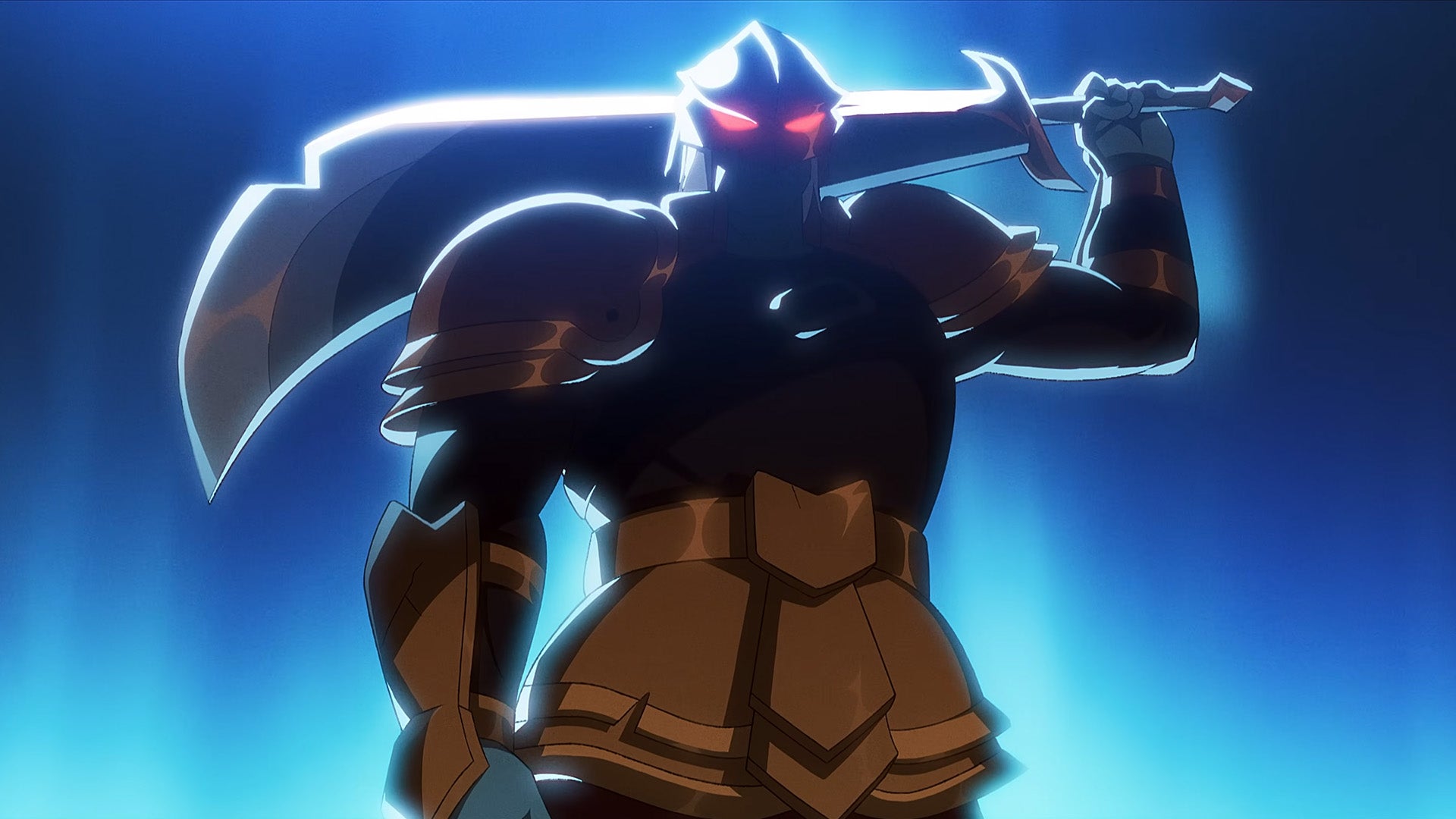
Furthermore, the update addresses player feedback regarding game balance. The "Doormaker," a boss that had become a lightning rod for community ire due to its perceived unfairness, has been officially removed. In its place steps "Aeonglass," a new encounter designed to test player strategy without the frustration associated with its predecessor. Alongside this, the addition of a comprehensive monster Bestiary provides players with the tactical information needed to optimize their runs, marking a significant quality-of-life improvement for those looking to master the game’s deeper systems.
Chronology of a Mathematical Mystery
The story of the "broken" RNG began with the community’s interaction with Neow’s Bones—a relic that grants the player two additional relics in exchange for a random curse. While curses are a standard risk-reward mechanic in the genre, players began to notice an unusual pattern: they were being saddled with the "Debt" curse at a rate that felt statistically impossible.
For the uninitiated, the Debt curse is particularly punishing, extracting 10 gold from the player’s purse every time a turn ends with the card in their hand. What started as anecdotal grumbling on forums like Reddit and Discord eventually evolved into a formal investigation.
The turning point came when a player known as "tckmn" performed an exhaustive analysis. In an impressive display of dedication, tckmn produced an eight-hour video breakdown, utilizing data from countless runs to demonstrate that the probability of receiving the Debt curse was not aligned with the game’s stated odds. Their calculations suggested a 54% probability of receiving Debt, a figure that defied the expected distribution of random outcomes.
Supporting Data: The Anatomy of a Pseudo-Random Failure
To understand how this occurred, one must look at how modern software handles "randomness." Computers, by their nature, are deterministic; they struggle to produce true chaos. Instead, they rely on Pseudo-Random Number Generators (PRNGs). A PRNG uses an initial "seed" value to produce a long, deterministic sequence of numbers that appears random.
In Slay the Spire 2, every run is generated based on a primary "run seed." However, the game employs multiple PRNGs to govern different aspects of gameplay—deck draws, combat rewards, and event outcomes. Each of these sub-PRNGs is derived from the main run seed.
Mega Crit’s error, as explained by programmer Ed Lu, lay in the implementation of these sub-seeds. Because the developers had fed different seeds into each PRNG, they operated under the assumption that the resulting outputs would be completely independent of one another. They were mistaken.
The data, visualized by the developers in side-by-side graphs, revealed the truth. The "faulty" system displayed clear, parallel diagonal lines, indicating a high degree of correlation between seemingly unrelated events. In simpler terms: if a player knew the outcome of a specific event or reward early in a run, they could mathematically predict the likelihood of receiving a specific curse from Neow’s Bones. The randomness was not random; it was a map, and players had begun to read the terrain.
Official Response: Mega Crit’s Transparency
Mega Crit has been praised for its transparency in addressing the issue. Rather than sweeping the discovery under the rug, the studio provided a detailed technical post-mortem. Ed Lu’s explanation in the patch notes serves as a masterclass in developer-to-player communication.
"Since we fed different seeds to each PRNG, we expected their results to be completely unrelated," Lu admitted. "But we were wrong, and it turns out that our strategy allowed players to predict outcomes given knowledge of unrelated parts of the game."
The fix involved decoupling these sequences and implementing a more robust distribution model. The new graphs provided by Mega Crit show a stark contrast: the clear, predictable lines have been replaced by a chaotic, "white noise" distribution, exhibiting no human-detectable correlation. This effectively seals the "exploit," ensuring that the curse outcome remains a matter of true chance rather than a predictable variable.

Implications for the Future of Roguelikes
The implications of this incident extend far beyond Slay the Spire 2. It serves as a stark reminder of the delicate balance between design and implementation in procedural generation.
1. The Death of Rote Memorization
As Lu noted in his analysis, once an exploit like this becomes public knowledge, the incentive structure of the game shifts. Players who want to play optimally are no longer playing a game of strategy; they are playing a game of memory, memorizing correlation tables to "game" the RNG. This strips the joy out of a roguelike, which is fundamentally built on the need to adapt to the unexpected. By fixing the PRNG, Mega Crit has restored the "fun" of the unknown.
2. The Responsibility of the Developer
The Slay the Spire 2 incident highlights the increasing role of "data-driven" player communities. When players have the tools to analyze game code or collect massive datasets, developers can no longer rely on "security through obscurity." Professionalism in the industry now requires a willingness to engage with high-level player analysis, even when it challenges the core foundations of the game’s code.
3. The Future of RNG Design
For developers, the lesson is clear: PRNGs are not "set and forget" systems. As games grow in complexity, the danger of seeding sub-systems with related values increases. Future roguelikes will likely need to adopt even more sophisticated methods—perhaps utilizing hardware-based entropy or more complex cryptographic hashing—to ensure that their "random" events remain truly unpredictable.
Conclusion
The Slay the Spire 2 update is a triumph of community engagement and technical humility. By acknowledging the statistical anomaly, correcting the underlying PRNG, and adding substantial new content like the Aeonglass boss and Workshop support, Mega Crit has reinforced its position as a leader in the roguelike genre.
For the average player, the change might be subtle—a slightly different spread of curses, a new monster to study in the Bestiary, or the ability to download a new mod. But for the health of the game’s ecosystem, the fix is monumental. It ensures that when you step into the Spire, the challenges you face are as unpredictable and exhilarating as they were intended to be. The ghosts in the machine have been exorcised, and the Spire remains, as ever, a place of fair, if brutal, competition.


 Asro
Asro
 Muslim