Nila Kartika Wati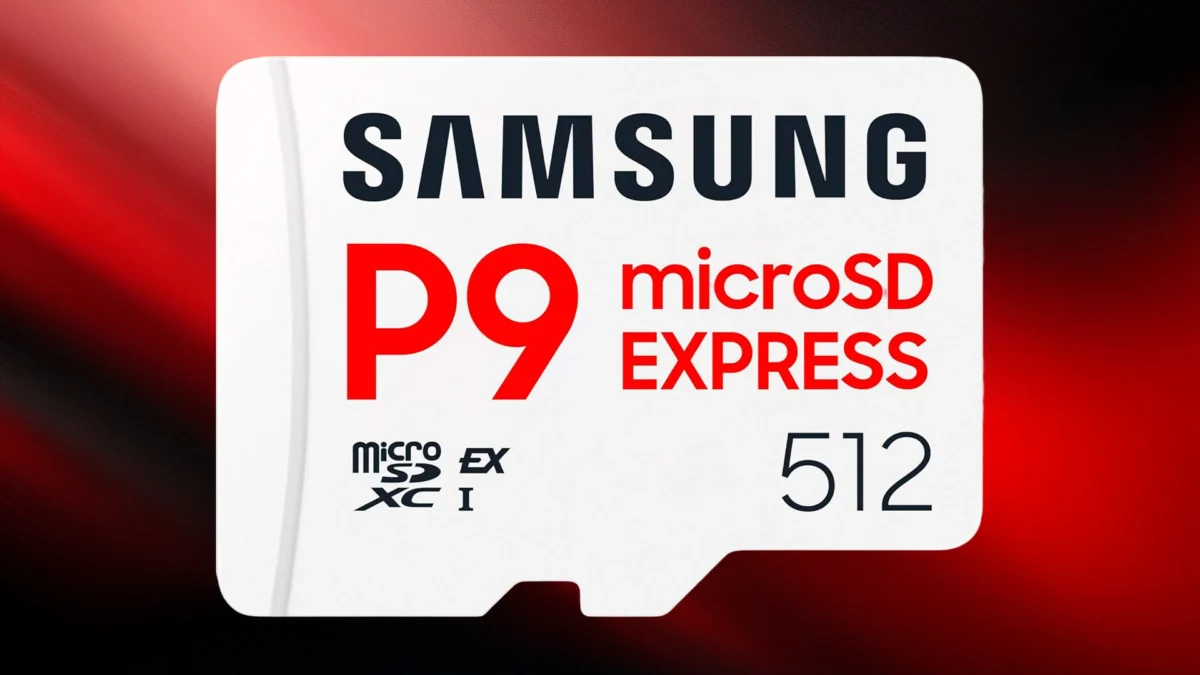
In an era defined by ballooning game file sizes and the relentless advancement of high-fidelity graphics, storage has become the most critical component of the modern gaming experience. For enthusiasts and casual players alike, the global flash memory market has recently become a landscape of scarcity and rising costs. However, a surprising reprieve has emerged in the retail sector: the high-performance Samsung P9 512GB microSD Express card is currently available for $99.99—a significant price correction that brings the premium storage medium back to its pre-shortage MSRP.
This deal, facilitated by a $50 checkout discount at Amazon, arrives at a pivotal moment. As the industry looks toward the next generation of handheld gaming—specifically the highly anticipated, though still nascent, Nintendo Switch 2—the demand for high-speed, high-capacity portable storage has never been higher.
The Current State of Flash Memory: A Market in Flux
To understand why a $50 discount on a 512GB card is newsworthy, one must first examine the volatility of the NAND flash market. Over the past eighteen months, global semiconductor manufacturers—including Samsung, Micron, and SK Hynix—have faced a complex confluence of supply chain bottlenecks, reduced production output, and fluctuating demand for consumer electronics.
The Impact of Production Cuts
Following the post-pandemic slump in PC and smartphone sales, major memory manufacturers intentionally slashed production quotas to stabilize plummeting prices. This strategy, while effective at preventing a market collapse, resulted in a leaner supply chain. As demand for AI-driven data centers surged, priority for high-end NAND flash shifted away from consumer-grade SD cards and toward enterprise-grade server components.
The Consumer Consequence
For the average consumer, this pivot manifested as a steady, consistent climb in the retail price of SSDs and microSD cards. By mid-2024, the "budget" tier of flash storage had largely disappeared, and premium cards, such as the Samsung P9, saw their street prices balloon by 30% to 50%. Finding high-performance storage that meets the rigorous demands of modern gaming consoles at an "affordable" price point has become increasingly difficult.
Chronology: The Road to the Current Shortage
The timeline of this storage crisis is marked by several key economic inflection points:
- Q1 2023: Major memory producers announce significant production cuts in response to record-low flash prices.
- Q3 2023: Market inventories begin to tighten. Prices for 512GB and 1TB microSD cards begin a slow but steady upward trend.
- Q1 2024: AI server demand reaches a fever pitch, consuming the bulk of high-quality NAND output. Consumer-facing storage brands report difficulty securing raw components.
- Q3 2024: Retail pricing for premium microSD Express cards hits a three-year peak, with many cards retailing well above $140.
- Current Date: A temporary retail adjustment at major outlets like Amazon signals a rare, albeit likely short-lived, return to baseline pricing for specific premium units like the Samsung P9.
Technical Superiority: Why the Samsung P9?
The Samsung P9 microSD Express card is not merely a storage vessel; it represents the cutting edge of portable data transfer technology. Unlike standard UHS-I or UHS-II cards, the "Express" designation signifies a fundamental shift in how the card communicates with the host device.
PCIe Interface Integration
MicroSD Express technology integrates the PCIe interface directly into the card. This allows for data transfer speeds that dwarf traditional cards, effectively narrowing the performance gap between removable storage and internal NVMe SSDs. For gamers, this means faster load times, smoother asset streaming in open-world titles, and reduced stuttering when playing games directly from the card.
Reliability and Longevity
The P9 series is engineered with robust NAND cells designed to handle the constant read/write cycles inherent to modern gaming. With the next generation of hardware—including the Nintendo Switch 2—likely to leverage faster bus speeds, cards like the P9 are effectively "future-proofed." Investing in a card that can handle the high throughput of next-gen titles is a strategic move for any console owner looking to avoid the cost of internal storage upgrades.
Supporting Data: Capacity vs. Performance
When evaluating the value of the current $99.99 price point, it is helpful to look at the cost-per-gigabyte metrics.
| Card Type | Typical Price (2023) | Peak Price (2024) | Current Deal Price |
|---|---|---|---|
| Standard 512GB | $60.00 | $95.00 | $75.00 |
| Premium P9 512GB | $99.99 | $149.99 | $99.99 |
The data indicates that while "standard" cards have seen moderate price increases, the premium segment—where the P9 resides—was hit significantly harder by the supply chain crunch. The $50 discount effectively resets the "premium tax," making a high-speed, high-reliability card available at the same cost as a mid-tier, slower alternative.
Industry Responses and Projections
Manufacturers have been relatively tight-lipped regarding the long-term outlook for consumer storage pricing. However, industry analysts at firms like TrendForce have suggested that the current volatility is expected to persist through at least the first half of 2025.
The Nintendo Factor
The impending launch of the Nintendo Switch 2 has created an "anticipatory demand" wave. Industry insiders suggest that Nintendo’s next console will require faster read speeds than the original Switch, making current UHS-I cards obsolete for optimal performance. Manufacturers are currently racing to position their products as the "go-to" recommendation for the new hardware, which explains the aggressive discounting seen on high-performance cards like the Samsung P9.
Official Statements
While Samsung has not issued a formal statement regarding the specific Amazon promotion, a representative for their memory division recently noted: "Our focus remains on delivering high-speed NAND solutions that empower the next generation of mobile and handheld gaming. We recognize the importance of competitive pricing in ensuring that our flagship performance products remain accessible to the gaming community."
Implications for the Gamer
What does this mean for the person currently holding a Nintendo Switch or preparing for a future upgrade?
The "Buy Now" Window
The primary implication is that the current pricing is an outlier. Because the underlying cost of NAND flash production remains high, retailers are likely subsidizing these discounts to move inventory or build consumer loyalty ahead of the holiday shopping season. Waiting for these prices to become the "new normal" is a risky strategy; it is more likely that once this promotional inventory is cleared, prices will revert to the $140+ range.
Future-Proofing Your Library
Modern game installations are growing exponentially. A 512GB card was once considered "overkill," but with many AAA titles now exceeding 100GB, it has become the standard for a comfortable gaming experience. By securing a high-speed card now, gamers avoid the logistical headache of constant game deletions and re-downloads—a common friction point that hampers the portability of handheld gaming.
Conclusion: A Rare Window of Opportunity
In the turbulent market of 2024, predictability is a luxury. The $99.99 price tag on the Samsung P9 512GB microSD Express card is a rare convergence of retail strategy and market correction. It offers gamers a chance to acquire top-tier technology at a price point that reflects a more stable, pre-shortage economic environment.
Whether you are looking to maximize the storage potential of your current handheld or preparing for the next frontier of portable gaming, the current discount serves as a timely reminder of the value of high-performance hardware. In a climate where costs are trending upward, the ability to lock in premium performance for less than $100 is an opportunity that few enthusiasts should overlook. As the digital landscape continues to demand more from our hardware, securing reliable, high-speed storage is no longer just a luxury—it is an essential component of the modern gaming toolkit.


 Nana Muazin