Reynand Wu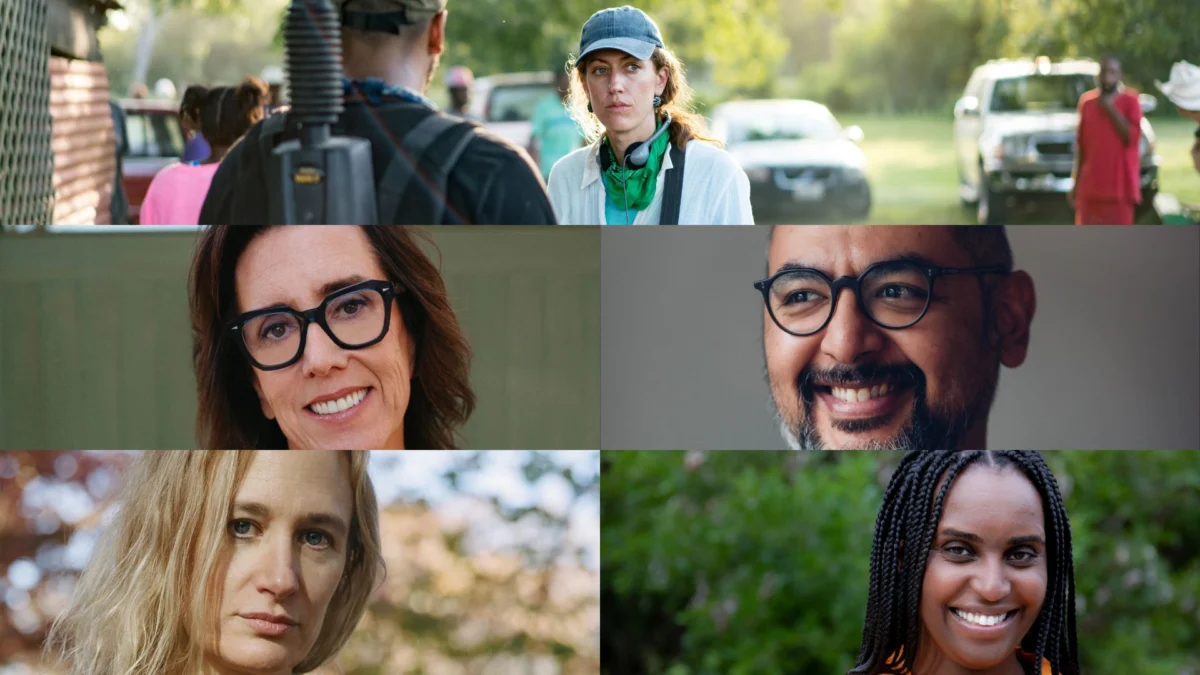
In a landmark announcement that signals a new era for independent cinema in the South, the Austin Film Society (AFS) has unveiled a massive infusion of capital to bolster regional storytelling. Celebrating three decades of cultural advocacy, the organization has announced over $300,000 in new filmmaker grant awards, anchored by the launch of "Texas Lights," a bold, restructured funding initiative designed to sustain and elevate the next generation of Texas-based independent artists.
The Pillars of Independent Cinema: Main Facts of the Initiative
The cornerstone of this announcement is the "Texas Lights" fund, a strategic expansion of AFS’s long-standing commitment to the local film ecosystem. While the AFS Grant remains the organization’s flagship open-application fund, Texas Lights serves as an overarching umbrella for a statewide network, aiming to provide cash-in-hand support for rising artists who might otherwise struggle to bring their visions to the screen in an increasingly expensive media landscape.
This year’s distribution is robust: over $160,000 has been awarded specifically to 14 feature-length productions, with individual grants reaching up to $20,000. These funds are not merely symbolic; they are critical lifelines for pre-production, principal photography, and post-production, often serving as the "seed money" that attracts additional private and public investment.
A Legacy of Three Decades: Chronology and Historical Context
To understand the weight of this announcement, one must look back at the origins of the Austin Film Society. Founded in 1985 by filmmaker Richard Linklater, the organization emerged during a time when the concept of a sustainable film industry in Texas was, at best, a pipe dream.
1985–1995: The Foundation Era
In its infancy, AFS focused on bringing international and experimental cinema to Austin, building an audience and a sensibility that would eventually foster a local production culture. The early days were marked by a lack of infrastructure, which the society slowly rectified through screening programs and community advocacy.
1996–2010: The Emergence of the Grant Program
The AFS Grant program began as an experiment in direct support. It was a radical idea: that a regional organization could provide financial backing for independent features. Over these years, the program helped launch the careers of filmmakers who would eventually garner international acclaim, such as David Lowery, whose early work was nurtured by the very community AFS helped build.
2011–2024: Scaling Impact
As the digital revolution lowered the barriers to entry, the competition for funding intensified. AFS responded by diversifying its support, moving from simple cash grants to mentorship programs, fiscal sponsorship, and professional development. With more than $3.3 million awarded over the last 30 years, the AFS alumni network now includes heavyweights like Athina Rachel Tsangari, Cristina Ibarra, and Chelsea Hernandez.
2025–2026: The Texas Lights Expansion
With the launch of Texas Lights, the AFS is moving into its fourth decade with a focus on institutional longevity. The program is helmed by a leadership team comprising AFS CEO Rebecca Campbell, Head of Film Holly Herrick, and Senior Director of Texas Lights Liz Lodge Stepp. This team is tasked with shifting the narrative from "Texas as a production location" to "Texas as a creative hub."
Supporting Data: The Impact of Financial Capital
The economic impact of the AFS Grant program is not limited to the individual budgets of the 14 feature films chosen for 2026. Data from the Austin Film Society indicates that for every dollar granted by the organization, recipients are often able to leverage an additional three to five dollars in outside capital.
The 2026 Feature Film Recipients:
- Leo Aguirre: Verano
- Miguel Alvarez: The Return
- Fernando Andrés: The Movie Lovers
- Alexis Franco: Where It All Begins
- Katy McCarthy: The Heart is a Cul-de-sac
- Keith Maitland: Gods of Fire
- Camille Morales-Zayas: Alma
- Sachin Dheeraj Mudigonda: A Silent Wave
- Matthew Q. Nelson: State of Care
- Sara Nimeh: Jedo
- Lanre Obisesan: The Orange Seller
- Travis Lee Ratcliff: Under My Command
- Karen Skloss: Interpreter
- Louise Min Van Assche: Huntsville Dreams
These selections represent a diverse cross-section of the Texan experience, covering themes from social justice and immigration to the complexities of personal identity.
Official Responses: The Vision of Richard Linklater
In a statement reflecting on the 30-year milestone, Richard Linklater offered a candid assessment of the journey.
"Thirty years of the AFS Grant is a major milestone for the Austin Film Society," Linklater noted. "I’m so proud of what we have accomplished by committing our organization to funding filmmakers and showing films. When we started a grant for Texas filmmakers, the idea that artists could live and work here wasn’t taken very seriously."
Linklater’s commentary highlights the psychological shift the organization has achieved. By creating a professional environment where filmmakers can thrive without moving to Los Angeles or New York, AFS has effectively decentralized the American independent film industry. "In looking back at the caliber of work and the artists supported through this program over the years, we’ve proven that artists can come from anywhere," he added. "With the launch of this new Texas Lights fund, we’re renewing our commitment to something we truly believe in—expanding creative culture by funding artists locally."
Implications for the Future of Texas Cinema
The introduction of Texas Lights has profound implications for the state’s creative economy. By focusing on a "statewide network," AFS is signaling that the benefits of the grant program should not be confined to the Austin city limits. This is a crucial pivot; for years, critics of the Texas film scene noted a concentration of resources in the state capital. Texas Lights intends to bridge the gap between burgeoning talent in Houston, Dallas, El Paso, and the Rio Grande Valley, ensuring that the next generation of stories reflects the full breadth of the state’s geography.
The Role of Mentorship
Beyond cash, the Texas Lights initiative prioritizes the "alumni effect." By selecting previous grant recipients such as Margaret Brown (The Yogurt Shop Murders), Annie Silverstein (Bull), and Diffan Sina Norman (Sitora) as the inaugural Texas Lights grant recipients, AFS is creating a feedback loop. These seasoned professionals provide a roadmap for younger filmmakers, acting as both beneficiaries and ambassadors for the program’s philosophy.
Economic Resilience
In an era where streaming platforms are increasingly unpredictable in their acquisition strategies, independent film is facing a crisis of sustainability. The AFS grant model—non-recoupable, equity-free funding—is an outlier in the current landscape. By providing "no strings attached" capital, AFS empowers filmmakers to retain creative control over their projects. This is essential for the preservation of artistic integrity, ensuring that Texas-based stories are told through the lens of those who live them, rather than through the lens of external corporate interests.
Strengthening Cultural Infrastructure
The leadership team of Campbell, Herrick, and Lodge Stepp is building an infrastructure that goes beyond individual films. By fostering a community where filmmakers know each other, share resources, and collaborate on crews, AFS is building a resilient production ecosystem. This network effect means that if one project struggles, the knowledge and labor force remain in the state to support the next project, creating a sustainable cycle of production that is less dependent on the volatility of the global market.
Conclusion: A Blueprint for Regional Growth
As the Austin Film Society enters its fourth decade, the launch of Texas Lights stands as a testament to the power of community-led funding. The $300,000 investment is more than a financial transaction; it is a declaration of confidence in the Texas creative spirit. By combining the historical weight of the AFS Grant with a forward-looking strategy that embraces the entire state, the organization is cementing Texas’s position as a vital, necessary contributor to the global cinematic conversation.
For the 14 feature film recipients of 2026 and the generations of filmmakers to come, this initiative provides more than just the means to finish a movie. It provides a community, a platform, and the institutional backing necessary to challenge the status quo. As Linklater famously observed, artists can come from anywhere—but with the support of programs like Texas Lights, they no longer have to leave home to find their voice.


 Nana Muazin
 Pevita Pearce