Jia Lissa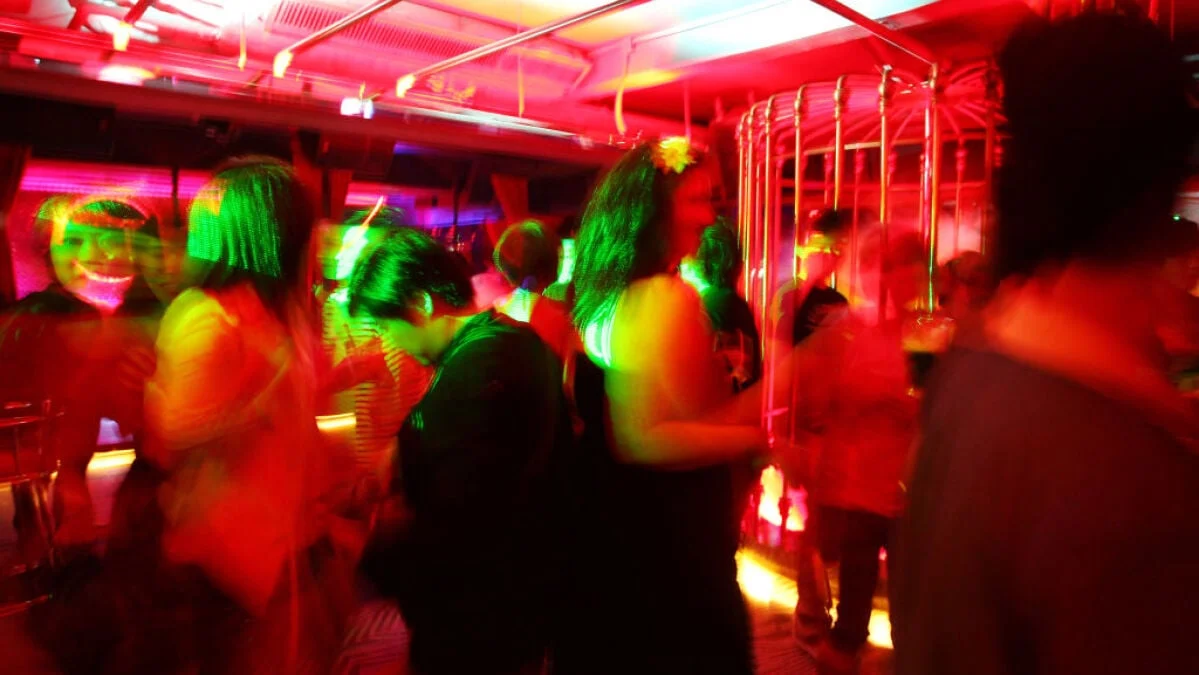
In the quiet, rolling landscape of Western Massachusetts, the town of Greenfield—a municipality of roughly 17,000 residents—is better known for its pastoral charm and progressive local politics than as the epicenter of a national digital firestorm. Yet, in late 2026, this unassuming town became the setting for a surreal, hyper-polarized drama that transfixed the internet, turning a local debate over public health policy into a 1,500-word investigative feature in The Boston Globe and spawning a cottage industry of memes, vitriol, and sociological analysis.
The subject of this intense scrutiny was the Last Ditch, a lesbian bar and arts venue. As one of only 36 documented lesbian bars in the United States—a statistic curated by the Lesbian Bar Project—the venue represents a precarious, vital sliver of American nightlife. However, the story that propelled it into the headlines was not about the struggle to keep queer spaces alive in a post-pandemic economy, but rather a volatile collision between COVID-19 safety protocols, accusations of ableism, and the relentless, often unsparing machinery of online discourse.
The Catalyst: A Policy Shift and a Digital Powder Keg
The drama ignited on August 31, when the owners of the Last Ditch posted an update to their Instagram account regarding the venue’s mask policy. For months, the space had maintained a rigorous standard, requiring KN-95 masks for all patrons at all times. The announcement signaled a pivot: the bar intended to open Saturday nights to maskless customers, moving toward a "hybrid" model of safety.
What the owners likely envisioned as a minor logistical adjustment was immediately interpreted by a significant segment of their community as a fundamental betrayal. Within hours, the comment section of the post transformed into a no-holds-barred battlefield. Former patrons and community members did not merely express disappointment; they leveled explosive accusations. The change was described by critics as a "mass disabling event" and an act of "eugenicist" violence.
"People like you kill disabled people in the name of your own leisure and convenience," one commenter wrote. The rhetoric escalated rapidly from policy critique to personal attacks, with some commenters going as far as to issue threats of violence, including suggestions that the venue deserved to be firebombed.
A Chronology of Escalation: From Local Dispute to Viral Sensation
The Boston Globe’s deep-dive coverage tracked the cascading fallout of this initial post. What followed was a dizzying sequence of events that highlighted the fragility of community cohesion in the digital age.
- The Initial Outcry (Late August): The Instagram announcement triggers an immediate, aggressive backlash, with the bar’s leadership caught off guard by the intensity of the accusations.
- The Cycle of Retractions and Apologies (Early September): In an attempt to de-escalate, the venue’s owners issued a series of statements and public apologies, attempting to explain the economic and social pressures necessitating the change. However, these clarifications often served only to provide more ammunition for their detractors.
- The Public Meetings: Local gatherings meant to mediate the tension instead became forums for raw, unfiltered grievance. The Globe reported on these sessions in granular detail, capturing the bizarre nature of the conflict—such as the revelation that one of the bar’s owners was currently enrolled in clown school, a detail that was quickly weaponized by online observers as evidence of the owners’ "lack of seriousness."
- The "Mainstream" Discovery: As the controversy spilled off local forums and into the broader social media ecosystem, the story began to mirror the trajectory of other viral "internet main character" phenomena, such as the Cat Person debate or the Bad Art Friend saga. By mid-September, the story had transcended its Massachusetts roots.
Supporting Data: The Precarity of Queer Spaces
To understand why the Last Ditch became such a lightning rod, it is necessary to consider the scarcity of the space itself. According to the Lesbian Bar Project, the number of dedicated lesbian bars has plummeted over the last two decades. These venues are not merely businesses; they are considered "third places"—essential refuges for a demographic that has historically faced exclusion from mainstream nightlife.
The post-COVID landscape has been particularly brutal for these venues. The decline in public socialization, combined with the rising costs of operation, has left many owners in a state of constant, high-stress survival mode. When a venue like the Last Ditch decides to modify its safety protocols, the stakes feel existential to a community that views these spaces as their only remaining sanctuaries.
However, the conflict also highlights a growing fracture within leftist and queer spaces regarding the "post-pandemic" reality. While some view the maintenance of strict mask mandates as a moral imperative for disability justice, others argue that the isolation caused by such policies is equally damaging to the social fabric of marginalized communities. The Last Ditch found itself trapped between these two irreconcilable ideologies.
Official Responses and the Price of Publicity
The owners of the Last Ditch have maintained a consistent, if beleaguered, message throughout the ordeal. In a statement posted in late April—well before the August explosion—the leadership articulated their mission: "We started this project as a small group of friends with a burning desire to keep unapologetically queer spaces alive in Western Mass. Not to make money, not to garner notoriety. Just to maintain, expand, and serve our queer community."
Yet, notoriety is exactly what they received. The Globe feature, while thorough, acted as a megaphone for the most extreme voices on both sides of the aisle. The article itself saw a significant business benefit, reportedly driving over 1,000 new subscriptions to the publication in the 24 hours following its release.
For the bar, the impact remains ambiguous. While the business gained national name recognition, it also became a target for bad-faith actors. Screenshots of the bar’s social media pages were circulated in right-wing and "anti-woke" circles, where users used the opportunity to mock the appearance of staff and patrons, and to dismiss the entire controversy as an example of "intergalactic woke batcrapitude."
Implications: The Internet as a Crucible for Queer Identity
The Last Ditch saga serves as a sobering case study on the weaponization of niche local disputes. Similar to the 2024 controversy surrounding New York City’s Cubbyhole, where a TikTok influencer’s video sparked a national debate about who "belongs" in queer spaces, the Greenfield incident shows how quickly the internet can strip a story of its local context.
When a community dispute is flattened for mass consumption, the individuals involved are often reduced to tropes. The "clown school" detail, for instance, was used to paint the owners as out-of-touch, while the vitriol of the commenters was used to characterize the entire queer/disability activist movement as irrational and dangerous.
Ultimately, the Last Ditch incident reveals a profound irony: a community that prides itself on being a haven from the judgment of the outside world ended up inviting the harshest judgment imaginable. As the dust settles in Greenfield, the venue remains a physical manifestation of a digital reality—a space struggling to exist in a world that is increasingly eager to watch it crumble for the sake of a viral headline.
The question remains: can such specialized, community-centric spaces survive when every internal disagreement is transformed into a public spectacle? For now, the Last Ditch continues to serve its patrons, though the silence of a quiet Western Massachusetts night has been permanently replaced by the digital echo of an internet that never forgets, and rarely forgives.

 Pevita Pearce
 Sagoh
Sagoh