Nana
Nana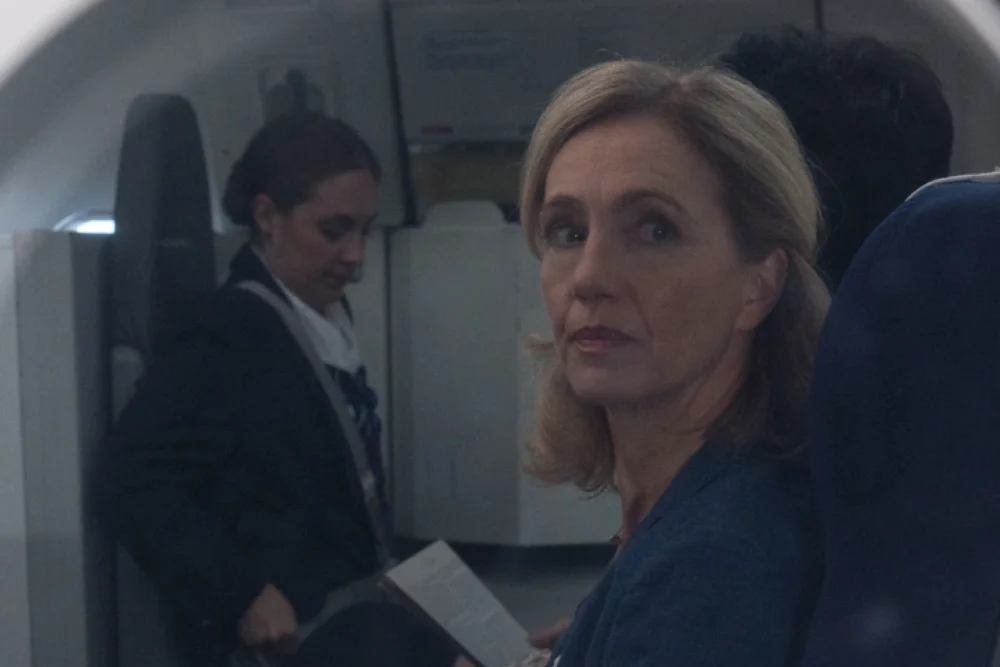
For over a decade, the haunting memory of Swissair Flight 111 has lingered in the creative consciousness of Swiss-Mexican filmmaker Mauro Mueller. The project, now realized as 111 – Echoes From Halifax, serves as a cinematic meditation on one of the most devastating aviation disasters in history. Currently premiering at the Zurich Film Festival, the film represents not just a directorial debut for Mueller within his home country, but a deeply personal, decade-long journey to translate collective trauma into a work of artistic resonance.
The seeds of the film were sown by producer Björn Hering of Fidelio Films. As the son-in-law of pilot Urs Zimmermann, Hering carried the weight of the tragedy on a personal level, long urging his creative partner, Mueller, to tackle the subject. While the gravity of the 1998 crash—which claimed the lives of all 229 souls on board—presented an intimidating narrative challenge, Mueller eventually found his entry point not in the mechanics of the crash, but in the ripple effects of the aftermath.
The Tragedy: A Collective Scar
On September 2, 1998, Swissair Flight 111, a McDonnell Douglas MD-11, departed from New York’s John F. Kennedy International Airport, bound for Geneva. Shortly after takeoff, smoke was detected in the cockpit. Despite the crew’s frantic attempts to divert to Halifax, Nova Scotia, the aircraft plummeted into the frigid waters of St. Margarets Bay.
The impact was catastrophic, leaving no survivors. For the Swiss and Canadian public, the disaster was more than a headline; it was a profound rupture in the collective psyche. In Switzerland, the national airline—a symbol of precision and reliability—was tarnished by the loss of so many lives. In Nova Scotia, the local fishing communities became first responders, thrust into a harrowing recovery operation that would leave an indelible mark on the coastline and its inhabitants.
Chronology of a Decade-Long Development
The journey to bring 111 – Echoes From Halifax to the screen was as arduous as the subject matter is heavy. For Mueller, the initial years were spent in hesitation. "It took me a decade to find my way into the story," the director explains. The primary hurdle was ethical: how to approach a tragedy that still pulsed with raw pain for surviving family members and former colleagues of the crew.
The development phase was marked by an exhaustive, sensitive dialogue between Mueller and Hering. "I was always conscious that people I knew and cared about would eventually sit down and watch what we had made," Mueller reflects. This sense of responsibility necessitated a departure from traditional biopic structures. The filmmakers realized that the experience of one family could not stand as a proxy for the grief of hundreds. Consequently, they adopted a fictionalized approach for their central characters, ensuring that while the emotional truths remained authentic, the narrative remained respectful of the varied, private experiences of the real-life victims’ families.
Challenging the ‘Disaster Movie’ Tropes
A common pitfall for films dealing with aviation disasters is the temptation to rely on the "ticking clock" suspense—the futile attempt to build tension around whether the plane will crash. Mueller consciously discarded this convention.
"We already know how the flight ends," he notes. "I didn’t want to build suspense around whether people would survive when the families watching know that they didn’t."
Instead, the film pivots to the aftermath. By utilizing elements of magical realism, Mueller attempts to visualize the intangible nature of grief. In his view, mourning is not a linear, solemn experience but one characterized by erratic shifts in time, sudden laughter, inexplicable anger, and the forging of deep, unexpected bonds between strangers. By allowing his characters to feel the full, messy spectrum of human emotion, he avoids the trap of a one-dimensional, sorrow-soaked portrait.
Practical Realities and Logistical Hurdles
The production of 111 – Echoes From Halifax was defined by a stark contrast between its emotional ambition and the practical constraints of independent filmmaking. Financial limitations necessitated a creative approach to location scouting and set design.
"We had less financing in Canada than we needed for the original plan, which meant moving some of the interior scenes to Switzerland," Mueller explains. This logistical pivot created unexpected hurdles, such as the difficulty of sourcing authentic American-style kitchens in Swiss locations or transforming the Halifax Airport to double for both Geneva and JFK.

The most grueling aspect of the production, however, was filming on the water. To recreate the atmosphere of the recovery site, the crew worked on moving boats under the cover of night. The physical toll—including seasickness—was significant, but the director prioritized the psychological well-being of his actors. "Protecting the time and concentration those performances needed, amid all the practical demands, was one of the biggest challenges," he admits.
The Landscape as a Witness
Shooting in Nova Scotia was non-negotiable for the creative team. The landscape, once a site of horror, is treated by cinematographer Claudine Sauvé as a silent witness to history. The goal was to balance the natural beauty of the Canadian coastline with the heavy, lingering memory of the 1998 crash.
"The coastline is beautiful, but once you understand what happened there, you experience it differently," says Mueller. By anchoring the film in the physical geography of the tragedy, the production captures the duality of a place that is simultaneously a breathtaking vista and a site of enduring sorrow.
Official and Industry Response
As the film makes its debut at the Zurich Film Festival, the industry reception has been overwhelmingly characterized by anticipation and respect. Swiss programmers have labeled it the country’s most anticipated film of the year. For Mueller, this label is a source of both pride and significant pressure.
"It’s humbling, and of course it brings a certain amount of pressure," the director acknowledges. "The tragedy remains part of Switzerland’s collective memory, so I understand why people are curious about how a film might approach it."
The premiere is particularly poignant due to the presence of former Swissair pilots in the audience. For them, the film is not just a piece of art but a revisit to a defining trauma of their professional lives. Mueller hopes the film provides a space for dialogue, noting that his intention was always to treat the story with the utmost care.
Implications: A Personal and Professional Milestone
For Mauro Mueller, this project is a homecoming. Having directed two features and numerous shorts internationally, 111 – Echoes From Halifax represents his first major feature debut in his native Switzerland. The personal significance is not lost on him.
"Much of my career has taken place internationally, so bringing this film to audiences at home means a great deal," he says. The film stands as a testament to the idea that, in the wake of unimaginable loss, the most profound resilience is found in the connections we build with others.
As the credits roll at the Zurich Film Festival, the film does not aim to provide "answers" to the tragedy of Flight 111. Rather, it offers a mirror to the viewers, asking a question that is perhaps more vital: How do we continue living, and how do we hold on to one another when the world as we knew it has vanished?
In the final epilogue, a brief appearance by Urs Zimmermann serves as a personal homage, a gentle tether back to the man whose life and legacy set this complex, challenging, and deeply human project in motion. Through 111 – Echoes From Halifax, Mueller has succeeded in doing the impossible: he has photographed a feeling, capturing the ghosts of 1998 and giving them a space to finally, perhaps, be at peace.


 Jia Lissa
 Siti Muinah