Laily UPN
The landscape of adult entertainment has undergone a seismic shift over the last decade. While traditional adult media—such as video content and static photography—remains a staple of the industry, a new, highly interactive medium has emerged to challenge the status quo: gay adult gaming. No longer content to simply watch, the modern "gaymer" is increasingly seeking agency, narrative depth, and the ability to dictate their own sexual fantasies within a digital framework.
This article explores the meteoric rise of gay-oriented adult titles, the technological advancements fueling their popularity, and the cultural implications of a market that is finally beginning to cater to a diverse spectrum of queer desire.

The Paradigm Shift: From Passive Consumption to Active Agency
For years, gay men interested in digital adult entertainment were often relegated to the fringes of the gaming industry. Early attempts at adult games were frequently poorly optimized, derivative, or entirely devoid of genuine queer representation. The content was often "skinned" over existing heteronormative frameworks, failing to capture the nuances of gay male dynamics.
However, the current market represents a "golden age" of sorts. Today’s top-tier gay porn games offer complex branching narratives, high-fidelity graphics, and, most importantly, authentic explorations of gay sexual dynamics. Whether a player prefers to explore themes of power exchange, medical fetishes, sports-related roleplay, or the complexities of "turning" a straight character, there is a dedicated title for almost every niche.

Chronology: How We Got Here
- The Early Era (Pre-2010): Characterized by low-resolution 2D sprites and limited, linear gameplay. Representation was sparse and often relied on tired stereotypes.
- The Flash Transition (2010–2016): With the proliferation of browser-based gaming, developers began experimenting with interactive storytelling. This period saw the birth of the "Visual Novel" format for adult content, allowing for deeper character development.
- The Modern Renaissance (2017–Present): Driven by sophisticated game engines like Unity and Unreal, modern titles offer 3D environments, motion-captured animations, and complex, player-driven decision trees.
Supporting Data: Why Players Are Making the Switch
What makes these games so compelling? The appeal is largely rooted in the psychological concept of "active engagement." Unlike a pornographic video, where the viewer is a passive observer, a game requires the user to make choices. These choices have consequences, which mirror real-world dynamics of consent, exploration, and roleplay.
Key Categories Dominating the Market
- Narrative-Driven Sims: These titles prioritize character relationships and long-term storylines. They often feature "dating sim" elements where the player builds a connection with a character before reaching an explicit conclusion.
- Hardcore Simulation: Focused on high-fidelity, explicit mechanics, these titles are designed for users looking for "pure" stimulation, often featuring complex gangbangs or BDSM scenarios.
- MMORPGs (Massively Multiplayer Online Role-Playing Games): For those seeking community, these games allow players to interact with other real-world individuals in a virtual, eroticized space, bridging the gap between gaming and online dating.
The Top Contenders: A Curated Selection
While the market is flooded with options, a few titles have set the benchmark for quality and immersion.

1. Dr. Dong
A standout in the medical fetish genre, Dr. Dong turns a mundane, uncomfortable real-world experience into a high-stakes, debauched fantasy. By allowing the player to assume the role of either the physician or the patient, the game explores themes of power and intimacy in a clinical setting.
2. Voy-bruh!
This title addresses a niche yet significant fantasy: the voyeuristic experience. It weaves a narrative around domestic dynamics, centering on the psychological tension of partners observing their significant other in new, queer contexts.
3. Subbie
Focusing on the BDSM and "forced" narrative tropes, Subbie is designed for those who prefer a submissive role. It is highly effective at exploring the power dynamic between a "master" and his charge, often utilizing the "turning straight men" trope that remains a popular fantasy in the genre.
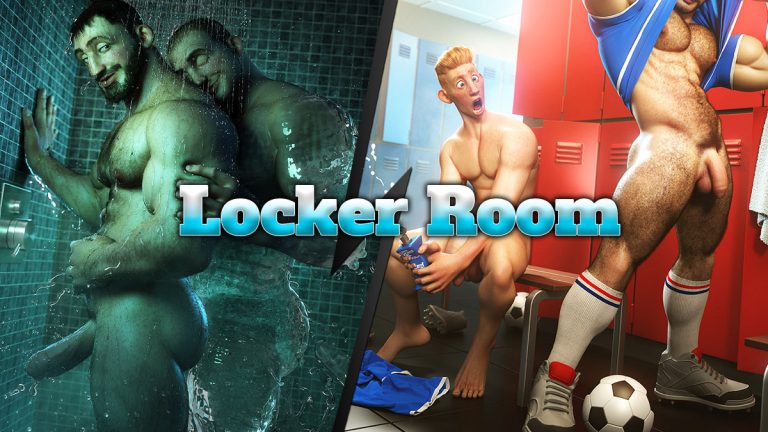
4. Locker Room
Capitalizing on the "jock" and "sports" archetype, Locker Room delivers on the fantasy of post-game bonding turning into something far more explicit. Its appeal lies in its straightforward, hyper-masculine aesthetic.

Implications: The Future of Queer Digital Space
The growth of this sector has significant implications for how we view queer digital identity. By creating spaces where fantasies can be enacted safely and with total anonymity, these developers are providing a service that goes beyond mere entertainment.
The Privacy Mandate
A critical factor in the success of these titles is the industry’s commitment to privacy. Unlike mainstream social media or gaming platforms, which often track user data, the best adult gaming studios operate on a "privacy-first" model. This ensures that users can explore their sexualities without the fear of social stigma or data exposure—a necessary condition for the growth of the medium.

The Role of Technology
As VR (Virtual Reality) and AI-driven NPC (Non-Player Character) interactions continue to improve, the next frontier for these games is immersion. Imagine a scenario where an NPC doesn’t just follow a script, but reacts in real-time to the player’s inputs, creating a truly unique and personalized experience. This is the trajectory the industry is currently on.
Addressing Criticisms and Ethical Considerations
It is important to acknowledge that the genre is not without its critics. Some argue that the prevalence of "coercion" and "forced" scenarios in these games could have negative real-world correlates. However, the prevailing counter-argument among players and developers is that these games serve as "fantasy containers."

Just as a person might watch a horror movie without desiring real-world violence, players of adult games use these platforms to process and explore complex, sometimes taboo desires within a safe, controlled, and non-consensual-free zone (within the logic of the game). As long as the distinction between digital fantasy and physical reality is maintained, these games function as a healthy outlet for human sexual expression.
Conclusion: A New Frontier
The landscape of gay adult gaming has moved well past its humble, pixelated beginnings. It has evolved into a sophisticated, multi-faceted industry that respects the diverse needs of its user base. Whether one is looking for the emotional depth of a well-written visual novel or the immediate, high-intensity satisfaction of a simulation game, the options are richer and more accessible than ever before.

As developers continue to push the boundaries of what is possible with game engines, and as the stigma surrounding adult gaming continues to dissipate, we can expect this sector to play an increasingly important role in the lives of gay men worldwide. For those who have yet to dive in, the message is clear: the technology is ready, the content is more immersive than ever, and the community is waiting.
The digital world has opened its doors—and for the modern "gaymer," there has never been a better time to step inside.


 Nana Wu
 Lina Hope