Azzam Bilal Chamdy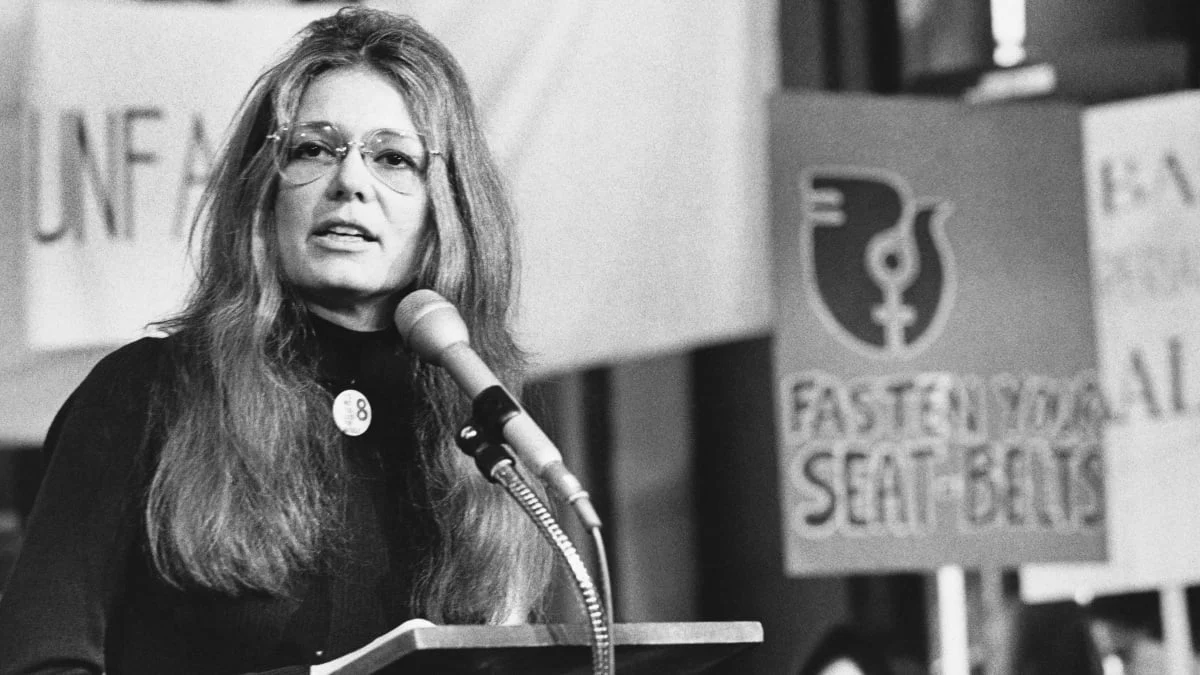
The global feminist movement has lost its North Star. Gloria Steinem, the legendary journalist, activist, and intellectual who defined the struggle for gender parity in the 20th and 21st centuries, has passed away at the age of 92. Her death was confirmed on Wednesday via a statement posted to her official Instagram account, marking the conclusion of a life that fundamentally altered the social and political fabric of the United States.
According to the official announcement, Steinem died peacefully at her home in New York City, surrounded by loved ones. The statement noted that she remained committed to the cause of equality until her final days, embodying the “independent spirit” and “curiosity” that had characterized her near-century on earth. No cause of death was disclosed, but the news has prompted a profound, global outpouring of grief and reflection from across the political, cultural, and academic spectrums.
A Life of Defiance and Discovery: A Chronology
To understand the scope of Gloria Steinem’s impact, one must look at the arc of her life—a journey from a nomadic childhood to the epicenter of the American cultural revolution.
Born in 1934, Steinem’s early life was marked by a lack of formal schooling and a deep sense of observation. Her path to prominence began in earnest in the early 1960s, a period when the limitations placed upon women in the workplace and society were rarely challenged in the mainstream press.
The Playboy Undercover Catalyst
In 1963, Steinem achieved national notoriety with a piece of investigative journalism that remains a masterclass in the form. Working undercover as a Playboy Bunny, she exposed the exploitative working conditions, low pay, and objectification inherent in the system. This exposé did more than just sell magazines; it peeled back the curtain on the "sexual liberation" of the era, revealing that for many women, it was merely another form of commodification. It was the first sign that Steinem possessed a unique ability to bridge the gap between high-level intellectual theory and the visceral, lived reality of working women.
The Ms. Magazine Era
By the late 1960s and early 1970s, Steinem became the face of the second-wave feminist movement. Her co-founding of Ms. magazine in 1971 was a watershed moment in publishing. Ms. was not merely a magazine; it was an insurgency. It provided a platform for issues that had been silenced in traditional media, including domestic violence, the pay gap, and, most controversially, reproductive rights. Under her stewardship, the magazine became the intellectual clearinghouse for the Equal Rights Amendment (ERA) and a vital hub for the Women’s Liberation Movement.
A Legacy of Recognition
Over the subsequent decades, Steinem’s influence only grew. She transitioned from a writer to a global orator and movement builder. Her work was recognized in 2013 when President Barack Obama awarded her the Presidential Medal of Freedom, the highest civilian honor in the United States. In presenting the award, Obama noted that Steinem’s work had "helped women break down barriers," acknowledging that her efforts were foundational to the progress of the modern American democracy.
The Power of the "Talking Circles"
While her public profile was defined by books, speeches, and marches, those who knew Steinem personally often point to her quiet, intimate work as her true legacy. In her later years, Steinem shifted her focus toward the "Talking Circles"—a practice she fostered in her own living room.
These circles were designed to be spaces of radical listening, where participants could speak their truths without judgment. As noted in the announcement of her passing, she held these sessions with remarkable regularity, hosting hundreds of guests even in the final months of her life.
Amanda Litman, President of Run For Something, reflected on these sessions, describing the profound experience of sitting in Steinem’s home while pregnant, discussing the future of women’s leadership. "It was an experience I’ll never forget," Litman wrote. The foundation she established, Gloria’s Foundation, remains the steward of this tradition, ensuring that the act of collective, empathetic listening continues as a form of grassroots activism.
Global Tributes: A Movement Responds
The death of Steinem prompted a wave of tributes that transcended borders and generations. The outpouring reflected not just respect for her resume, but a deep, personal affection for her character.
Writer Roxane Gay, who has been a prominent voice in contemporary feminism, captured the sentiment on social media: "Gloria was one of a kind. Genuine, generous, curious, thoughtful. She lived a staggering life and her passing is a staggering loss tempered only by the ferocity of her legacy."
Political leaders also weighed in on her influence. Former Speaker of the House Nancy Pelosi called her a "fearless trailblazer" who "transformed the fight for equality in America." Similarly, former Rep. Stacey Abrams highlighted the human side of the icon, noting that while meeting heroes often leads to disappointment, knowing Steinem was an honor, as her "humor and kindness were matched by a relentless belief that we could be better."
Even those from the world of entertainment felt the void. Shonda Rhimes, the prolific television producer, remembered her as "fierce and kind and full of grace." Musicians and performers, including Carole King and Sandra Bernhard, echoed these sentiments, emphasizing that the best way to honor Steinem is to "carry her fight" and continue the work of reclaiming reproductive and civil rights.
Implications: The Future of the Movement
Steinem’s passing comes at a precarious moment for the causes she championed. With the shifting landscape of reproductive rights and the ongoing, often contentious, debates regarding gender parity, the movement finds itself in a period of transition.
However, the consensus among scholars and activists is that Steinem’s greatest contribution was not just the battles she won, but the infrastructure she built. By training a new generation of leaders and normalizing the idea that women’s voices are essential to the democratic process, she ensured that her death would not mark the end of the movement, but rather a call to arms.
Beyond the Icon
One of the most poignant tributes came from author Tia Levings, who noted that many grew up in environments where Steinem was painted as a radical or an enemy. She encouraged those who were once wary of Steinem’s politics to take this moment to "educate yourself on her extraordinary life and fight for all women." This speaks to the enduring, often polarizing, but ultimately undeniable power of her work: she forced a national conversation that society could no longer ignore.
The Signal Fire
The official statement from her team included a metaphor that felt fitting for the end of a long, arduous journey: "Gloria loved the tradition of lighting signal fires on hills to light the way to the other side of the mountain."
In her final days, Steinem requested that those wishing to honor her memory donate to Gloria’s Foundation. The foundation does not merely archive her history; it provides fellowships and residencies for those working on current social justice projects, effectively turning her estate into a living, breathing engine for future activism.
A Final Reflection
Gloria Steinem’s life was defined by a refusal to be defined by others. From the moment she stepped into the spotlight as an undercover reporter to the quiet, final days spent hosting circles of younger activists, she remained a student of humanity. She understood that progress was not a straight line, but a series of conversations, connections, and, when necessary, confrontations.
As the tributes continue to pour in, from the halls of power to the social media feeds of young activists, one thing is clear: while the person has left, the philosophy remains. The "signal fire" she lit has not gone out. It has been passed to a generation that she spent her life preparing, teaching them that the fight for equality is not a burden to be carried, but a shared responsibility to be honored.
Gloria Steinem leaves behind a world that is fundamentally more aware of its own inequities, and perhaps more importantly, better equipped to dismantle them. She did not just lead the fight for equality; she invited us all to join her in it. And in that invitation, she left the most enduring legacy of all.


 Lina Hope
 Jia Lissa