Ali Ikhwan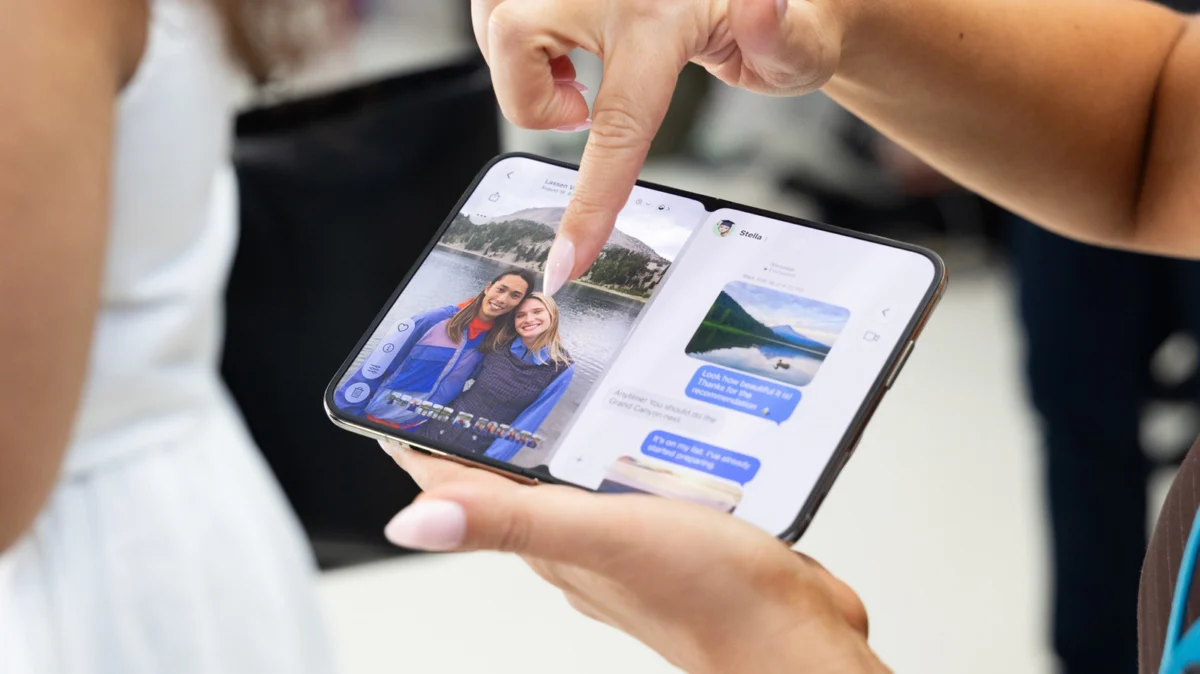
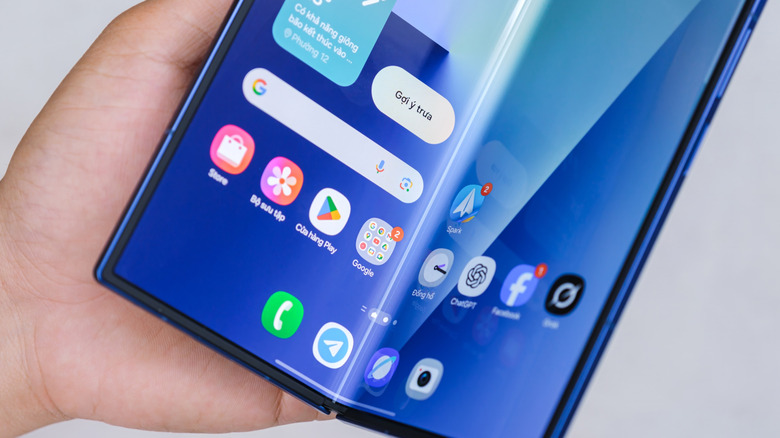
The smartphone industry has spent the better part of a decade chasing the "holy grail" of mobile hardware: a device that offers the expansive utility of a tablet while maintaining the portability of a pocketable phone. With the recent announcement of the iPhone Duo, Apple has finally entered the foldable arena. However, as the initial excitement surrounding the device’s unveiling begins to settle, the industry’s focus has shifted toward a persistent, nagging reality that has haunted the foldable category since its inception: the screen crease.
Apple’s solution to this mechanical shortcoming involves a proprietary nano-texture display coating designed to diffuse light and mask the physical deformation inherent in folding glass. While initial hands-on reports suggest the visual impact of the crease has been significantly mitigated, experts and enthusiasts alike remain skeptical. The true test of the iPhone Duo will not take place on the pristine demo tables of an Apple event, but in the pockets and bags of consumers over the coming years.
The Evolution of the Crease: A Brief Chronology
To understand why the iPhone Duo’s crease remains a point of intense scrutiny, one must look at the history of foldable technology.
- 2019: The "First Generation" Struggles: The release of the original Samsung Galaxy Fold marked the arrival of foldables in the mainstream consciousness. However, it was plagued by structural failures, most notably at the hinge and the crease. The plastic polymer screens of the time were fragile, and the visible indentation was often deep enough to catch a fingernail.
- 2020–2022: The Refinement Phase: Competitors like Huawei, Motorola, and Xiaomi entered the fray. During this period, manufacturers shifted to "Ultra-Thin Glass" (UTG). While this improved tactile feel, it did little to eliminate the physical crease. Instead, manufacturers focused on "teardrop" hinge designs, which allowed the screen to fold into a wider arc, effectively shallowing the crease.
- 2023–2024: The Pursuit of Perfection: By the time of the Galaxy Z Fold 8, the crease had become a cosmetic issue rather than a structural one. Most users grew accustomed to it, though it remained the primary "tell" of a foldable device.
- Late 2024: The Apple Entry: Apple’s announcement of the iPhone Duo introduced the nano-texture coating. By applying a matte, anti-reflective layer, Apple isn’t necessarily removing the physical depression; they are using optical physics to ensure the eye cannot easily track the transition between the two halves of the screen.
The Physics of the Fold: Why Creases Persist
The fundamental problem with any foldable display is simple Newtonian physics. To fold a display, the material must be flexible. Glass, by its nature, is brittle. Even when thinned to a microscopic level, it requires a "hinge zone" that is subjected to extreme stress every time the device is opened or closed.
When a phone is folded, the display is compressed on the inside and stretched on the outside. Over thousands of cycles, the substrate—the layer beneath the glass—begins to fatigue. This results in "permanent set," a deformation that refuses to flatten out completely even when the phone is fully extended.
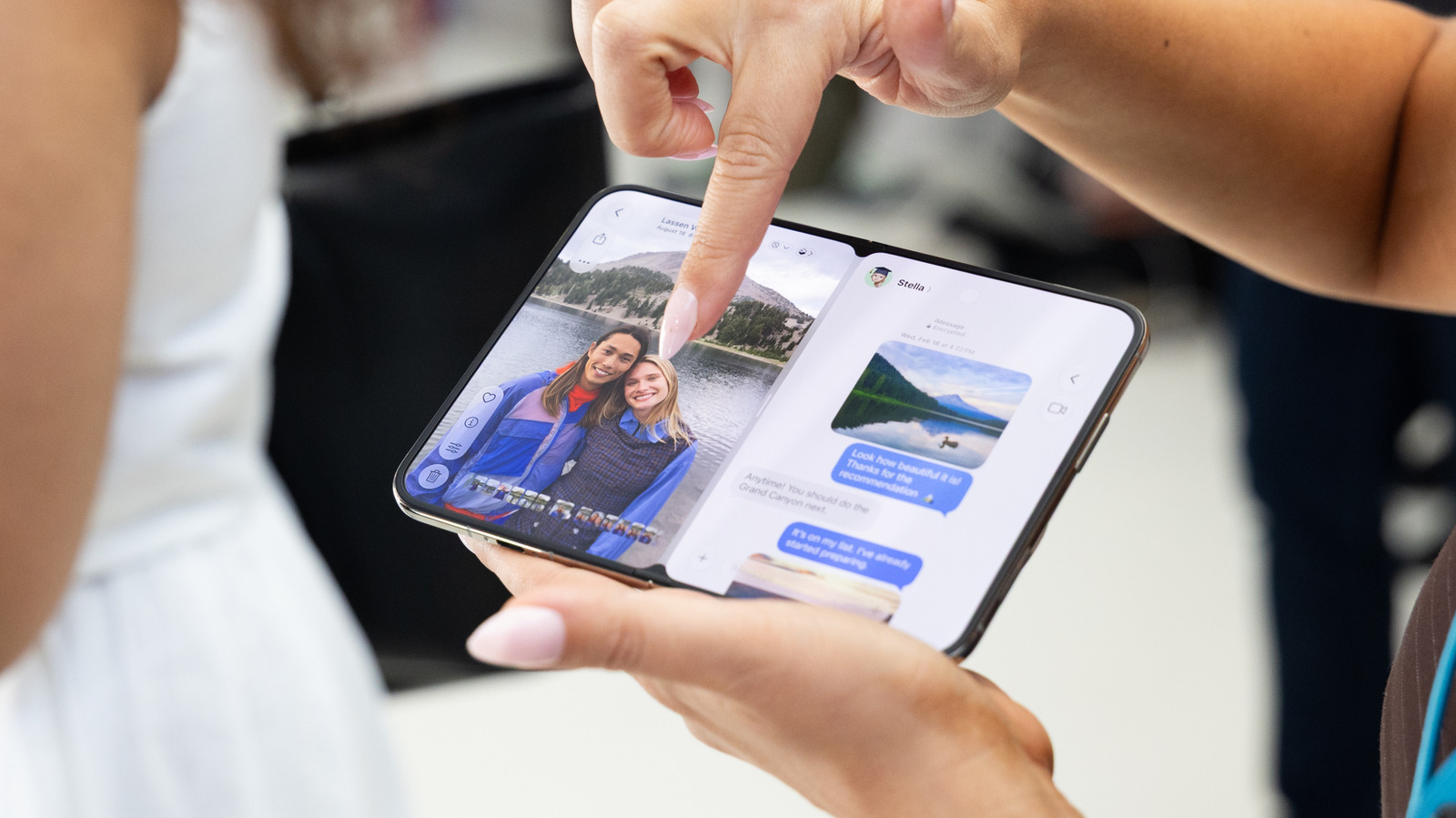
Apple’s nano-texture coating is an ingenious optical offset. By creating a surface that scatters light, the company masks the sharp highlights that typically outline a crease. In a brightly lit retail store, this works remarkably well. However, in low-light conditions or when viewing the screen from extreme angles, the physical indentation remains. The central question remains: Does this coating mask the degradation that occurs over months of daily use, or will the crease eventually "punch through" the visual trickery?
Supporting Data: The Cumulative Damage Factor
When analyzing the longevity of foldable displays, analysts look at "cycle counts"—the number of times a device can be folded before the panel exhibits signs of failure. Most modern foldables are rated for 200,000 to 400,000 folds.
However, lab-tested folding is different from real-world usage. Real-world conditions include:
- Thermal Expansion/Contraction: Changes in temperature significantly alter the viscosity of the adhesives holding the display to the frame.
- Debris Intrusion: Even the smallest particle of dust trapped in the hinge can create a "point-load" stressor on the back of the display, leading to a permanent dead pixel or a deeper, more pronounced crease.
- Pressure Sensitivity: Unlike a standard iPhone, the screen of the Duo is susceptible to fingernail indentations and localized pressure.
Current durability data from the Galaxy Z Fold series shows that while the hinge remains robust, the "crease depth" increases by roughly 15–20% over 18 months of heavy usage. If the iPhone Duo follows a similar trajectory, Apple’s nano-texture coating will face its greatest test as the material beneath it loses its original tension.
Official Responses and Corporate Strategy
Apple has been characteristically guarded about the technical specifications of its hinge and display-layering process. During the launch, Apple executives emphasized the "durability of the Ceramic Shield 2" and the "precision engineering" of the hinge mechanism.
"When I see someone put a screen protector on their iPhone, it makes my skin crawl," an Apple VP of hardware engineering remarked recently, suggesting that the company believes their factory-applied coatings and materials are superior to anything an aftermarket accessory could provide. By integrating the nano-texture directly into the screen manufacturing process, Apple is attempting to control the entire user experience. They are essentially betting that by the time a user notices the crease beginning to deepen, they will be ready for an upgrade, or that the degradation will be slow enough to remain within the threshold of "acceptable wear."
Implications for the Future of Mobile Hardware
The success or failure of the iPhone Duo will set the tone for the next decade of smartphone design.
For the Consumer
The consumer is caught in a trade-off. If the iPhone Duo proves that a "near-invisible" crease can be maintained for two or three years, it will likely trigger a massive shift toward foldables as the new standard for flagship devices. If, however, the crease becomes a prominent, distracting mark after just six months, the foldable category may struggle to shed its "gimmick" reputation among power users who prioritize aesthetics and display longevity.
For the Competition
Manufacturers like Samsung, Google, and OnePlus are likely watching Apple’s implementation with extreme interest. If Apple’s nano-texture approach proves superior, we can expect a rapid industry-wide pivot toward similar optical-masking technologies. This would essentially turn the "crease race" from a mechanical engineering challenge into a material science and coatings challenge.
For the Repair Industry
A major implication of this design is repairability. If the nano-texture coating is damaged—a high probability given its matte, soft nature—the entire display assembly will likely require replacement. Unlike a standard smartphone screen, which is protected by a hard, oleophobic glass layer, the iPhone Duo’s surface is a complex, multi-layered system. This raises concerns regarding the total cost of ownership for early adopters.
Conclusion: The Long-Game
As we look toward the wider release of the iPhone Duo, it is essential to temper the initial, enthusiastic reviews with a dose of reality. The device is a technical marvel, representing the pinnacle of what is currently possible with flexible display technology. However, a device is not merely the sum of its launch-day features; it is the sum of its performance over its entire lifecycle.
For now, the crease is a ghost—visible in some lights, hidden in others, and waiting for the passage of time to reveal its true permanence. Whether Apple has truly "solved" the problem or merely applied an elegant, high-tech bandage remains to be seen. The true verdict will not be delivered by the tech press this month, but by the millions of users who will be folding, unfolding, and living with the iPhone Duo for years to come. Until then, the crease remains the defining challenge of the foldable age, a physical reminder that even the most advanced technology must eventually bow to the laws of physics.

 Lina Hope
 Nana Muazin