
 Siti Muinah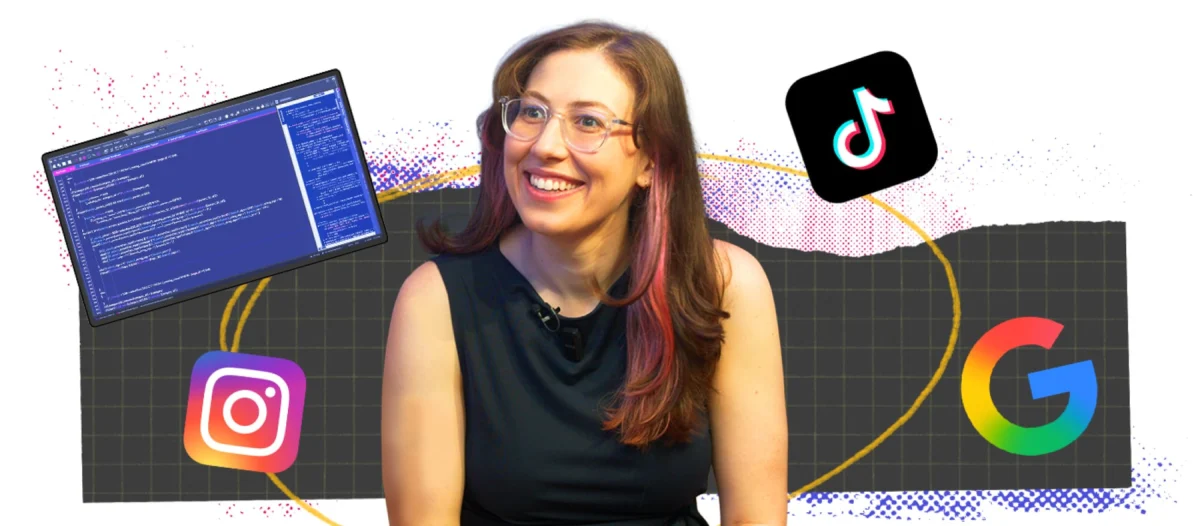
By Crystal Bell | Digital Culture Editor
September 30, 2026
For six and a half years, the life of a software engineer at Google was defined by rigorous logic, syntax, and the pursuit of scalable infrastructure. But for the creator now known as "Alberta Tech," that life has been traded for a different kind of architecture: the architecture of a viral video.
Alberta Tech’s transition from a behind-the-scenes builder to a front-facing digital personality represents a growing trend in the creator economy—the migration of highly skilled professionals who are leveraging their niche expertise to demystify complex industries through comedy. In an exclusive interview, Alberta details how she navigated the transition from corporate stability to the volatile, high-stakes world of full-time content creation.
The Genesis: A Pandemic Pivot
The spark for Alberta’s career shift was not a calculated business plan, but the universal byproduct of the early pandemic: boredom. Like millions of others confined to their homes, Alberta turned to social media as a creative outlet.
"I was just bored at home," she recalls. "I wanted to be making jokes on TikTok because everybody I knew was scrolling there. I started off making silly jokes about living in a tiny New York apartment, but as time progressed, I found my community through tech."
Initially, Alberta led a "double life." By day, she was a Google engineer building features for YouTube; by night, she was a creator analyzing the very platform she worked on. This duality allowed her to observe the creator economy from two distinct vantage points: the internal, technical side and the external, cultural side.

Chronology of a Career Shift
The decision to leave Google was not sudden. It was a calculated risk that followed years of balancing two demanding roles.
- 2020: The "boredom" phase begins. Alberta starts posting sketches on TikTok to cope with pandemic isolation.
- 2021–2023: The "dual-life" era. Alberta builds a dedicated following among software engineers by satirizing the absurdity of tech culture while maintaining her role at Google.
- Early 2026: The tipping point. Alberta realizes that her content requires a level of production quality and focus that is incompatible with a 40-hour work week at a tech giant.
- Mid-2026: The leap of faith. After a nervous conversation with her manager, she resigns to pursue content creation as a full-time career.
"I loved working in my job, especially since I was working specifically on YouTube," Alberta says. "But at a certain point, I realized that to take this seriously—to hit the high-quality bar I wanted—I needed to do this full-time."
The Secret Weapon: Credibility as Currency
In an era where "influencer" is often synonymous with superficiality, Alberta’s background provides a significant competitive advantage: domain expertise. Her audience is composed largely of software developers and tech professionals who demand authenticity.
"To speak to that group of people, you need to have some kind of credential," she explains. "You need to know what you’re talking about."
This expertise acts as a filter for her comedy. By grounding her sketches in the technical realities of generative AI, "vibe coding," and office politics, she builds trust. When she satirizes the industry, her audience understands that the joke is coming from someone who has spent years in the trenches of the codebase.
AI: From Skeptic to User
One of the most compelling aspects of Alberta’s content is her evolving relationship with generative AI. A self-described "hard skeptic" in 2022, she initially viewed Large Language Models (LLMs) as "stochastic parrots" that offered little value beyond hype.

However, her stance has shifted toward a pragmatic, "cautiously optimistic" approach. Today, AI is a fixture in her workflow, though she remains critical of its creative limitations.
What AI Gets Right (and Wrong)
- Research and Exploration: Alberta utilizes AI to map out complex technical topics. It serves as a starting point for her to dive down "rabbit holes" that she might have otherwise missed.
- Creative Execution: This remains the AI’s Achilles’ heel. Alberta notes that while she has experimented with using AI to generate scripts, the results lack the nuance required for effective comedy. "I have never had that work for me," she says. "It’s not quite there yet."
The "Vibe Coding" Phenomenon
As a working engineer, Alberta has a unique perspective on the buzzword "vibe coding." While the term has become a pejorative in some developer circles—implying that a programmer is blindly trusting AI-generated code—Alberta views it as an inevitable evolution of the workflow.
"It’s not just blindly trusting that code anymore," she notes. "It’s becoming part of every programmer’s workflow. We don’t have a great word for it yet—I’ve heard ‘agentic engineering’—but it is the new reality."
Implications for Aspiring Creators
Alberta’s journey offers a blueprint for professionals looking to pivot into the creator economy, but she is quick to offer a word of caution. The transition is not merely about having a camera and a joke; it is about providing consistent, recognizable value.
The "Value Proposition" Rule
When asked what advice she would give to someone looking to quit their job, Alberta is blunt: Don’t do it until you have figured out your hook.
"Your audience doesn’t really care about you as a person initially," she says. "They care about the value you are providing. Until you find that thing—the entertainment that hooks them—you have to keep trying. Don’t quit your day job until you’ve found that resonance."

The Future of Human-AI Competition
As AI becomes more sophisticated, a common fear is that human creators will be rendered obsolete. Alberta’s experiment—remaking a viral video using AI-generated visuals—yielded a surprising result. While the video performed well, it reinforced her belief that the concept is the differentiator.
"The idea is the most important thing," she asserts. "AI levels the playing field, but it doesn’t replace the human intuition required to spot a trend or understand why a specific joke lands."
Conclusion: The New Professionalism
Alberta Tech’s career trajectory underscores a shift in how we perceive professional success. Moving from a high-status role at Google to the creator economy is no longer seen as a "fall from grace," but rather a diversification of labor.
By combining the structural discipline of engineering with the cultural insight of a creator, she has tapped into a demand for "edutainment" that is only expected to grow. As she continues to navigate this landscape, one thing is clear: the most successful creators of the future will be those who can speak the language of the machine while keeping the pulse of the human audience.
For now, Alberta is focused on the "uncomfortably exciting" state of the industry, keeping her audience informed and entertained as AI continues to rewrite the rules of both software engineering and digital media.

 Azzam Bilal Chamdy
 Sagoh
Sagoh





