
 Layla Zulfa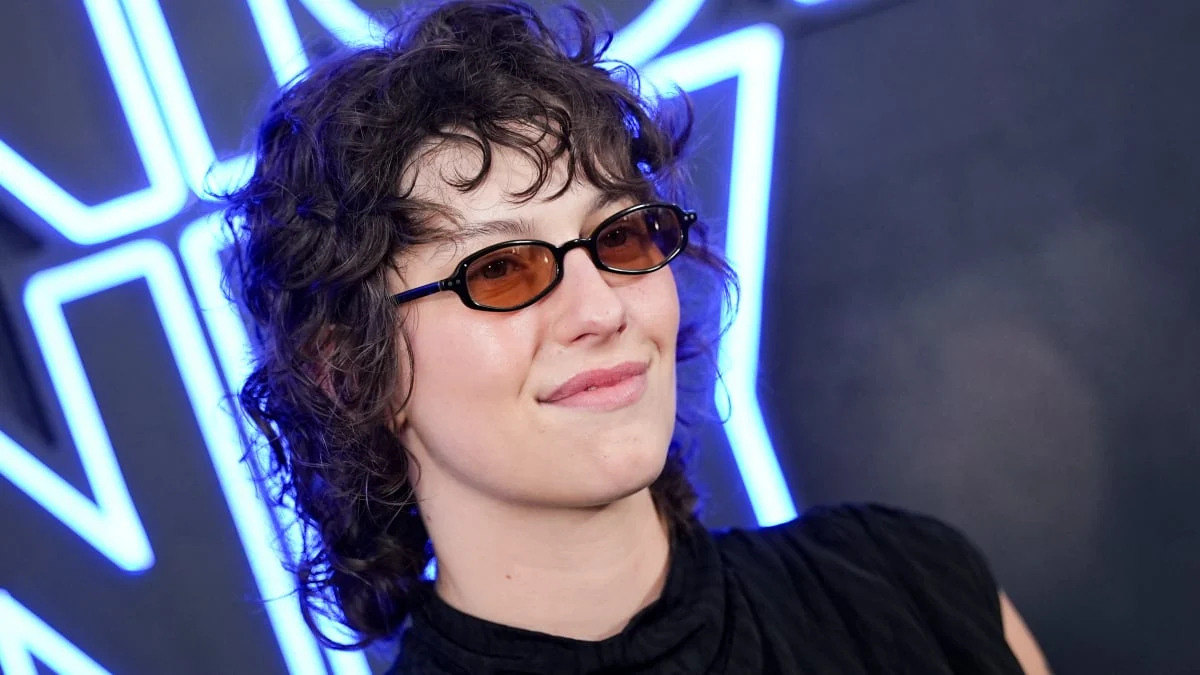
As September draws to a close, marking the final day of Bisexual Visibility Month, the internet has found itself embroiled in a familiar yet uniquely heated debate regarding the boundaries of sexual identity. At the center of this storm is singer-songwriter King Princess, whose recent candid remarks about her sexual history have reignited a long-standing, often volatile conversation within the LGBTQ+ community: Where exactly is the line between a label and a lifestyle, and who gets to draw it?
The Spark: A Resurfaced Podcast Moment
The controversy began when a November 2024 appearance on the podcast Celebrity Book Club with Steven & Lily was pulled from the archives and catapulted back into the social media zeitgeist. In the clip, the musician, who has long identified as a lesbian, spoke with disarming openness about her sexual experiences with men.
"I’ve taken a lot of dick," the singer stated during the episode. "Sometimes you get bored, and you’re just like, ‘I’m just gonna ride a cock.’ People get really shook when I say that… I’m not bi, but why would I exclude myself?"
The comments were intended to be a reflection on the fluidity of her personal experiences, but they hit a nerve within the sapphic community. To many, the statement felt contradictory—an attempt to claim the "lesbian" label while describing behavior that, by traditional definitions, falls under the umbrella of bisexuality or pansexuality.
A Chronology of the Digital Firestorm
The reaction was immediate and widespread. By the time the clip gained traction, King Princess’s name was trending on Reddit, dominating discussion boards like r/lesbiangang and r/lesbianactually. The sentiment was largely one of frustration. Critics argued that by maintaining a lesbian identity while actively engaging with men, the artist was effectively erasing the specific experiences and boundaries of the lesbian community.
As the discourse migrated from Reddit to X (formerly Twitter), Instagram, and TikTok, the responses became polarized. On one side, users accused the artist of "bisexual cosplaying," suggesting she was utilizing a marginalized identity for "cool" points while refusing to acknowledge the bisexual label. On the other side, some defenders argued that sexuality is inherently personal and that "lesbian" should not be treated as a rigid, exclusionary box.
The situation escalated when King Princess attempted to clarify her stance in a series of now-deleted TikTok videos. She maintained that she has never fallen in love with a man, nor has she sought a romantic relationship with one, framing her sexual encounters as purely transactional or born of boredom. She explicitly rejected the "gold star" standard—a controversial term used to describe lesbians who have never been with a man—arguing that her sexual history does not invalidate her primary attraction to women.
The "Identity Police" and the Definition of Lesbianism
At the heart of this controversy lies a tension between two competing philosophies of queer identity: one that views labels as descriptive of behavioral patterns, and one that views them as an expression of internal, romantic, and sexual orientation.
For many, the term "lesbian" is a political and social identity defined by an exclusive attraction to, and focus on, women. When a public figure—someone with significant cultural influence—claims that identity while simultaneously describing sexual encounters with men, it creates a cognitive dissonance for those who view "lesbian" as a term that excludes men entirely.
The comparison to other celebrities, such as Jojo Siwa or Reneé Rapp, has been frequent. The former has faced public scrutiny over her evolving sexuality, while the latter has been open about the fluid nature of her own labels, openly wondering if her identity might shift again in a decade. This fluidity is precisely what creates anxiety for those who desire stable, clear definitions within their community.
Supporting Data: The Stigma of Bisexuality
Why is there such a visceral reaction to the idea of being called "bisexual"? The answer, according to many sociologists and queer theorists, lies in the intense societal stigma that still clings to the label.
A recent study by YouGov highlights the depth of this issue. The data shows that a significant portion of the population is hesitant to engage with the bisexual community. Two-thirds of straight women surveyed stated they were unwilling to date a bisexual man, citing fears of infidelity or the antiquated stereotype that bisexual individuals are "confused" or "predatory."
This stigma is not limited to heterosexuals. The same research found that one-third of straight men are unwilling to date a bisexual woman, and, perhaps most surprisingly, one in five lesbians reported a similar reluctance to date bisexual women.
These statistics suggest that the refusal to identify as bisexual—often seen as "biphobia" or "bi-erasure"—is frequently a defensive reaction to the baggage the label carries in the real world. By claiming a "safer" or more "fixed" label like lesbian, some individuals may be subconsciously shielding themselves from the harsh judgment that the "bi" label attracts.
The "Witch Hunt" and the Danger of Speculation
The controversy took a darker turn when King Princess, in a moment of frustration, commented on the habits of other pop stars. She suggested that followers should "check on the pop divas who are actively lying about being gay… in fully committed relationships with men on the DL."
This comment acted as an accelerant, turning a debate about labels into a speculative "witch hunt." Fans began pouring over the public records of various queer celebrities, attempting to "out" or "expose" those who might be hiding their true sexual lives behind a curated public image. This transition from discussing identity to policing the personal lives of others illustrates the toxic nature of modern parasocial relationships, where fans feel entitled to the intimate truths of the people they consume as entertainment.
Official Responses and Implications
To date, no formal institutional statement has been issued, nor is one expected. The incident remains a purely cultural phenomenon—a case study in how the internet processes the intersection of fame, identity, and tribalism.
The implications, however, are significant. We are living in an era where identity is increasingly viewed as a form of social currency. When a label like "lesbian" or "bisexual" is debated, it is rarely just about the definition of the word; it is about the community, the history, and the safety that those labels provide.
For the bisexual community, the frustration is twofold: they are simultaneously fighting against the stigma of being "less than" or "untrustworthy" while watching high-profile individuals avoid the label as if it were a scarlet letter. This reinforces the very hierarchy that makes being bisexual difficult in the first place.
Conclusion: Labels in a Post-Binary World
As we exit Bisexual Visibility Month, the King Princess controversy serves as a reminder that we are far from a post-label society. The human brain’s innate desire for categorization—for the "black-and-white" comfort of a box—clashes violently with the messy, gray reality of human desire.
If we look at the core of the issue, we see a culture that is more interested in policing who belongs in which box than in understanding the nuances of individual experience. King Princess’s assertion that "you can’t tell me what my sexuality is" is technically correct in an individual sense; however, the social contract of identity relies on a shared understanding of what those labels mean to the collective.
Ultimately, whether or not King Princess identifies as bisexual is a matter for her alone. But the intense, often painful debate her comments have sparked reveals a deeper truth about the state of our community in 2026: we are still grappling with how to hold space for fluidity while protecting the sanctity of the identities that have historically provided us with refuge. Until we address the systemic stigma that makes the "bisexual" label so undesirable to so many, we will likely continue to see these same arguments cycle through our feeds, each one louder and more divisive than the last.


 Azzam Bilal Chamdy
 Sagoh
Sagoh





