

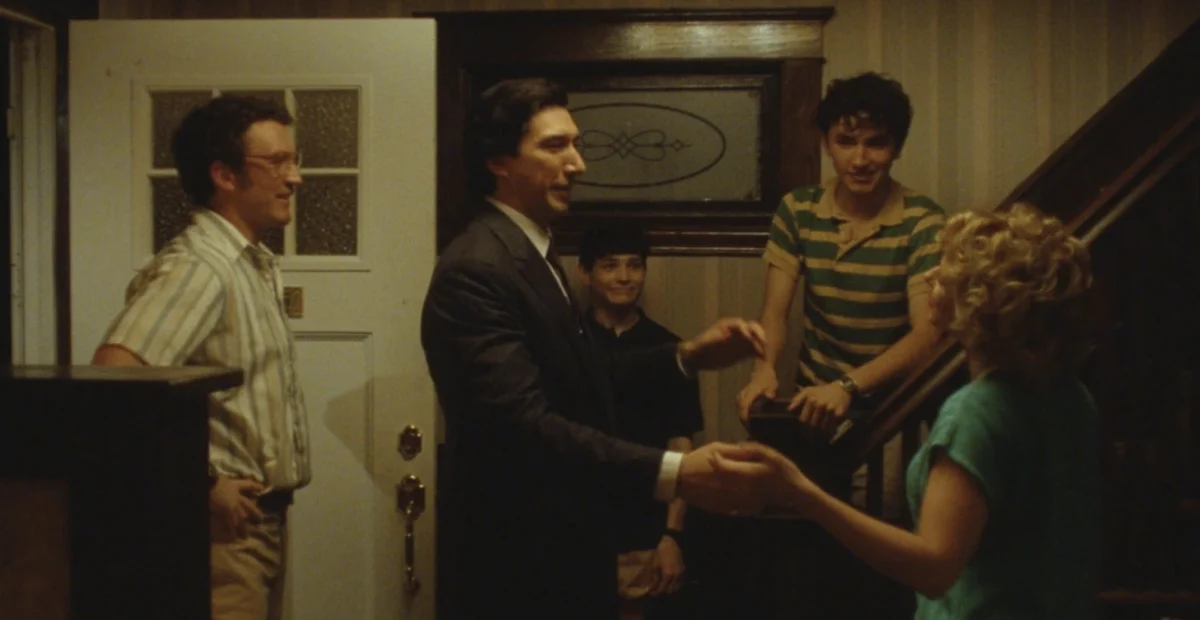
The late summer of 1986 serves as a cinematic pressure cooker in James Gray’s latest masterwork, Paper Tiger. Set against the backdrop of a humid, restless Queens, the film captures a specific moment in time—the final weeks of a season defined by the fading echo of a vanishing middle class and the looming, mythic triumph of the 1986 New York Mets. For Irwin Pearl (Miles Teller), a soft-spoken, nebbishy engineer, these weeks are a period of quiet, suburban stagnation. He remains blissfully unaware that he is living through a “golden age” of sorts, a period of stability that will soon be violently dismantled by the very forces he seeks to emulate.
Paper Tiger is more than a period piece; it is a harrowing, intimate examination of the "devil’s bargain" that is the modern family. By blending the grand, fatalistic themes of Aeschylus with the gritty, grounded reality of 1980s New York, Gray has crafted a tragedy that feels simultaneously ancient and devastatingly contemporary.
The Collision of Ambition and Oblivion
The film’s narrative engine is built on the friction between two brothers: the cautious, overlooked Irwin and his older sibling, Gary (Adam Driver). Gary, a divorced former police officer who navigates the city with the swagger of a man untouchable by consequence, represents the seductive allure of the American Dream. He drifts into the lives of Irwin, his wife Hester (Scarlett Johansson), and their two teenage sons like a storm front, bearing the trappings of wealth—a blue Mercedes and a catered feast from Peter Luger’s—that throw the modesty of Irwin’s life into sharp, painful relief.
While Irwin toils in the suburbs, grappling with his mother-in-law’s demands for an upscale relocation to Great Neck and the escalating costs of his son’s 18th birthday, he finds himself increasingly susceptible to the lure of the "Mount Olympus" that Gary occupies. Irwin is not naturally ambitious, but the persistent, low-level humiliation of his perceived inadequacy eventually cracks his resolve.

A Chronology of a Downward Spiral
The central catalyst of the film’s plot is a business proposal that marks the beginning of the end for the Pearl family. Gary approaches Irwin with a "lucrative" opportunity involving a land development project along the Gowanus Canal. Under the guise of legitimate engineering work, Gary lures his brother into a collaboration that is, in reality, a front for a ruthless Russian criminal syndicate.
The descent into the underworld follows a precise, sickening trajectory:
- The Hook: Gary exploits Irwin’s latent desire for financial independence, framing the Gowanus project as a harmless, high-paying engineering contract.
- The Inciting Incident: Irwin, displaying a naive commitment to the quality of his work, brings his sons to the canal to survey the site. They inadvertently witness the Russians illegally dumping toxic waste into the water, a discovery that irrevocably marks them as liabilities.
- The Confrontation: The subsequent encounter with the syndicate is a masterclass in tension, leaving the family in the crosshairs of a brutal turf war.
- The Ultimatum: Gary is given a one-week deadline to rectify the "problem" created by his brother’s discovery. The demand for $125,000 serves as a ticking clock that highlights the disparity between the brothers’ understanding of their reality.
- The Ruin: As the deadline looms, the film shifts into a frantic, fatalistic pursuit of survival, stripping away the veneers of the Pearl family’s suburban life to reveal the hollow, desperate core beneath.
The Performance of a Lifetime: Adam Driver’s Gary
The emotional weight of Paper Tiger rests squarely on the shoulders of Adam Driver. His portrayal of Gary is a career-defining performance, oscillating between flash, menace, and a fractured, desperate sincerity. Driver imbues Gary with the tragic flaw of the classic tragic hero: he believes he is saving his brother, even as he is leading him to the slaughter.
In scenes that are as quiet as they are chilling, Driver portrays a man who uses his own apparent success as a form of currency, desperate to buy back the love and respect he feels he has lost. Opposite him, Miles Teller’s Irwin provides a necessary, grounded counterpoint. Teller’s performance, reminiscent of an aging, disillusioned Albert Brooks character, captures the tragedy of a man who realizes, too late, that his "smarts" were no match for the predatory systems he tried to navigate.

Scarlett Johansson’s turn as Hester is equally critical. Though she is kept in the dark by her husband for the sake of "protection," her performance is characterized by a growing, hollowed-out sense of foreboding. Her journey reflects the internal collapse of a family unit that is being suffocated by secrets and the crushing weight of external expectations.
Supporting Data and Thematic Implications
While the film is elevated by its performances, its technical execution remains a vital component of its impact. Cinematographer Joaquín Baca-Asay utilizes 35mm film to capture the grit of 1980s New York, turning the environment into a silent witness to the family’s decay. The visual language of the film—from the flickering, orange-hued light of a home invasion to the dark, industrial sludge of the Gowanus—reinforces the sense of inevitable ruin.
Thematically, Paper Tiger functions as a critique of the American obsession with upward mobility. By referencing Aeschylus’ plea for "wealth without tears," Gray frames the film as a cautionary tale. He argues that the pursuit of a higher standard of living often demands the sacrifice of the very things that make life worth living: honesty, safety, and, ultimately, family.
The "Paper Tiger" of the title serves as a perfect metaphor for the family itself. On the surface, they appear robust, capable, and on the verge of greatness; in reality, they are fragile, easily torn by the slightest application of external pressure.

Critical Reception and Industry Impact
Paper Tiger premiered in Competition at the 2026 Cannes Film Festival to widespread acclaim, with critics noting the film as the most personal and self-referential entry in James Gray’s body of work. It is being heralded as a maturation of his "auto-cinema" style—a process where the director filters his own formative experiences through the structure of classical tragedy.
The industry response has been overwhelmingly positive, with many pointing to the film’s "fatalistic velocity" as a return to the form of Gray’s early classics like Little Odessa and The Yards. By stripping away the scale of his recent, more experimental projects, Gray has returned to the "textbook parable" of the American family, proving that the most profound cinematic statements are often those that look inward.
Implications for the Audience
Ultimately, Paper Tiger leaves the viewer with a haunting question: What is the cost of "having it all"? As Irwin mutters the film’s most poignant line—"We already had everything"—the audience is forced to confront the tragedy of his realization. The film suggests that the desire for more is the primary engine of human misery, a sentiment that resonates powerfully in an era marked by economic uncertainty and social division.
Through the lens of the Pearl family, Gray has created a mirror for the audience to examine their own "devil’s bargains." It is a film that refuses to offer easy catharsis, instead choosing to sit with the silence that follows the destruction of a household. As the credits roll, the viewer is left not with the relief of a resolved plot, but with the sobering, lingering truth that the greatest risk we take in life is the very family we strive so hard to protect.

Paper Tiger is scheduled for a theatrical release via NEON later this year, and it is poised to be a significant player in the upcoming awards season. It stands as a testament to the power of film to articulate the "soft and immortal agony" of the human condition, solidifying James Gray’s place as one of the most important voices in contemporary American cinema.









No comments yet. Be the first to join the conversation!