In a disturbing incident that has ignited a firestorm across social media, a delivery driver has been caught on camera deliberately throwing a package at a family’s pet cat. The event, which occurred in Virginia Beach, Virginia, on October 25, has reignited long-standing debates regarding the conduct of gig-economy delivery personnel and the safety of household pets in the age of omnipresent doorbell surveillance.
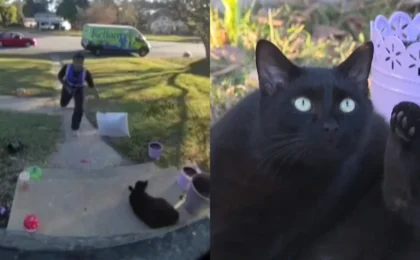
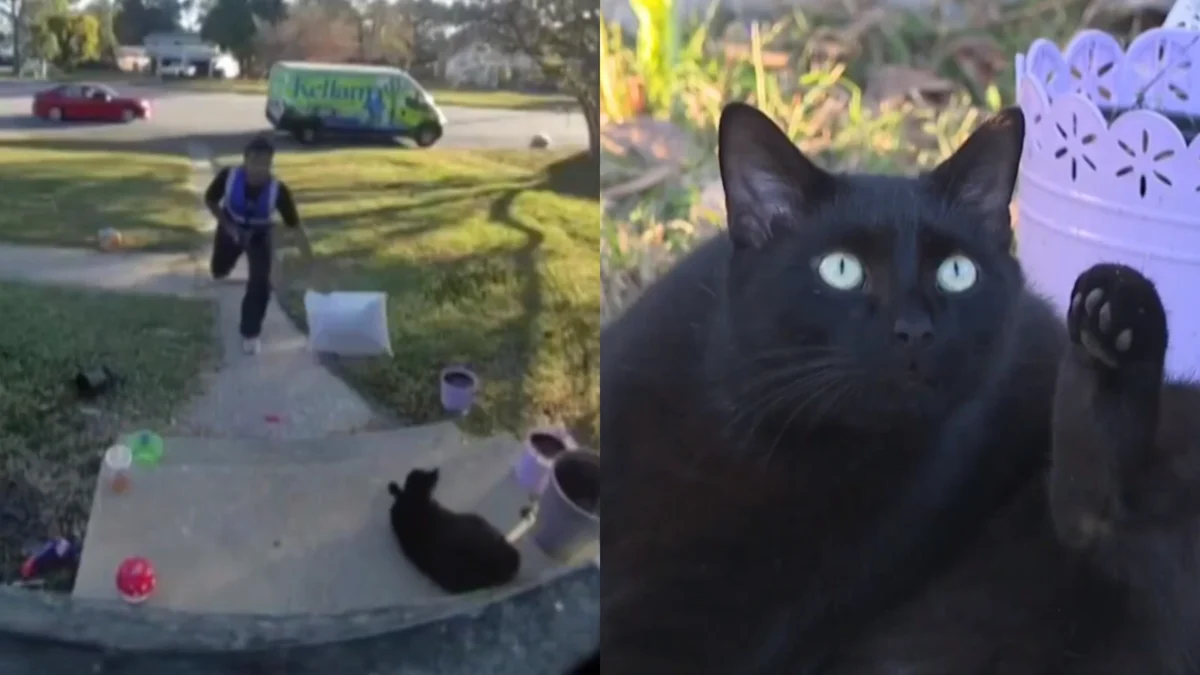
The victim of the assault, a 21-pound black cat named Opie, was simply enjoying a quiet moment on his front porch when the encounter turned aggressive. The footage, captured by the family’s Ring doorbell camera, shows the driver approaching the residence, spotting the resting feline, and choosing to lob a parcel directly at the animal before appearing to smirk and proceed with his documentation duties.
A Chronology of the Confrontation
The incident began in the early afternoon of October 25. According to Isabell Sump, Opie’s owner, the cat was resting peacefully—a typical behavior for the laid-back feline.
- The Arrival: The delivery driver, working for the service provider GOFO, approached the Sump residence. The video shows the driver hesitating as he spots Opie on the porch.
- The Act: Rather than placing the package on the ground or opting for a different delivery location, the driver lunged forward, throwing the parcel with enough force to strike the cat.
- The Reaction: Following the impact, the driver did not show immediate concern. Instead, he is observed smirking and taking the required "proof of delivery" photos of the package, despite having just assaulted a living creature.
- The Viral Surge: Ms. Sump uploaded the footage to social media, where it was quickly picked up by news outlets and viral content aggregators. The juxtaposition of the driver’s nonchalant demeanor and the cat’s obvious distress triggered immediate outrage.
- The Return: Following the public outcry and the identification of the driver, the individual returned to the Sump residence to offer an apology, which was captured during a subsequent news interview.
The Owner’s Perspective: A Lack of Provocation
For Isabell Sump, the incident has been both traumatic and infuriating. "He’s typically a very carefree cat," Sump explained in an interview with WAVY. "He doesn’t bother anybody unless they give him a reason, and he wasn’t doing anything. He picked his head up and then next thing you know, he’s getting hit with a package."
Sump has been vocal about the aftermath, noting that Opie has exhibited behavioral changes since the incident, including a noticeable limp and an increased level of skittishness. The emotional toll on the family is significant, as the safety of their pet—a member of the household—was compromised by someone tasked with a professional service.
During the driver’s return to the home to offer an apology, the interaction was fraught with tension. The driver, communicating through a translation app, stated, "Cats make me uneasy. I came to apologize to the person. To show my face, because I’m telling you, I’m not someone who likes trouble, let alone cats."
Sump remained unconvinced by the justification. "He wasn’t bothering a soul; you could have put it at the bottom of the steps," she argued during the confrontation. "You didn’t have to throw it at him, laugh, and point at him. If you were scared of him, you could have left the package in the yard, and we would come get it. There’s no need to harm the animals."
Contextualizing the Incident: A Pattern of Concern
This event is not an isolated occurrence but rather the latest in a series of concerning interactions between delivery workers and household pets. Public trust in delivery services is increasingly being tested by footage revealing erratic or malicious behavior.
Earlier this year, an Amazon delivery driver in a separate incident was caught on camera taking a family’s cat from their property. In that case, the driver attempted to justify the abduction by claiming the cat was his own missing pet—a claim that sparked widespread disbelief and underscored the vulnerability of outdoor-accessible pets. Another similar case in England saw a cat stolen during a delivery, though, fortunately, that animal was eventually reunited with its owners.
Sociologists and animal behaviorists suggest that these incidents reflect a broader breakdown in the "social contract" between service providers and the homes they visit. When drivers operate under extreme time pressure and high-quota expectations, the human element—including respect for private property and the welfare of animals—is often the first casualty.
The Role of Superstition and Seasonal Timing
Ms. Sump also raised a poignant point regarding the timing of the incident. Occurring in late October, the assault on a black cat carries a heavier weight due to long-standing, albeit outdated, superstitions that often lead to increased mistreatment of black cats around Halloween.
"People have different views on black cats, and we worry about that," Sump noted. While there is no definitive evidence that the driver’s actions were motivated by occult superstition, the timing contributed to the heightened sensitivity of the community and the intensity of the public response. Animal shelters and rescue organizations frequently caution pet owners to keep black cats indoors during the Halloween season due to the elevated risk of targeted harassment, a reality that Sump is now acutely aware of.
Official Responses and Corporate Accountability
The logistics company, GOFO, has officially responded to the incident, confirming that they have contacted Ms. Sump and initiated an internal investigation into the driver’s conduct. In corporate statements, such companies often emphasize their "zero-tolerance policy" toward animal abuse and unprofessional behavior. However, for many observers, the question remains: How are these drivers vetted, and what training is provided regarding interactions with pets?
Legal experts suggest that while the driver has apologized, the path to criminal charges remains complex. Depending on the state’s animal cruelty statutes, the prosecution would need to prove that the driver acted with malicious intent to cause physical injury. While the video is compelling, it serves as a litmus test for how law enforcement interprets "harm" in the context of delivery-related incidents. As of now, it is unclear whether the driver will face termination or formal charges.
Broader Implications for the Gig Economy
The Virginia Beach incident has sparked a necessary conversation about the future of package delivery. As smart-home technology becomes standard, the "Ring-doorbell era" has provided a window into the daily lives of delivery drivers—and often, what homeowners see is not what they expect.
1. The Surveillance Effect
The rise of residential security cameras is fundamentally changing the delivery landscape. Drivers are now under constant surveillance, which should theoretically incentivize professional behavior. However, as this case demonstrates, it also provides a permanent, viral record of lapses in judgment.
2. Training and Pet Policy
Companies like GOFO, Amazon, and others may soon face pressure to implement specific training modules regarding animal interactions. Currently, most training focuses on efficiency and package security, with little guidance on how to handle an encounter with a friendly or neutral pet.
3. Consumer Trust
When a delivery service enters a property, the homeowner expects the package to be delivered safely and the property to be respected. When that trust is broken—especially when a family pet is involved—the reputation of the entire logistics provider is damaged. Companies are now finding that a single viral video can undo years of marketing and brand building.
Conclusion: A Call for Accountability
The story of Opie the cat has struck a chord because it highlights the vulnerability of our domestic spheres. Whether it is a delivery driver, a utility worker, or a visitor, the expectation of safety remains paramount.
As the investigation into the GOFO driver continues, the incident serves as a stark reminder that professional responsibilities must include a baseline of human decency. For Isabell Sump, the goal is not merely retribution, but ensuring that such a senseless act of aggression does not happen to another family or another unsuspecting pet.
"I just want people to know that this isn’t okay," Sump concluded. "He was on his own property. He was safe at home. No one should have to worry that a delivery driver is going to target their pet."
As the world watches to see if justice is served, the incident remains a cautionary tale of how quickly a routine service interaction can descend into a national conversation about empathy, animal welfare, and the responsibilities of the modern workforce. Whether through stricter corporate policy, legal consequences, or a shift in public awareness, the demand for accountability in the wake of this viral footage is clear. The case of Opie is not just about a cat and a package; it is about the standards we demand from those who traverse our neighborhoods every day.