In an era defined by hyper-optimized "morning routines," high-stakes productivity hacks, and the relentless pressure to turn every hobby into a side hustle, a quiet, rhythmic, and undeniably unusual trend has emerged from the depths of TikTok. It involves no expensive subscriptions, no complex goal-setting apps, and no sunrise yoga sessions. Instead, it involves a trampoline, the cover of darkness, and a woman who has spent the better part of a decade jumping her way through the middle of the night.
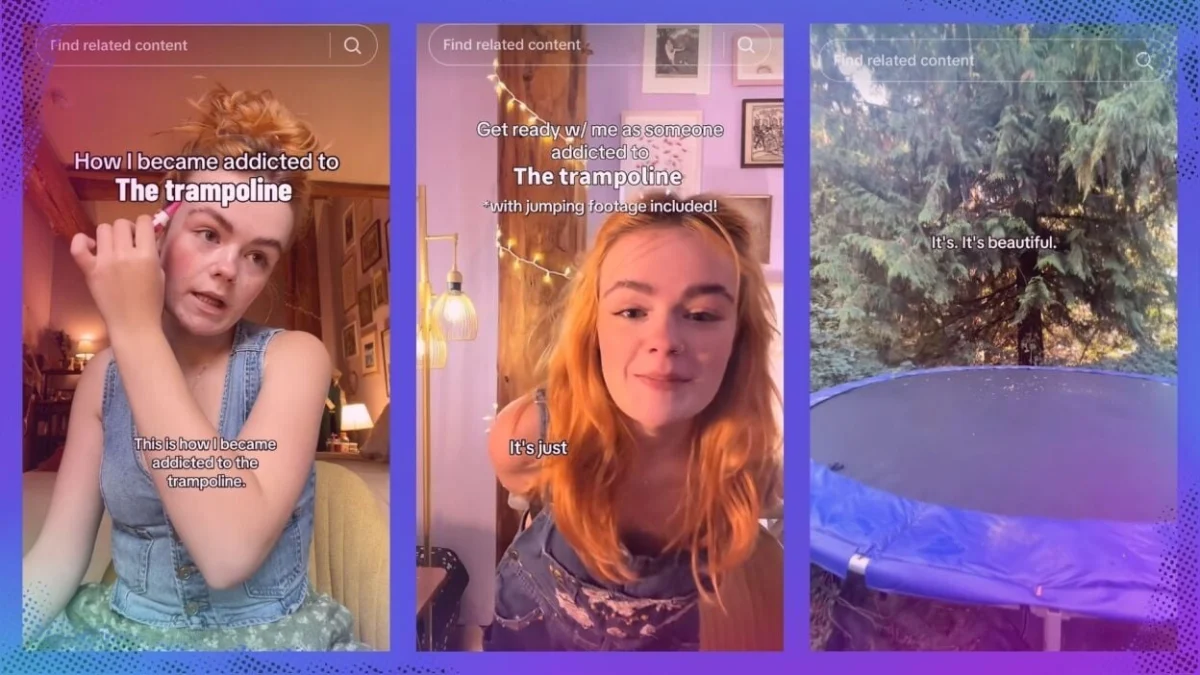
TikTok creator @whatifimjustagirl has recently captured the internet’s collective imagination—and sparked a spirited debate—by documenting her seven-year ritual of jumping on a trampoline, typically between the hours of midnight and 3 a.m. While the world sleeps, she is outside, headphones on, engaging in a repetitive, kinetic act of self-expression.
The Anatomy of an Unlikely Viral Hit
The phenomenon began as a personal diary of sorts. The creator, who prefers to keep the focus on the activity rather than her personal identity, began sharing clips of her nocturnal sessions. The videos are simple: a dark backyard, the faint squeak of springs, and a silhouetted figure bouncing rhythmically against the backdrop of a quiet night.
For most, the trampoline is a relic of childhood, a seasonal backyard toy that eventually gathers rust or ends up in a landfill. For this creator, it is an essential anchor. She describes the experience not as a workout—though the physical exertion is undeniable—but as a necessary sensory and emotional release.
"I look forward to it every single day," she stated in a recent viral video. Her routine is as minimalist as it is consistent: she has a rotation of reliable, comfortable clothing—leggings and a flannel for the chill of the night—and a curated playlist that fuels her sessions. It is a ritual stripped of pretense, devoid of the performative nature that often accompanies "wellness" content on social media.
A Chronology of a Seven-Year Habit
To understand the gravity of this habit, one must look at the timeline. Seven years is a lifetime in the context of internet trends. Most viral moments burn out in a week; this creator has maintained her trajectory for nearly 2,500 nights.
- Year 1-3: The Private Ritual: The activity began as a solitary pursuit, completely disconnected from the gaze of the internet. During these early years, the jumping was a way to process the stresses of young adulthood, serving as a private sanctuary away from the digital noise.
- Year 4-6: The Integration of Routine: The ritual became firmly entrenched in her lifestyle. It evolved from a sporadic activity into a "non-negotiable" part of her day. It was during this period that the physical benefits began to merge with the psychological; the rhythmic movement served as a meditative state.
- Year 7: The Viral Explosion: Earlier this year, she began documenting the process on TikTok. The reception was immediate. Users were simultaneously baffled, intrigued, and, for many, deeply envious. The sheer consistency of the act touched a nerve in a society that often feels fragmented and overwhelmed.
The Intersection of Mental Health and Public Perception
As the videos gained traction, the comment sections became a microcosm of modern armchair psychology. The internet, often quick to pathologize anything that deviates from the "norm," immediately began to speculate.
A significant portion of the discourse centered on whether the creator’s behavior was a symptom of neurodivergence, specifically autism. The creator, however, was quick to address the speculation with transparency and candor.

"I just wanted to comment on the mental health aspect of it because I have a lot of people assume I have autism, and I do not," she explained in a candid follow-up video. She did, however, confirm a diagnosis of Obsessive-Compulsive Disorder (OCD), acknowledging that it plays a role in her rigid adherence to the routine.
"Yes, is my obsession with the trampoline a little extreme? Yes. Does my OCD play a factor in that? Yes, but that’s not why I jump," she clarified. "I don’t think there needs to be a diagnosis [for it]."
Her response highlights a critical issue in digital culture: the tendency to "diagnose" creators based on curated clips. By reclaiming her narrative, she challenges the audience to accept that joy—even when it manifests as a repetitive, midnight-hour obsession—does not always require a medical label to be valid.
The Science of Repetitive Motion and Joy
While the creator is clear that her trampoline habit isn’t an "optimized" wellness hack, experts in human behavior suggest that there is a scientific logic to why she finds such peace in the activity.
The Power of Rhythmic Movement
Repetitive, rhythmic motion—such as jumping, rocking, or swaying—is known to have a self-soothing effect on the nervous system. This is why many people find comfort in pacing or swinging in a hammock. The vestibular system, which governs balance and spatial orientation, is stimulated by the act of jumping, which can lead to a release of endorphins and a reduction in cortisol (the stress hormone).
The "Flow State" at Night
The "midnight to 3 a.m." window is significant. During these hours, the world is at its quietest. The reduction in sensory input—diminished light, reduced traffic noise, and a lack of social expectations—allows the brain to enter a "flow state." In this state, the prefrontal cortex, which handles complex planning and self-criticism, quietens down, allowing for a more primitive, joyous connection to the present moment.
Implications for Modern Wellness
The popularity of this TikTokker suggests a cultural exhaustion with the "hustle culture" of self-improvement. We are told to wake up at 5 a.m., drink lemon water, journal for thirty minutes, and exercise for an hour—all before the workday begins.
This creator’s routine is a subversion of that model. It is not about becoming a better version of oneself; it is about finding a pocket of peace in a world that feels increasingly loud.

The Anti-Productivity Movement
Her success points to a growing desire for "low-stakes" activities. There is no monetary reward for her jumping. There is no leaderboard. There is no "before and after" photo meant to sell a supplement. It is a pure, unadulterated act of doing something simply because it feels good. In a digital economy that demands constant monetization of our hobbies, this is a radical act of rebellion.
The Social Component of Solitude
Ironically, by posting her solitary habit, she has created a community of thousands who watch her for a sense of vicarious relief. Her viewers are not necessarily going to buy trampolines; they are tuning in to see someone else prioritize their own happiness over the demands of the clock.
Conclusion: Is There a Secret to Happiness?
As we look at the trajectory of this viral story, the lesson is perhaps less about the trampoline and more about the permission to be "unproductive."
The "secret" to happiness, as illustrated by this TikTokker, may not be found in the latest wellness app or the most expensive retreat. It is, perhaps, found in the discovery of a ritual that is entirely your own—one that requires nothing from anyone else, serves no purpose other than your own mental regulation, and persists simply because it brings you back to yourself.
While most of us will never jump on a trampoline at 2 a.m., we can all benefit from the philosophy behind it. In a world that is constantly asking us to change, improve, and perform, sometimes the most radical thing you can do is find your own version of a midnight bounce—a space where you are free to simply exist, move, and breathe, far away from the pressures of the day.
As the creator herself proves, the most important routine isn’t the one that makes you the most successful—it’s the one that keeps you the most human.