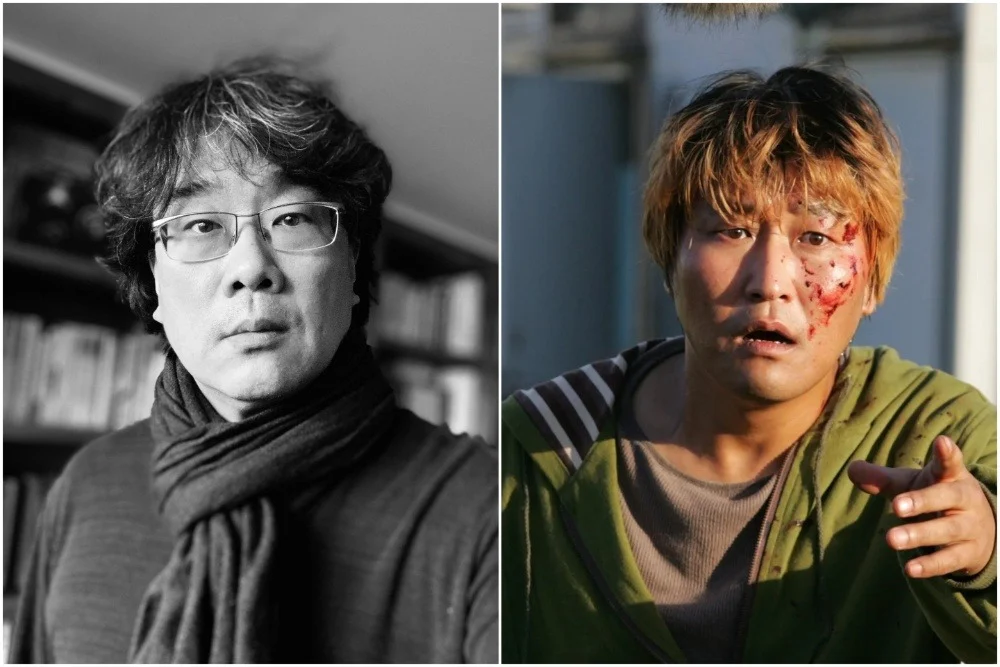
Twenty years after it first emerged from the murky waters of Seoul’s Han River, Bong Joon Ho’s genre-defying masterpiece The Host (2006) is set to reclaim its place on the big screen. Magnolia Pictures has announced a nationwide theatrical run for the film’s 4K restoration beginning November 20, offering both long-time devotees and a new generation of cinemagoers the chance to witness one of the most significant monster movies of the 21st century in its most pristine form.
The re-release is accompanied by a special cinematic event: on November 21 and 23, select screenings will feature an exclusive, moderated conversation between Bong and acclaimed British filmmaker Edgar Wright, bridging the gap between two of cinema’s most meticulous visual stylists.
A Legacy Refined: The 4K Restoration Process
For Bong Joon Ho, the restoration of The Host was not merely a technical exercise in upscaling, but an archaeological effort to preserve the artistic intent of his 2006 vision. Working closely with his original cinematographer, Kim Hyung-ku, Bong sought to replicate the specific aesthetic qualities of the film’s original 35mm print—a feat complicated by the fact that the movie was shot on Fuji film stock, which possesses a distinct color palette compared to the industry-standard Kodak.
"Ironically, we were using digital technology to enhance the film look of the movie," Bong remarked in an interview with Variety.
The process presented unique challenges, particularly regarding the visual effects. Produced in 2005 and 2006, the film’s creature effects—a collaborative effort between New Zealand’s Weta Workshop and the VFX house The Orphanage—predated the ubiquity of 4K workflows. The team had to meticulously upscale the legacy digital assets to ensure the creature maintained its seamless integration with the practical environments and the actors. While Bong admits he can still identify minor imperfections in the CGI that reflect the technology of the mid-2000s, he has chosen to leave them untouched.
"I believe that the film is a record of what I was as a filmmaker at the time, and so I do not have any wishes to correct that," Bong said. "Just like we don’t edit or rewrite our journals, I feel like it should just be left as it is." He noted that he briefly considered the "Ridley Scott approach"—referring to the Alien director’s tendency to trim and alter his films years after release—but ultimately decided against it. "I had that kind of impulse, but luckily I was able to hold myself back."
Chronology: From SARS to the Modern Era
When The Host premiered at the Cannes Film Festival in 2006, it was immediately recognized as a daring departure from the creature-feature template. Bong had written the script with the backdrop of the SARS outbreak in mind, infusing the narrative with a biting cynicism toward institutional authority.
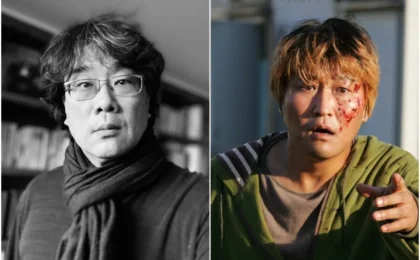
The plot centers on Park Gang-du (played by the incomparable Song Kang-ho), a bumbling, snack-kiosk worker whose life is shattered when a mutant creature—born from environmental negligence—snatches his daughter, Hyun-seo, from the banks of the Han River. While the family struggles to reunite, the South Korean government and foreign interests collude to fabricate a narrative about a fictitious virus, effectively using the creature as a smokescreen to control the populace.
Bong’s satire of official misinformation was a direct critique of the rhetoric surrounding the Iraq War, specifically the false claims regarding weapons of mass destruction. Two decades later, as the world navigates the aftermath of a global pandemic and a landscape of perpetual geopolitical instability, Bong finds that the film’s core themes have achieved a haunting, unintended relevance.
"Now we’re in the thick of the Iran War and we’re still in the midst of an ongoing war, and whether it’s good history or bad history, it seems like we as a community, as a whole, are repeating our mistakes," Bong reflected. "Although the film has stayed the same, the history is repeating itself and making the film relevant again."
Supporting Data: Technical Artistry and Sound Design
The Host was a landmark production for South Korean cinema, proving that the country’s filmmakers could compete with the scale of Hollywood blockbusters while maintaining a distinct, auteur-driven sensibility. The sound design, in particular, remains a masterclass in atmospheric storytelling.
Bong performed the sound work at Livetone, a Seoul-based facility where he has maintained a 25-year professional relationship with his sound supervisor—a rare consistency in an industry defined by shifting crews. The studio still maintains the original sound library, including the complex layers used to create the creature’s unsettling, visceral voice.
The sound team famously processed the guttural noises of a sea lion and layered them with the vocal performances of Korean actor Oh Dal-su. This hybrid audio identity gave the monster a personality that was at once animalistic and strangely human. While the film has historically been presented in various formats, Bong is currently evaluating the feasibility of an Atmos mix for the North American theatrical run, acknowledging that while the film’s original sound design is iconic, modern immersive audio could potentially heighten the experience.
Official Responses and Filmmaker Perspectives
Bong’s career trajectory since 2006 has been nothing short of meteoric. Following the international success of The Host, he directed Mother (2009), Snowpiercer (2013), Okja (2017), and finally Parasite (2019). Parasite made history as the first non-English-language film to win the Academy Award for Best Picture, cementing Bong as one of the most influential directors in global cinema.
However, despite his recent global acclaim, Bong remains grounded in his roots. He notes that he sees little value in remastering his more recent work, as films from Okja onwards were already finished in 4K with Dolby Atmos. Instead, he has focused his creative energies on exploring different visual textures, such as the black-and-white versions of Mother and Parasite.
"I have great admiration for black-and-white films," he noted. "It’s a process that I enjoyed very much."
When asked about his future, Bong confirmed that he is looking to return to his origins. Having previously announced an upcoming animated feature titled Ally, the director stated he intends to pivot back to his favorite genres: crime and horror. "I want to return home," he said, signaling a desire to revisit the gritty, tension-filled storytelling that defined his early career.
Implications: Why ‘The Host’ Still Matters
The re-release of The Host serves as a poignant reminder of the power of social satire in genre cinema. In an age where misinformation travels faster than truth, the film’s depiction of bureaucratic incompetence and the manipulation of fear resonates with startling clarity.
For the audience, the 4K restoration is an invitation to revisit a film that refuses to be categorized. It is a family drama, a political thriller, and a monster movie all at once. By refusing to update or "improve" the film, Bong is allowing the audience to engage with it exactly as it was: a snapshot of a moment in history that mirrors our own.
As the film prepares to hit theaters again, it serves as a bridge between the South Korean New Wave of the early 2000s and the current era of globalized cinema. Whether it is the tragic arc of Gang-du, the terrifying fluidity of the creature, or the biting political commentary, The Host proves that a truly great film does not age—it simply waits for the world to catch up to its warnings.
The 20th-anniversary restoration is not just a celebration of a movie; it is a celebration of a filmmaker’s integrity. By leaving the flaws, the original CGI, and the raw, unvarnished sound design intact, Bong Joon Ho has ensured that The Host remains, above all else, an honest document of a creative journey—one that continues to captivate, terrify, and enlighten audiences twenty years later.