

It usually becomes obvious around week three. The honeymoon phase of a new agency-client partnership is over, the content calendar is flowing, and the first few posts have gained traction. Then, a customer leaves a comment on a brand’s post: “Hey, do you offer this in blue?”
No one replies. A few days later, a second user chimes in: “Yeah, I’ve noticed they never reply to their comments either.”
In a digital landscape where social proof is the primary currency, that exchange is now visible to every potential customer who discovers the post. The agency assumed the client was monitoring the inbox. The client assumed the agency was handling everything, as “social media management” is broadly—and often incorrectly—defined as a catch-all service. Because no one explicitly documented roles and responsibilities, the conversation withered for eight days, leaving a permanent, public mark of neglect on the brand’s reputation.
This is not an isolated incident; it is a structural failure in the modern digital marketing workflow.
The Magnitude of the Problem: A Data-Driven Reality
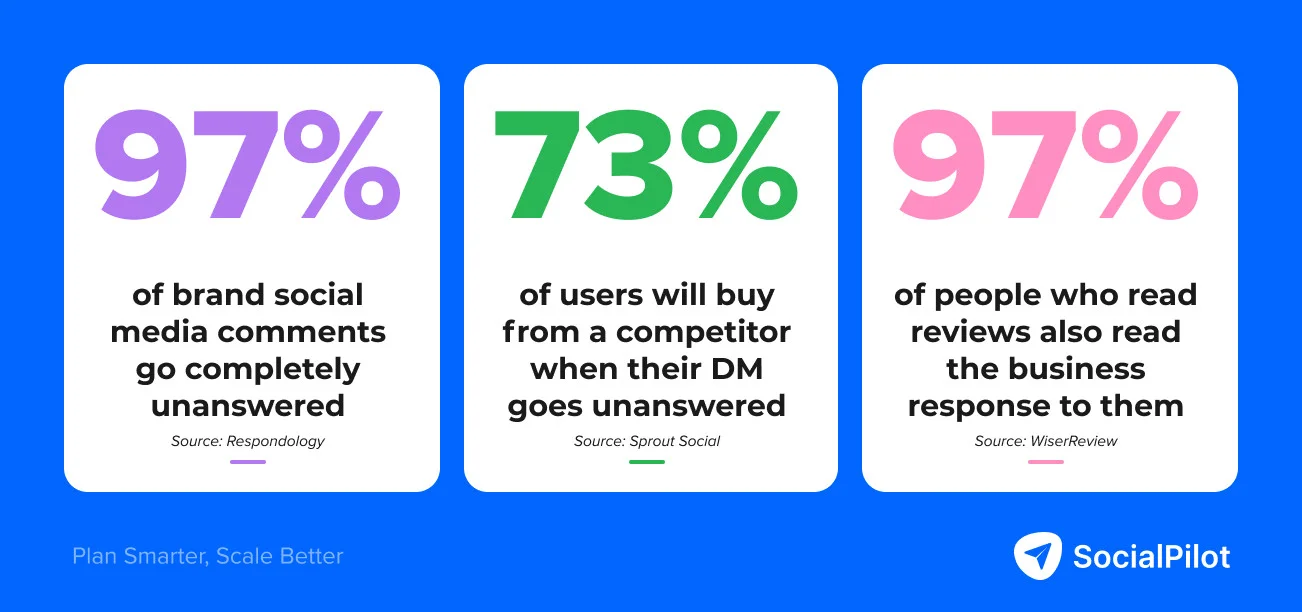
According to the Business of Comments Report by Respondology, a staggering 97% of brand social media comments go unanswered. This statistic encompasses everything from high-intent purchase inquiries and service complaints to expressions of loyalty from genuine brand advocates.
The silence is deafening, and the consequences are measurable. Recent social media statistics for 2026 indicate that 73% of consumers who do not receive a timely response will pivot to a competitor. When a potential customer sends a Direct Message (DM) or asks a question in a comment thread, they are often in the final stages of the buying journey. By failing to acknowledge them, brands aren’t just losing a sale; they are actively handing a warm lead to their competition.
Chronology of a Communication Breakdown
The trajectory of this "silent crisis" usually follows a predictable path:
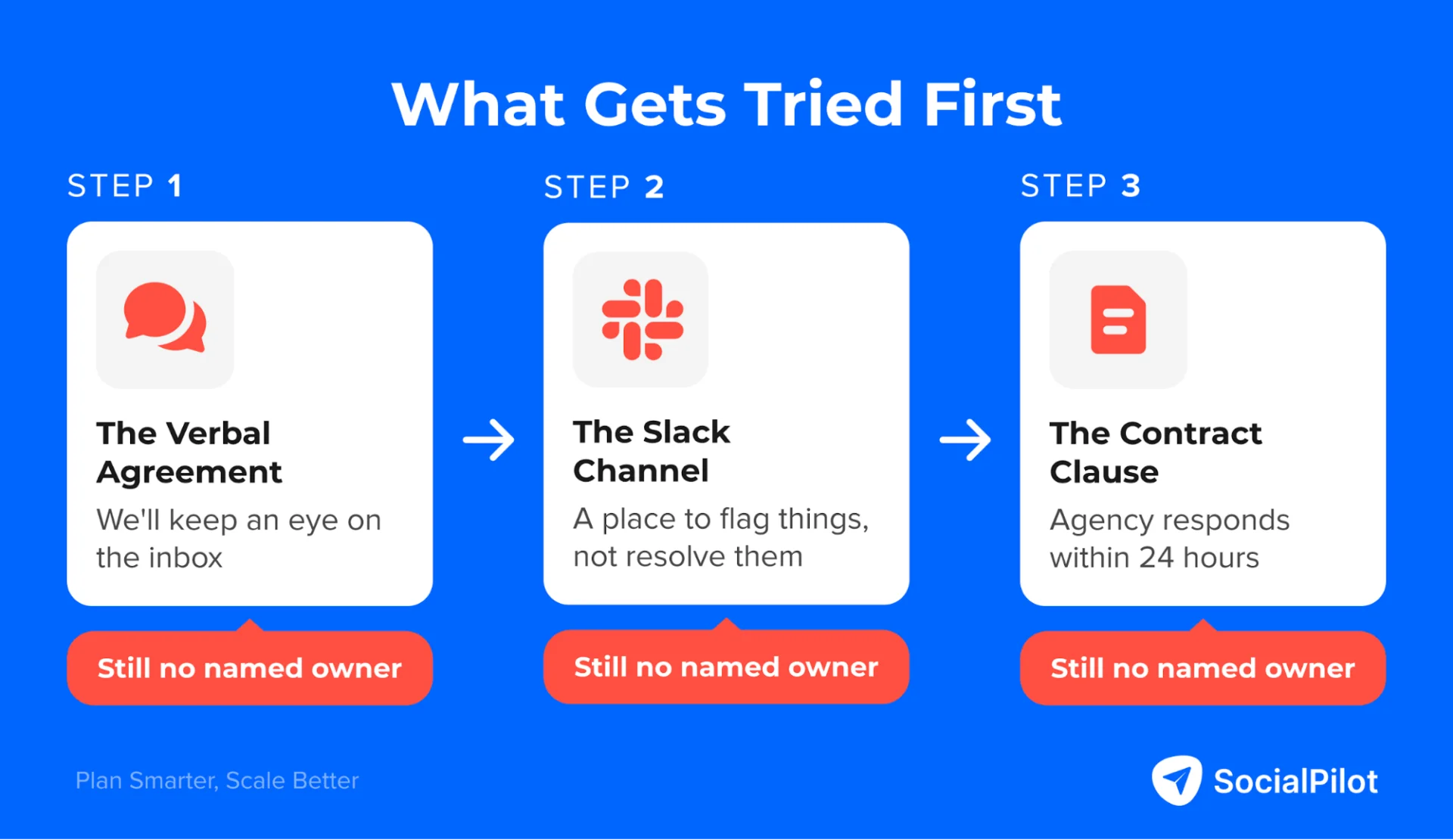
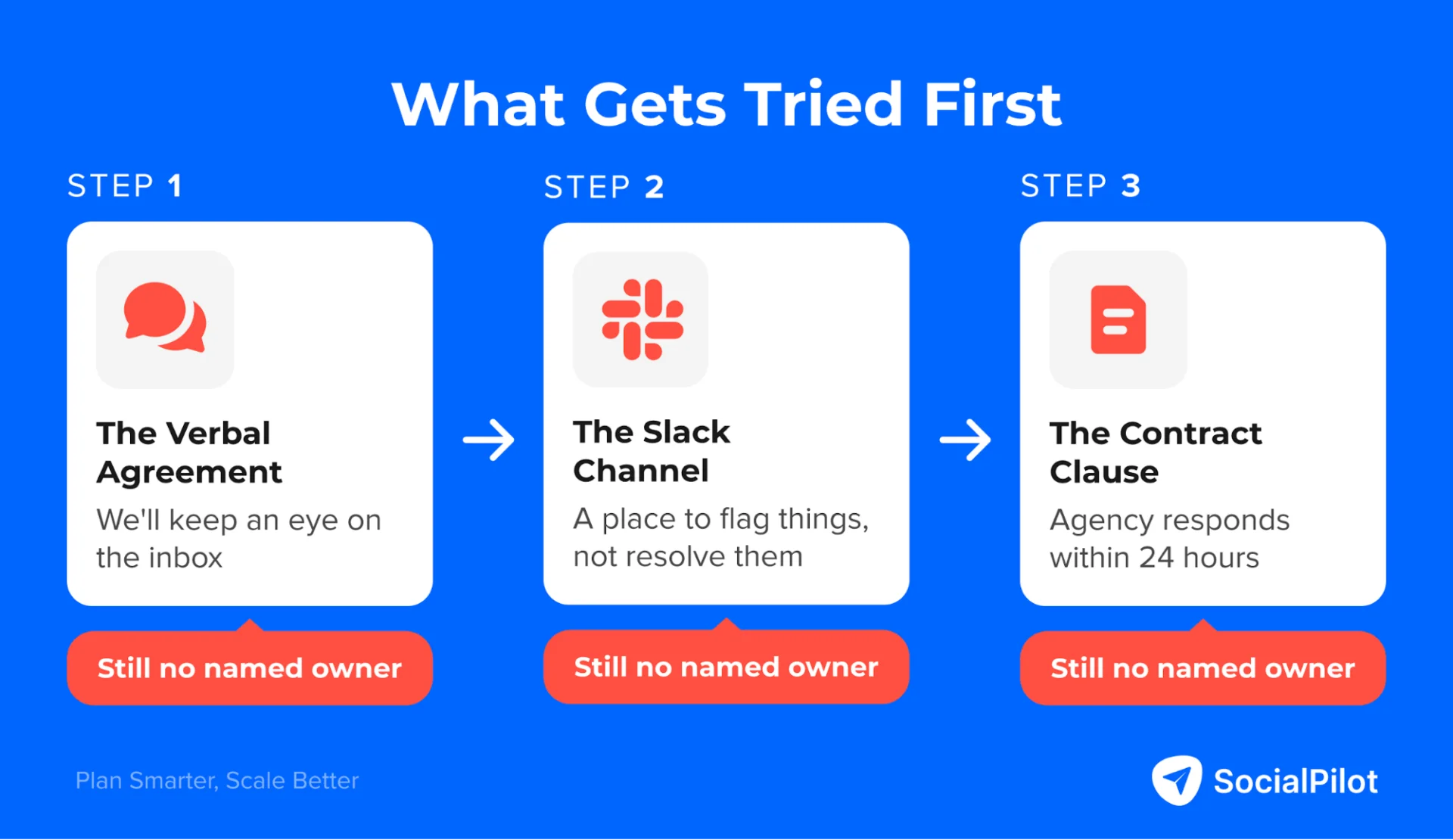
- The Onboarding Mirage: During the initial discovery calls, the focus is heavily skewed toward aesthetic content, posting schedules, and brand voice. When the topic of "inbox management" arises, vague phrases like "we’ll keep an eye on things" are tossed around. Both parties agree, assuming a shared understanding of what "keeping an eye" entails.
- The Ownership Vacuum: The work begins. The agency posts, but because no formal workflow was defined, nobody takes ownership of the incoming notifications. The client thinks it’s the agency’s job; the agency thinks it requires internal client approval.
- The Public Exposure: A customer complains or asks a question. It sits for 24, 48, and then 72 hours. The lack of response is no longer just a missed message; it is a public display of indifference.
- The "Week Three" Conflict: A frustrated customer takes their grievance to a public forum or escalates it to a complaint. The agency and the client find themselves on an emergency call, defensive and scrambling to determine who was supposed to be monitoring the account. The partnership is now strained by an issue that was entirely preventable.
The Operational Nuance: Why "Engagement" Is Not a Monolith
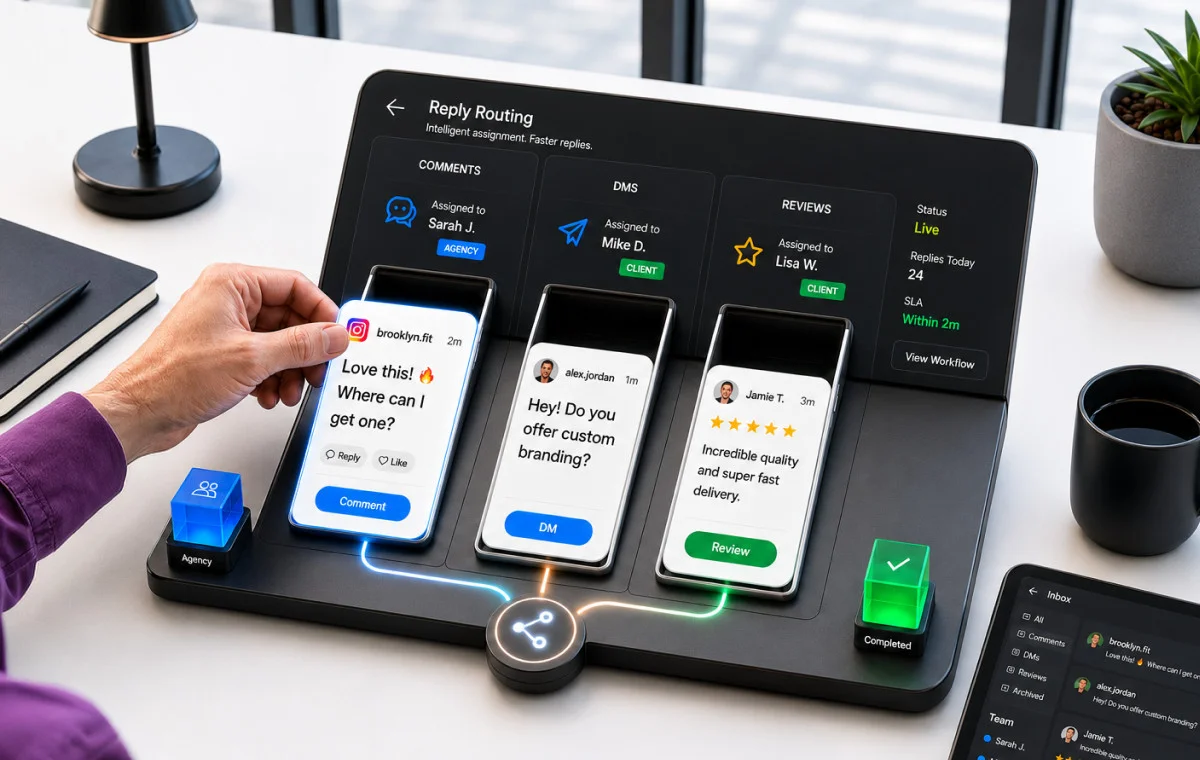
The failure often stems from treating all engagement as a single category. From an operational standpoint, comments, DMs, and reviews function differently and require distinct skill sets.
The Three Surfaces of Engagement
- Public Comments: These are visible to your entire audience. They function as a public FAQ. The agency is typically best suited to handle these, as they are already intimately familiar with the brand voice and can maintain consistency without needing constant input from the client.
- Private DMs: These are high-stakes, one-on-one interactions. They often involve proprietary information regarding stock, logistics, or pricing. Because these require immediate, accurate, and internal operational knowledge, they should generally be owned by the client or a designated member of the brand’s internal team.
- Reviews: These are permanent, SEO-indexed assets. A response to a review is not just for the reviewer; it is for the hundreds of future prospects reading that interaction. A hybrid approach—where the agency drafts the response and the client reviews it for factual accuracy—is the gold standard.
The Implications: Revenue, Reputation, and Search Visibility
The impact of this neglect extends far beyond simple customer service.
Financial Leakage
Every unanswered DM is a missed conversion. Sprout Social data indicates that 79% of consumers expect a response within 60 minutes. When a brand fails to meet this, the friction in the buyer’s journey becomes a hard stop.
Reputational Damage
Publicly ignored comments signal to the market that a business is either unorganized or indifferent to its customers. When other users chime in to reinforce the brand’s lack of responsiveness, it creates a "pile-on" effect that can permanently damage brand equity.
Search Engine Optimization (SEO)
Reviews are a critical component of local SEO. WiserReview notes that 97% of consumers read a business’s response to reviews. Furthermore, ReplyOnTheFly’s benchmarking suggests that responding to a negative review within four hours increases the likelihood of a rating update by 300%. Ignoring these opportunities is not just a service failure—it is a direct hit to the brand’s discoverability and search ranking.
Implementing a Robust Ownership Map
To solve this, agencies and clients must move away from verbal "gentlemen’s agreements" and toward a documented Ownership Map. This should be finalized during the onboarding phase, ensuring that every touchpoint has a designated owner, a response window, and a clear escalation path.
| Platform | Surface | Owner | Response Window |
|---|---|---|---|
| Comments | Agency | 24 Hours | |
| DMs | Client | 4 Hours | |
| Reviews | Agency/Client | 24 Hours | |
| Comments | Agency | 24 Hours | |
| DMs | Client | 4 Hours |
By signing off on this document, both parties acknowledge their specific responsibilities. If an issue arises, the contract is already in place to resolve it.
Leveraging Technology for Accountability
The final step in this process is ensuring that the right people have the right access. Using role-based access control—such as the features offered by SocialPilot—allows agencies to segment access. An agency manager can be given permission to handle public comments, while the client retains exclusive access to sensitive DMs or internal logistics.
This separation of duties ensures that the "right hand knows what the left hand is doing." When an agency isn’t waiting for a client to approve a simple "thank you" comment, and a client isn’t waiting for an agency to find out if a product is in stock, the system becomes frictionless.
Conclusion: Turning Engagement into Growth
The "silent crisis" of social media is fundamentally a symptom of poor communication between service providers and their clients. It is not an issue of intent, but of systems.
By defining ownership, setting clear response windows, and utilizing role-based tools to facilitate those workflows, agencies can transform their social media management from a source of friction into a competitive advantage. The goal is to move from a state of "waiting for the week three complaint" to a state of proactive, seamless, and high-converting customer engagement.
Don’t wait for the silence to become your brand’s defining feature. Standardize your response protocol today and ensure that every customer who reaches out feels heard, valued, and ready to buy.












No comments yet. Be the first to join the conversation!