

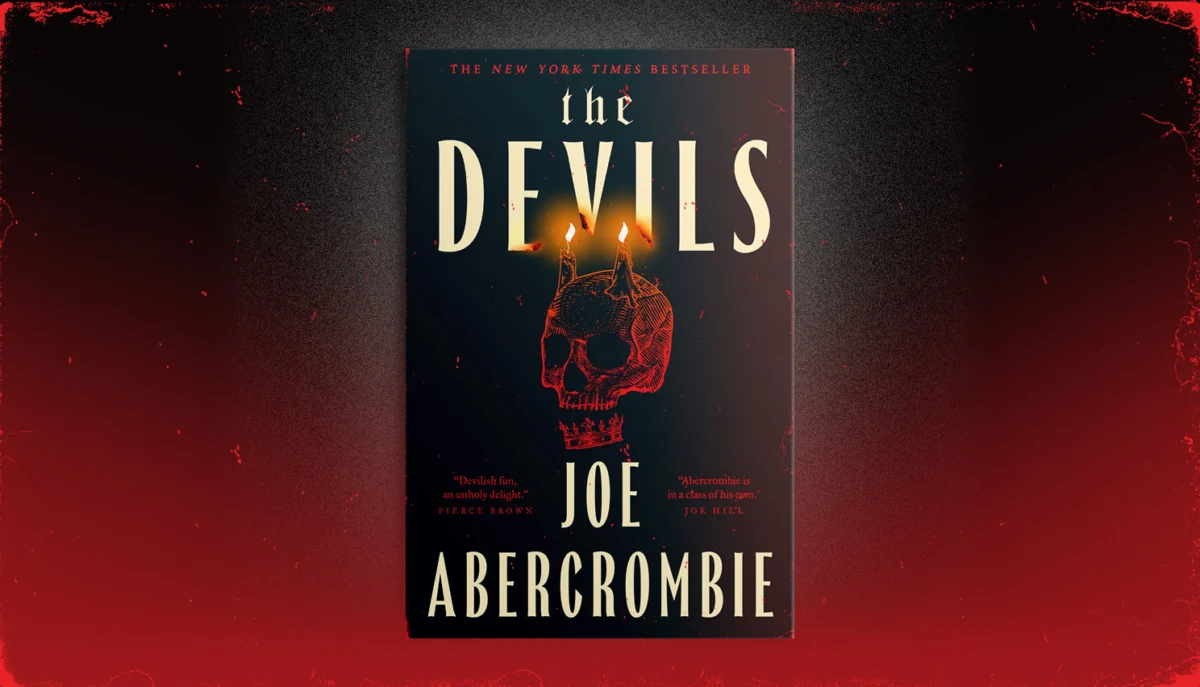
In the ever-shifting landscape of modern fantasy literature, few authors have managed to leave as indelible a mark as Joe Abercrombie. Known for his signature "grimdark" style—a subgenre characterized by moral ambiguity, visceral violence, and deeply flawed protagonists—Abercrombie has once again pivoted toward the unexpected. His latest offering, The Devils, promises to subvert traditional tropes by pitting a ragtag group of monstrous outcasts against an existential threat: an invasion of flesh-eating elves.
In a recent appearance on the Poured Over podcast, hosted by Jenna Seery, Abercrombie sat down to deconstruct the mechanics of his latest narrative, the evolution of his writing process, and the literary foundations that continue to influence his craft.
The Core Narrative: Monsters as Saviors
At its heart, The Devils is an exploration of the "lesser of two evils." The premise centers on a Europe under siege by an otherworldly, predatory elven force. In a classic subversion of the high-fantasy archetype—where elves are typically portrayed as ethereal, benevolent, or wise—Abercrombie’s elves are terrifying, flesh-eating antagonists.
To combat this encroaching darkness, a special task force is assembled. Unlike the noble knights of Arthurian legend, this squad consists of monsters—individuals who are as dangerous, if not more so, than the enemy they are hired to defeat. During the Poured Over discussion, Abercrombie emphasized that the allure of this story lies in the characterization. By forcing the reader to root for "monsters," he challenges the traditional boundaries of heroism and asks whether the ends truly justify the means in a world devoid of pure light.
A Chronology of Craft: From The First Law to The Devils
To understand the trajectory of The Devils, one must look at the foundation laid by Abercrombie’s earlier works.
- The Early Years (2006): With the publication of The Blade Itself, the first entry in The First Law trilogy, Abercrombie exploded onto the scene. He introduced readers to Logen Ninefingers and Sand dan Glokta, characters who prioritized survival over honor, effectively redefining the tone of modern fantasy.
- Expansion and Experimentation: Throughout the following decade, Abercrombie continued to flesh out his world with standalone novels and the Age of Madness trilogy, slowly refining his ability to weave complex political intrigue with bone-crunching action sequences.
- The Present Day: With The Devils, Abercrombie appears to be leaning into a faster, more kinetic style of storytelling. The shift toward a "special forces" dynamic suggests a move toward tighter, mission-based plotting, moving away from the sprawling, multi-POV epics that defined his earlier career.
Supporting Data: The Literary DNA of an Icon
The Poured Over episode served as a masterclass in literary influence. When discussing the books that shaped his perspective, Abercrombie revealed a diverse, and at times surprising, reading list that informs his unique narrative voice.
Influential Works Cited:
- Fantasy Foundations: Abercrombie credits George R. R. Martin’s A Game of Thrones for pushing the genre toward a more realistic, consequence-heavy narrative, and Ursula K. Le Guin’s A Wizard of Earthsea for its unparalleled depth and atmospheric world-building.
- Genre-Bending Influences: His interest in grit extends beyond fantasy. He cited James Ellroy’s L.A. Confidential as a prime example of voice-driven, cynical storytelling.
- Historical and Western Narratives: Interestingly, Abercrombie pointed to Larry McMurtry’s Lonesome Dove and Shelby Foote’s The Civil War: A Narrative as key influences. These texts provide the backbone for his realistic approach to violence, logistics, and the human cost of conflict—elements that he meticulously transplants into his secondary worlds.
Official Insights: The Author’s Perspective
During the conversation with Jenna Seery, Abercrombie addressed the nuances of "voice" in fantasy. He argued that the most compelling characters are not those who are most powerful, but those who are most consistent in their internal logic, even when that logic is twisted.
"Action," Abercrombie noted, "is never just about the fighting." In his view, a battle sequence is a character study. How a character moves, what they fear during a melee, and how they react to the aftermath of violence reveal more about their soul than any amount of internal monologue. This philosophy is clearly reflected in the high-octane sequences of The Devils, where the physical threat of the elven invasion serves as a crucible for the squad members’ personal transformations.
The Implications: Why The Devils Matters
The publication of The Devils comes at a time when the fantasy genre is undergoing a period of intense self-reflection. Readers are increasingly moving away from the "chosen one" tropes of the mid-20th century, favoring instead the grounded, morally gray, and often irreverent narratives that Abercrombie pioneered.
Impact on the Genre
- Redefining the "Monster": By making the protagonists literal monsters, Abercrombie forces the reader to confront their own biases. The implication is that the "good guys" in history are often just the winners of the most recent slaughter.
- The Short-Form Renaissance: While many fantasy authors are chasing the "thousand-page epic," Abercrombie’s move toward more focused, high-stakes narratives in The Devils may signal a trend toward punchier, more accessible fantasy that doesn’t sacrifice depth for pacing.
- The Legacy of Grimdark: As the subgenre matures, critics have wondered if "grimdark" has hit its ceiling. Abercrombie’s work suggests that the subgenre is not a monolith; rather, it is a toolset that can be adapted for horror, heist, or even survival-thriller stories.
Conclusion: A Must-Listen Conversation
The Poured Over episode featuring Joe Abercrombie is more than just a promotional stop; it is an essential listen for fans of the craft. It provides a rare glimpse into the mind of a writer who has spent nearly two decades defining the cutting edge of fantasy.
As readers dive into The Devils, they are encouraged to look past the surface-level gore and combat. Beneath the violence, they will find a meticulously constructed exploration of what it means to be a hero in a world that has forgotten the definition. Whether you are a long-time fan of The First Law or a newcomer to Abercrombie’s dark, sharp-edged prose, The Devils stands as a testament to his ability to keep the genre fresh, dangerous, and utterly compelling.
For those interested in exploring these works further, the featured titles discussed in this episode are currently available at Barnes & Noble locations and through major book retailers.
Production Note: This episode of Poured Over was hosted by Jenna Seery and expertly mixed by Harry Liang. New installments of the podcast are released every Tuesday and Thursday, with periodic Saturday drops, available on all major podcast platforms.










No comments yet. Be the first to join the conversation!