

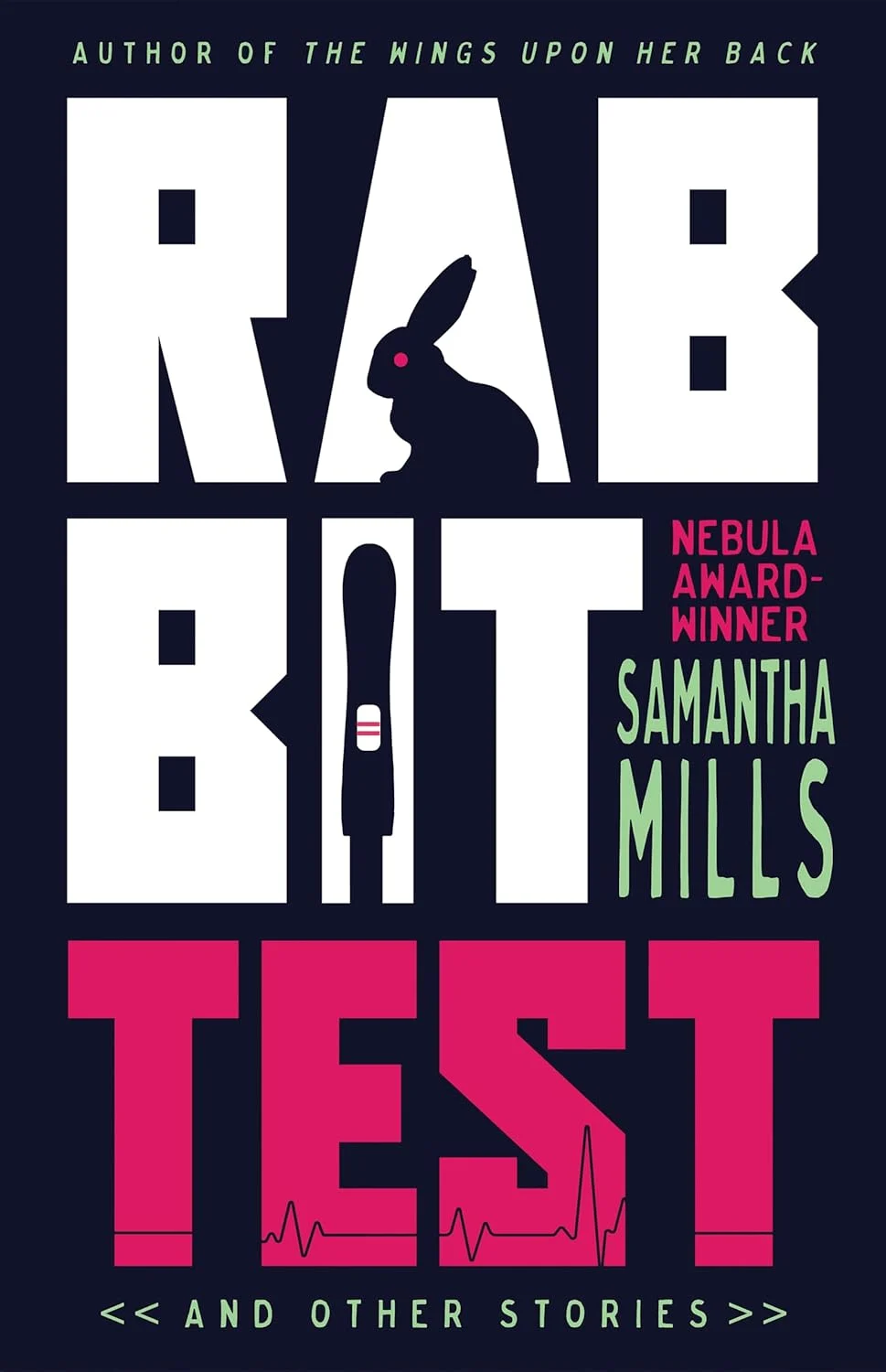
In the landscape of contemporary speculative fiction, few short stories have achieved the cultural gravity of Samantha Mills’ "Rabbit Test." Since its debut in the prestigious Uncanny Magazine in 2022, the story has become a phenomenon, earning the industry’s most coveted accolades—including the Nebula, Theodore Sturgeon, and Locus Awards—while being selected for The Best American Science Fiction and Fantasy (2023). It has been translated into seven languages, cementing its status as a defining piece of 21st-century anglophone science fiction.
However, the recent publication of the anthology Rabbit Test and Other Stories presents a complex challenge for both the author and her audience. When a collection is anchored by a singular, widely celebrated masterpiece, it risks a "devil’s bargain": the titular story may cast a shadow so long that the remaining works appear diminished by comparison. As Mills herself notes in the collection’s afterword, "Rabbit Test" acted as the engine for her career’s recent momentum, yet the task of curating a collection that lives up to that specific weight is a monumental literary hurdle.
A Chronological Examination of the Collection
To understand the trajectory of Samantha Mills’ career, one must look at the structural organization of this collection. Of the thirteen stories included, nine were written and published prior to the release of "Rabbit Test." This chronological spread allows readers to trace the evolution of Mills’ thematic obsessions and her maturation as a prose stylist.
The Developmental Arc
Early works within the collection, such as "Strange Waters," demonstrate the embryonic stages of the stylistic techniques that would eventually culminate in the precision of "Rabbit Test." "Strange Waters," which tracks a fisherwoman navigating temporal anomalies to return to her family, serves as a structural precursor to the later story’s "fleet-footed" historical approach.
Other entries, such as "Laugh Lines" and "The Limits of Magic," mirror the sociopolitical anxieties found in the titular work. In "Laugh Lines," the protagonist is marked by her participation in "anti-vat marches," a clear thematic sibling to the reproductive surveillance themes that define the dystopian future of "Rabbit Test." These connections are not necessarily a failing of the stories; rather, they illuminate the author’s consistent preoccupation with bodily autonomy, the state’s interference in private life, and the burden of historical legacy.
The Post-"Rabbit Test" Landscape
The collection also includes works penned after the success of the title story. "10 Visions of the Future; or, Self-Care for the End of Days" and "The Death of the God-King" represent a shift in tone. While the former attempts a meditation on "permacrisis"—the exhausting, unrelenting nature of modern existence—it lacks the sharp, singular focus of Mills’ best work. The latter, a fantasy piece exploring the surrender of immortality, struggles with the "stale" nature of its tropes. The depiction of the Grim Reaper as a lover is a well-trodden path in fantasy literature, and while Mills executes the concept with technical competence, it lacks the incendiary, genre-defining urgency of her most lauded work.
Supporting Data: Why "Rabbit Test" Remains the Gold Standard
The critical consensus surrounding "Rabbit Test" is not merely hype; it is a response to the story’s extraordinary craft. Written as a direct, visceral response to the U.S. Supreme Court’s Dobbs v. Jackson Women’s Health Organization decision, the story functions as an extended fugue on reproductive justice.
Craft and Narrative Precision
The story’s effectiveness lies in its terrifyingly coherent world-building. Mills’ dystopian vision is not an abstraction; it is woven into the very fabric of the protagonist’s consciousness. Consider the narrator’s internal monologue: she monitors her menstrual cycle "like a surveillance drone over a labor march," and she carries guilt "the size of a rich man’s space station."
These metaphors achieve a rare feat in science fiction: they bridge the gap between high-concept world-building and intimate human experience. The story is simultaneously a historical account of pregnancy tests and a harrowing projection of a future stripped of reproductive freedom. When the reader arrives at the final, bitter line—"It is 2022 and it is never over"—the emotional impact is unavoidable. It is a work that demands the reader’s engagement with the reality of current political erosion.
Official Perspectives and Critical Reception
In the introduction to the anthology, writer Meg Elison provides a candid assessment of the collection, comparing the book to a comet. She acknowledges the "trepidation" a reader might feel upon approaching such a volume: "What if none of the other stories were as good as the titular wonder? What if all the light of it was in the fireball, and the tail was simply ice and dust?"
Elison argues that Mills successfully navigates these hazards, praising her ability to turn "rancid" concepts into fresh narratives and to populate speculative worlds with deeply recognizable, human characters. However, a closer inspection of the anthology suggests a more fragmented reality. While the prose is consistently polished, the collection as a whole suffers from a lack of consistent impact. Many of the shorter, secondary entries feel like genre staples—metafictional reflections on space exploration or fairy-tale retellings—that would feel right at home in a standard genre magazine but struggle to maintain their footing when placed alongside a masterpiece.
Implications: The Potential of "Phase Two"
Despite the uneven nature of the anthology, there are clear glimmers of promise that suggest Mills is still in a state of creative flux. Some stories rise above the "ice and dust" of the collection’s lesser entries:
- "Anchorage": A compelling exploration of spacefaring spirituality that utilizes well-executed twists to keep the reader engaged.
- "Four of Seven": Perhaps the collection’s most poignant entry, this story examines the emotional cost of social mobility. By using the metaphor of a sub-FTL ship to describe the distance between a mining colony and a university, Mills captures the profound loneliness of leaving one’s working-class roots behind.
- "Kiki Hernández Beats the Devil": A refreshing change of pace, this story leans into the charm of classic rock aesthetics and features a delightful, albeit dangerous, hellhound. It serves as a reminder that Mills possesses a playful, inventive streak that balances her more serious, polemical work.
Looking Toward the Future
In her afterword, Mills frames these thirteen stories as "Phase One of Sam Getting Serious." This framing is crucial. By labeling these works as a distinct phase of her development, she acknowledges that the collection is a portrait of an artist in transition.
The implication is clear: the current unevenness of the anthology is not a failure of talent, but rather a testament to the fact that Mills is still exploring the boundaries of her craft. The "Rabbit Test" phenomenon may have been a catalyst, but it is not the ceiling of her capabilities. If the industry and the reading public can look past the shadow of her most famous work, they will find an author who is versatile, deeply empathetic, and still in the process of discovering the full extent of her voice.
Ultimately, Rabbit Test and Other Stories serves as a bridge. It is a document of an author who has already written a seminal text of the 2020s and is now preparing for the next iteration of her career. For those who admire the precision and fury of "Rabbit Test," the collection is an essential, if imperfect, look into the mind behind the page. As the literary world waits for "Phase Two," it is evident that Samantha Mills remains one of the most vital, albeit still evolving, voices in speculative fiction today.










No comments yet. Be the first to join the conversation!