

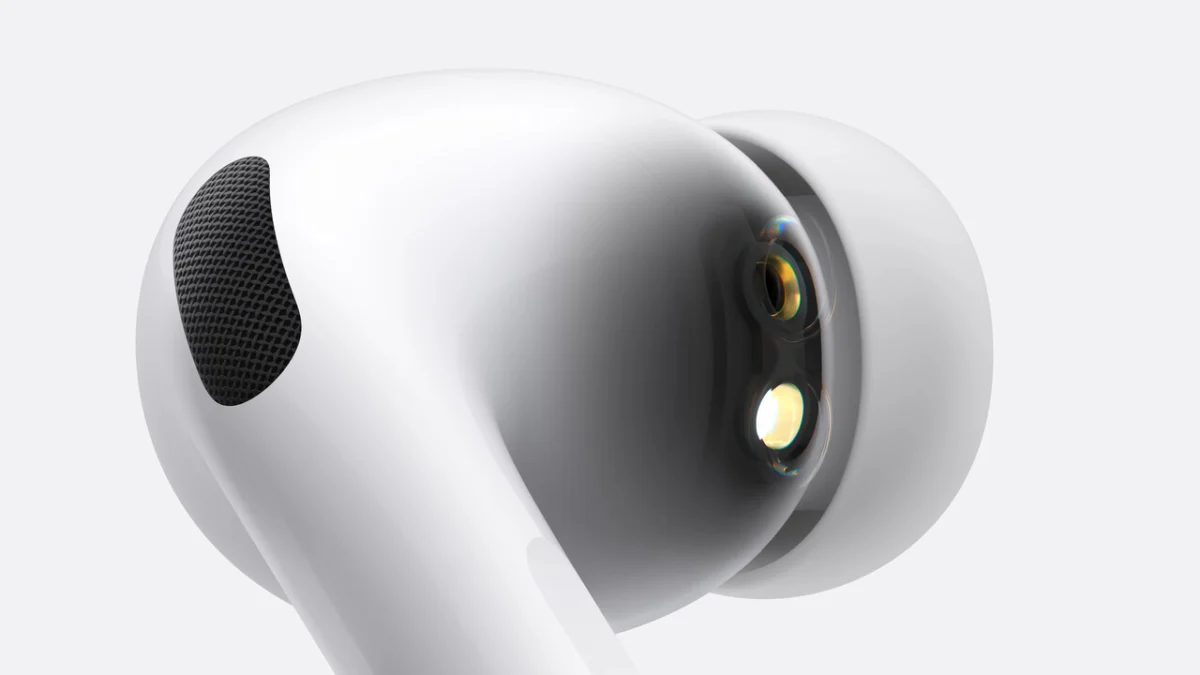
Apple is inching closer to a fundamental shift in its wearable strategy. According to recent reports from Bloomberg, the Cupertino-based tech giant is nearing the commercialization of a radical evolution of its iconic AirPods: a version equipped with integrated camera sensors and powered by the next generation of Apple Intelligence. While the hardware development appears to be nearing completion, the product’s launch is tethered to the sophisticated software architecture of the forthcoming Siri, slated for debut alongside iOS 27.
This development marks a significant milestone in Apple’s multi-year roadmap, signaling a transition from passive audio devices to proactive, AI-driven digital assistants that perceive the world through the eyes of the user.
The Core Concept: Ambient Intelligence
The core proposition of these next-generation AirPods is to provide a "visual interface" for Siri. By embedding cameras into the housing of the earbuds, Apple aims to enable the digital assistant to perceive the user’s environment in real-time. This is not intended to function as a tool for traditional photography or videography; rather, it serves as a sensor suite designed to feed visual data into Apple’s AI models.
The implications for daily utility are vast. Imagine walking through a supermarket and asking Siri for recipe suggestions based on the ingredients in front of you, or receiving proactive navigation prompts as you approach local landmarks. The goal is to move beyond voice commands toward a context-aware interface where the AI understands exactly what the user is looking at, providing timely, relevant, and actionable information.
Chronology: From Concept to DVT
The journey of the "camera AirPods" has been a lengthy, iterative process. Reports suggest that these devices have been in active development for roughly four years.
- Initial Research (2022–2023): Apple’s hardware engineers explored various form factors, focusing on the miniaturization of camera sensors capable of fitting into the compact chassis of an earbud.
- Prototype Phase (2024): Internal testing began, focusing on power consumption and heat dissipation, both critical challenges when adding active image processing to a battery-constrained device.
- Design Validation Testing (DVT – Current Phase): As of May 2026, the project has entered the DVT stage. This is a critical milestone where Apple tests the mass-production feasibility of the design. Bloomberg reports that internal employees are currently using these prototypes in daily life to refine the AI’s ability to interpret environmental data.
- Production Validation Testing (PVT) and Launch (H2 2026): Pending the stability of iOS 27, the devices are expected to transition to final validation before mass production.
The Hardware: A Subtle Evolution
Externally, the new AirPods will be instantly recognizable as a product of the Pro line. They share the aesthetic DNA of the AirPods Pro 3, though with one notable physical alteration: a slightly elongated stem. This structural change is necessary to house the camera optics and the supporting circuitry.
To address privacy concerns—a pillar of Apple’s branding—the devices will feature integrated LEDs. These indicators will illuminate whenever visual data is being processed or shared with the cloud, offering a transparent signal to bystanders. By explicitly omitting standard camera functionality (like photo or video capture), Apple is positioning these devices as "utility sensors" rather than recording tools, a strategic move intended to mitigate social stigma and privacy backlash.
The Software Bottleneck: The "Siri 2.0" Challenge
The primary obstacle preventing an immediate release is not the hardware, but the intelligence layer. Apple is currently putting the final touches on a massive overhaul of Siri, which will leverage a hybrid model—utilizing its own proprietary AI alongside Google’s Gemini engine.
This integration is critical. For the camera-equipped AirPods to be effective, the AI must perform "Visual Intelligence" tasks with near-zero latency. Apple executives are reportedly concerned about the current reliability of these features. Because the AirPods rely entirely on the assistant’s ability to interpret visual context, any failure in the AI’s logic would render the camera hardware useless. Consequently, Apple has tied the launch to the release of iOS 27, scheduled for September 2026, ensuring the software is mature enough to support the hardware’s capabilities.
Strategic Implications: Building the AI Ecosystem
The introduction of these AirPods is part of a broader "wave of AI products" that Apple expects to define its portfolio for the remainder of the decade. By integrating AI into one of its most popular and ubiquitous product lines, Apple is betting on a high adoption rate that could dwarf the impact of more niche devices.
1. Market Penetration
The AirPods are an essential accessory for the iPhone ecosystem. By turning them into a "visual wearable," Apple is lowering the barrier to entry for AI-driven life assistance. Unlike smart glasses—which require a more significant change in user behavior and aesthetic preference—AirPods are already an accepted part of the daily uniform for millions of users.
2. Preparing for the "Post-Phone" Era
Apple’s long-term roadmap includes more ambitious projects, such as specialized smart glasses designed to compete with the Meta-Ray-Ban collaboration. The AirPods act as a "stepping stone" technology. The data gathered from the AirPods’ cameras will provide Apple with invaluable insights into how users interact with their physical environment, which will inform the development of future head-mounted displays and AR glasses.
3. Home Automation and Robotics
Beyond personal wearables, Apple is also rumored to be developing a smart home device: a HomePod variant featuring a screen mounted on a robotic arm. When combined with the "Visual Intelligence" being developed for the AirPods, this creates a cohesive ecosystem. The AI will eventually know who you are, what you are looking at, and where you are in the house, allowing for a level of automation that is currently impossible.
Addressing the Risks
Despite the optimism, significant hurdles remain.
- Privacy and Ethics: Even with indicator LEDs, the presence of cameras in ears is likely to spark intense public debate. Apple must navigate the "creeper" factor, ensuring that users feel comfortable wearing them in public and that others feel respected.
- AI Reliability: The "hallucination" problem—where AI confidently provides incorrect information—is a major liability when the AI is tasked with identifying real-world objects or providing navigation cues. If the device misidentifies a crosswalk or a food ingredient, the consequences could be severe.
- Battery Life: Processing video streams is notoriously power-hungry. Maintaining the battery longevity that users expect from AirPods while simultaneously performing real-time AI analysis remains a massive engineering hurdle.
Conclusion: A New Paradigm
The shift toward camera-integrated wearables represents a pivot from "Apple as a hardware company" to "Apple as a provider of ambient computing." By embedding intelligence into the very things we wear, Apple is attempting to dissolve the barrier between the digital assistant and the physical world.
Whether these AirPods become the next transformative device or a niche experiment depends largely on the success of the iOS 27 launch. As Apple moves from the DVT stage toward mass production, the company is effectively betting its reputation on its ability to make AI not just smart, but truly useful in the chaotic, unpredictable environment of the real world. The second half of 2026 is shaping up to be a defining moment in the history of consumer electronics.











No comments yet. Be the first to join the conversation!