Neng Nana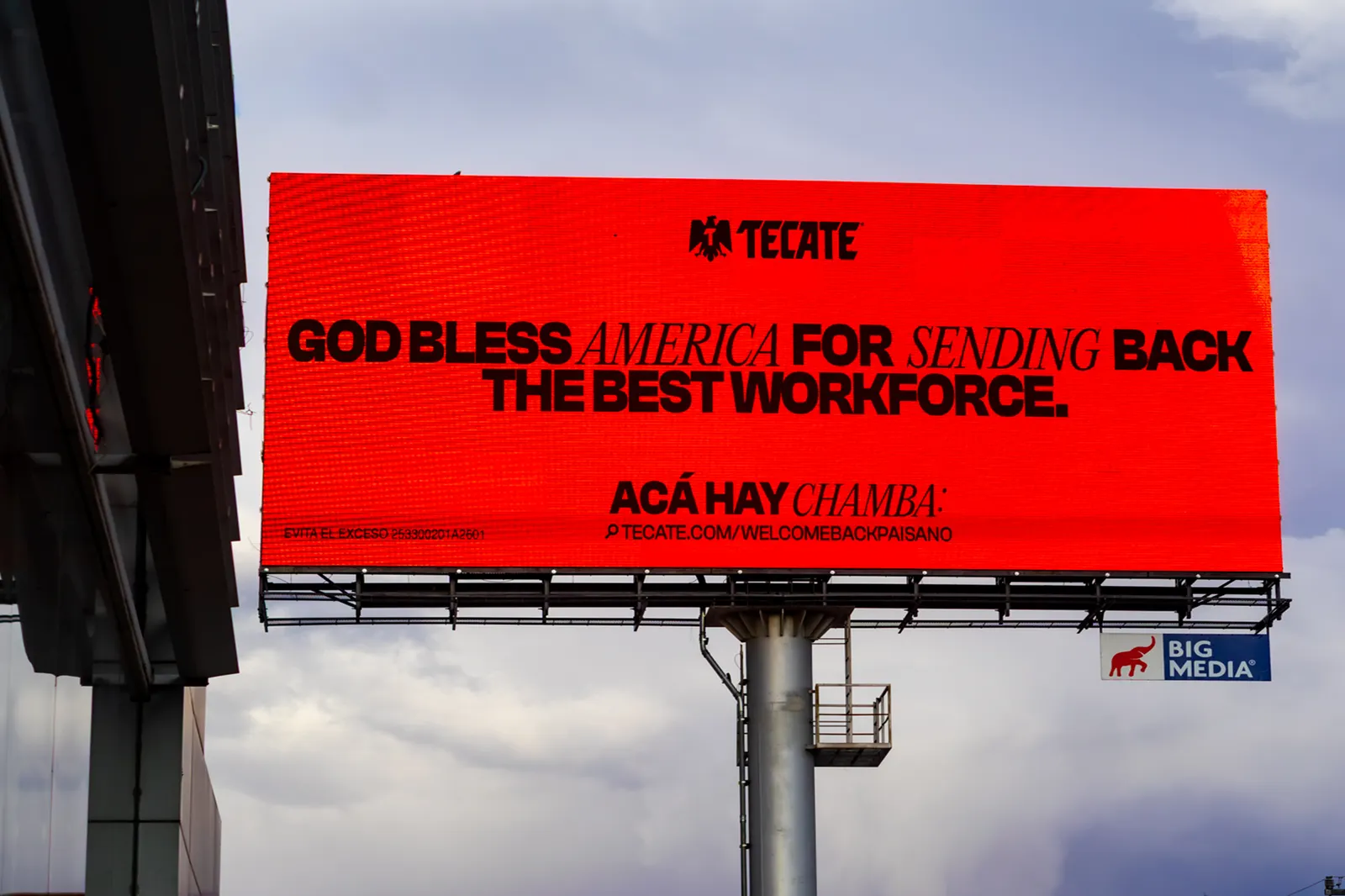
In an era where major global brands often retreat into neutrality to avoid the volatile "culture-war" minefields of an increasingly polarized United States, Mexican beer titan Tecate has chosen a remarkably different path. Rather than shying away from the complexities of cross-border migration, the brand is leaning directly into the friction. Its latest campaign, "Welcome Back, Paisano," utilizes biting satire and concrete economic support to address the human cost of current U.S. immigration policies, signaling a shift in how multinational brands engage with political realities.
The Core Narrative: A Satirical Look at Labor Realities
At the heart of the campaign is a hero spot that serves as a bold commentary on the symbiotic, yet often fraught, relationship between the U.S. labor market and Mexican immigrants. The narrative is framed through a series of vignettes set in the United States—a high-end restaurant, a sprawling construction site, a commercial farm, and a suburban backyard—where the absence of a familiar, hardworking demographic is suddenly and painfully felt.
The tone is not one of mournful tragedy, but of sharp, observational humor. As U.S. employers struggle to navigate the chaos left in the wake of mass deportations, the campaign flips the script. It highlights the indispensable nature of the workforce that has been removed, while simultaneously showcasing the resilience of those who have returned to Mexico. In one particularly poignant scene, a repatriated worker quips, "I’m an artist, an artist of the work. You’re missing out, gringos."
This creative direction—developed by the agency LePub Mexico City—represents a calculated risk. By embracing a characteristically Mexican penchant for dark humor in the face of adversity, Tecate manages to discuss a "problematic" and somber reality without falling into the trap of being overly moralistic or preachy.
A Chronology of Engagement: From Rebranding to Action
The "Welcome Back, Paisano" campaign is not an isolated event; it is the culmination of a multi-year strategic pivot for the brand.
- Early 2020s: Tecate initiates a comprehensive, purpose-driven rebrand. The goal was to pivot away from traditional, "macho" messaging that had defined the brand for decades, opting instead to align more closely with modern Mexican-American heritage and cultural identity.
- Late 2024: As immigration rhetoric in the U.S. intensifies, internal discussions at Heineken México and LePub focus on how the brand can remain relevant to its core audience while staying true to its roots as a beer born in the border town of Tecate.
- Early 2025: Research into the fallout of the first year of the U.S. administration’s second term highlights the scale of the crisis, with approximately 170,000 individuals deported to Mexico.
- Last Month: The official launch of "Welcome Back, Paisano" occurs across digital platforms and strategic out-of-home (OOH) placements throughout Mexico.
- The Future: Tecate announces a two-year commitment to an employment and entrepreneurship program, with plans to scale the initiative as long as the current immigration climate persists.
Supporting Data: The Economic Impact of Displacement
The urgency behind Tecate’s initiative is rooted in cold, hard economic data. The deportation of approximately 170,000 people during the first year of the current U.S. presidential term has left a void in several key American industries. By focusing on sectors like hospitality, construction, and agriculture, the campaign highlights a reality often ignored in the political discourse: the dependency of the American service and manual labor sectors on foreign-born talent.
Tecate’s collaboration with the nonprofit organization FUNDES provides the backbone for this operation. The initiative is not merely performative; it is operational. By leveraging Tiendas Six—the chain of convenience stores owned by Heineken México—the brand has created a concrete pathway for repatriated citizens to re-enter the workforce as entrepreneurs and store operators. The company has publicly committed to employing 130 repatriated Mexicans over the next 24 months, providing a scalable model for economic reintegration.
Official Responses and Brand Philosophy
The leadership at Heineken México has been vocal about the necessity of this shift. Marta García, vice president of marketing, framed the campaign as an embodiment of the brand’s "character and courage."
"We aim to generate real impact in communities, strengthen the local economy, and create opportunities that allow the world’s strongest workforce to build a new beginning," García stated. Her comments reflect a broader shift in corporate social responsibility (CSR) where "purpose" is no longer just a tagline on a website, but a tangible business operation.
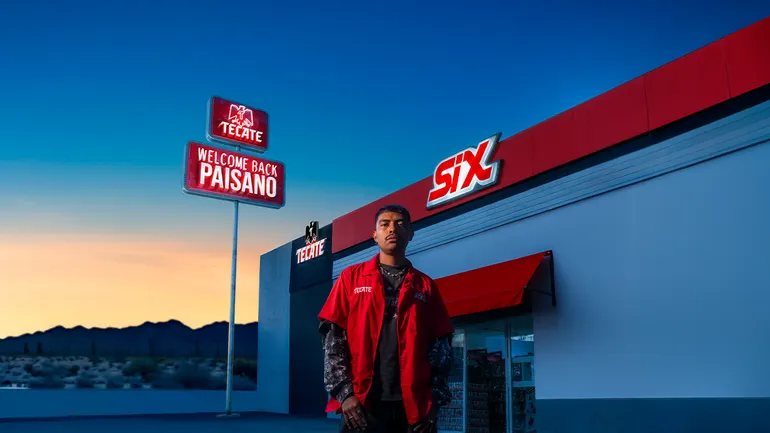
The creative team at LePub echoed this sentiment. Aldo Ramirez, chief creative officer at LePub Mexico City, noted that being a "Mexican beer born in the town of Tecate" carries a specific obligation. "Especially in this moment, in this cultural context… the campaign means that we’re actually building a brand that is crossing the line between brand purpose and brand action," Ramirez explained.
Ricardo Avilés, also a chief creative officer at LePub, defended the use of humor, noting that it is an essential cultural survival mechanism. "The right way of communicating something this problematic, the best Mexican way possible, is to actually make it humorous," Avilés remarked. "It is difficult for us to take it seriously, because in the DNA of the brand and in the DNA of the Mexican culture is laughing at almost everything."
The Implications: Where Purpose Meets Policy
The implications of "Welcome Back, Paisano" for the marketing industry are profound. For years, the "Switzerland strategy"—staying neutral on all political matters—has been the gold standard for avoiding consumer backlash. However, Tecate’s approach suggests that in a landscape of hyper-segmentation, taking a side can actually build deeper brand loyalty among a target demographic.
1. The Death of Neutrality
Tecate is not attempting to appeal to everyone; they are focusing on their primary audience: Mexicans and the Mexican diaspora. By acknowledging the pain of deportation while mocking the "loss" felt by the U.S. economy, the brand solidifies its position as a defender of its own culture. This is an admission that, in the modern age, a brand cannot be everything to everyone.
2. The Rise of "Brand Action"
The industry is seeing a transition from "brand purpose" (telling people what you stand for) to "brand action" (showing people what you are doing). By funding jobs for 130 people, Tecate is insulating itself against charges of "purpose-washing." If critics attack the campaign, the brand has the luxury of pointing to the actual jobs and livelihoods it is supporting.
3. Cultural Authenticity as a Moat
By embracing the specific, often dark humor of Mexico, the campaign creates a cultural barrier to entry for competitors. A global conglomerate trying to replicate this campaign would likely struggle with the tone; it requires a level of cultural nuance that can only come from a brand that is "born" in the region.
4. Long-Term Commitment
Perhaps the most significant aspect of this campaign is its stated duration. By framing this not as a seasonal promotion, but as a two-year commitment that may expand, Tecate is signaling to the market that it is prepared to weather the long-term volatility of international relations.
Conclusion: A New Blueprint for Multinational Brands
Tecate’s "Welcome Back, Paisano" serves as a masterclass in how to navigate the intersection of social responsibility, political controversy, and creative advertising. By refusing to be silenced by the fear of controversy and instead choosing to engage with the reality of its consumers’ lives, the brand has elevated its status from a commodity to a cultural participant.
As we look toward the future of marketing, the lesson of Tecate is clear: authenticity is found in the willingness to take a stand, even—or especially—when that stand is divisive. While many brands will continue to walk the tightrope of neutrality, Tecate has chosen to jump, armed with humor, clear-eyed realism, and a commitment to action that speaks louder than any traditional ad campaign could. Whether this model proves sustainable in the long run remains to be seen, but for now, it has set a high bar for what it means to be a brand that truly "stands for something."


 Jia Lissa
 Nana Muazin