Evan Lee Salim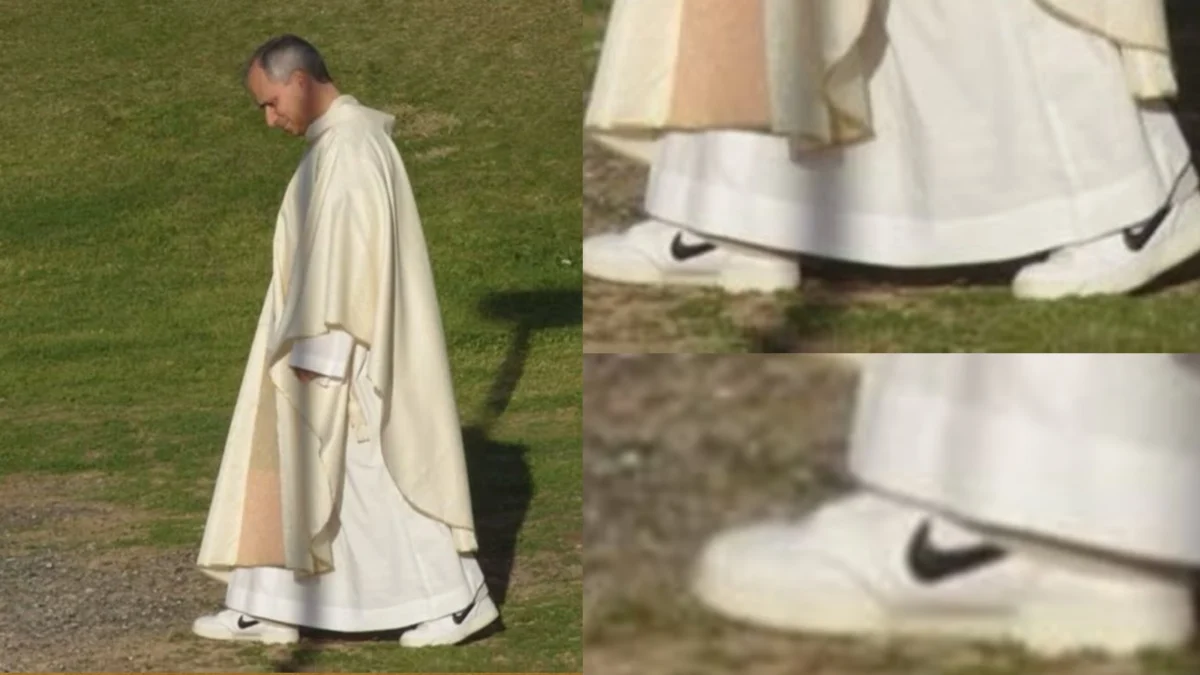
In the hallowed halls of the Vatican, tradition usually dictates the aesthetic: ornate vestments, scarlet robes, and the timeless, albeit functional, footwear associated with the office of the Papacy. However, a recent glimpse into the private life of Pope Leo XIV has shattered these expectations, sending the internet into a fervor. In a brief, candid moment captured in the trailer for the upcoming documentary Leone a Roma, the leader of the Catholic Church was spotted wearing a pair of classic white Nike sneakers, igniting a viral firestorm that has bridged the gap between theological discourse and high-street sneaker culture.
The Viral Discovery: A Sneakerhead’s Holy Grail
The revelation began with the release of a promotional clip for Leone a Roma, a feature-length documentary produced by Vatican News. The film aims to chronicle the Pope’s formative years in Italy before his historic ascension to the throne of St. Peter. While the documentary promises deep insights into his tenure and spiritual philosophy, the audience’s attention was almost immediately diverted from the historical narrative to the Pope’s feet.
As the Pope walked through the corridors of the Apostolic Palace, the camera captured a clear, unmistakable view of white Nike trainers adorned with a prominent black Swoosh. For the global sneaker community, which thrives on identifying obscure silhouettes and limited-edition colorways, this was an immediate call to action. Within hours of the trailer’s release, Reddit threads exploded, with the screenshot garnering over 70,000 upvotes and thousands of comments analyzing every detail of the footwear.
Identifying the Silhouette: The Nike Franchise Low
While high-profile figures are often seen in the latest collaborations—from Travis Scott Jordans to luxury house branded sneakers—Pope Leo XIV’s choice was distinctly "old school." Experts from the footwear outlet JustFreshKicks were quick to weigh in, identifying the model as the Nike Franchise Low.
The Franchise Low is an outlier in the modern Nike catalog. Originally released in the late 1970s, it represents a period of athletic design characterized by minimalist aesthetics and functional utility. The shoe, which saw a brief re-release cycle around 2008, is best known for its unique split cupsole design around the arch, a feature that distinguishes it from the more ubiquitous Air Force 1s or Blazer models of the same era.
Unlike the hyper-inflated market of modern "grails," where shoes can sell for thousands of dollars, the Franchise Low remains an accessible, albeit rare, vintage find. Market data suggests that surviving pairs—often found on secondary marketplaces like eBay or specialized vintage sneaker forums—frequently list for between $20 and $50. The irony of the leader of the world’s largest religious institution wearing a sub-$50 vintage sneaker, while the world of high fashion obsesses over luxury-tier pricing, has provided a refreshing counter-narrative to modern consumerism.
A Chronology of the "Papal Flex"
The trajectory of this story moved from a niche observation to a mainstream media event in record time.
- May 8, 2026: Vatican News drops the official trailer for Leone a Roma.
- May 9, 2026 (Morning): The first social media posts identifying the Nike sneakers appear on X (formerly Twitter) and Reddit’s r/sneakers community.
- May 9, 2026 (Afternoon): Footwear outlets confirm the model as the Nike Franchise Low, noting its rarity and historical design elements.
- May 10, 2026: The story crosses over into mainstream news outlets, including The New York Times and international wire services, as the internet dubs the Pope the "ultimate unintentional influencer."
- May 11, 2026: Online search volume for "Nike Franchise Low" surges by over 4,000%, leading to a near-total sellout of any remaining stock on global secondary markets.
Supporting Data: The American Pope and His Roots
To understand why Pope Leo XIV—born Robert Prevost in Chicago—might gravitate toward such a specifically American sneaker choice, one must look at his background. Before his life in the clergy, the Pope was a product of the Chicago sports culture of the late 20th century.
Having grown up during the golden era of the Chicago Bulls and the rise of the city’s die-hard baseball fanbases, the Pope has never hidden his affinity for American athletics. He has been documented as a supporter of the Chicago White Sox, a relationship that was recently solidified when the team announced a "Pews at the Ballpark" night in his honor.

This deep-seated connection to his Midwestern roots provides context for his sartorial choices. While the Vatican is a place of ancient tradition, Pope Leo XIV has consistently signaled his desire to remain "of the people." His preference for the Franchise Low, a shoe that symbolizes the blue-collar, utilitarian design of the late 70s, aligns with his broader public persona as a man who values accessibility over opulence.
Official Responses and Vatican Protocol
The Vatican has, for the most part, remained stoic regarding the viral moment. A spokesperson for the Holy See, when pressed by reporters during a press briefing, offered only a measured response: "The Holy Father’s primary concern is his service to the Church. His choice of footwear is a matter of personal comfort and preference, which remains secondary to his mission."
However, insiders suggest that the administration is not entirely displeased with the attention. The documentary Leone a Roma has seen a massive spike in pre-release interest, with millions of new viewers adding the film to their watchlists. By appearing "human" and relatable, the Pope has inadvertently bridged the generation gap, sparking curiosity about his life among younger demographics who might otherwise have little interest in a papal documentary.
Implications: The Intersection of Faith and Consumer Culture
The phenomenon of the "Papal Nike" raises significant questions about the nature of influence in the digital age. When a public figure, especially one as transcendent as the Pope, is caught engaging in a consumer behavior—even one as benign as wearing a vintage sneaker—it becomes a cultural touchstone.
1. The Death of the "Staged" Image
In an era of heavily curated social media feeds, the spontaneity of the Pope’s sneaker choice felt authentic. It proved that in the age of 4K cameras and constant surveillance, even the most traditional figures cannot avoid the lens of modern culture.
2. The Democratization of Style
By wearing an inexpensive, vintage shoe rather than a designer collaboration, Pope Leo XIV effectively challenged the hierarchy of fashion. He showed that "cool" is not always a function of price or hype, but of personal history and comfort. This has sparked a broader debate in the fashion industry about the value of "slow fashion" and the appeal of vintage utility over mass-produced luxury.
3. The New Evangelization
Some religious scholars have noted that this event acts as a form of "New Evangelization." By appearing in a way that is relatable to the secular, youth-oriented sneaker culture, the Pope has opened a dialogue with a demographic that often feels alienated by the formalities of the Church. If the Pope can wear Nikes, the argument goes, then the Church can perhaps meet the modern world on its own terms.
Conclusion: A Legacy of Comfort
As the release of Leone a Roma approaches, the "Nike incident" will likely go down as one of the most memorable humanizing moments of the 21st-century papacy. While the world may eventually return to discussing the theological implications of his encyclicals and the weight of his administrative decisions, the image of Pope Leo XIV, walking in the shadows of Michelangelo’s frescoes with a pair of retro sneakers on his feet, will remain an enduring symbol of the complexities of the modern world.
Whether or not the Pope intended to make a fashion statement is irrelevant. In the digital age, everything is a message. By choosing to wear the Nike Franchise Low, he signaled that even the most ancient institutions are subject to the tides of time, and that occasionally, even the Vicar of Christ needs to trade in his traditional slippers for something with a bit more grip.

 Sagoh
Sagoh
 Lina Irawan