

Following the conclusion of the Battlefield 2042 open beta earlier this month, the gaming community has been locked in a tense state of anticipation. As EA and DICE sifted through the terabytes of player data, telemetry, and qualitative feedback, the pressure to deliver a polished experience has never been higher. With the game’s official launch set for November 19, the developers have finally broken their silence, outlining a comprehensive strategy to address player concerns and refine the massive-scale experience that Battlefield is renowned for.
The Beta Experience: A Technical and Social Stress Test
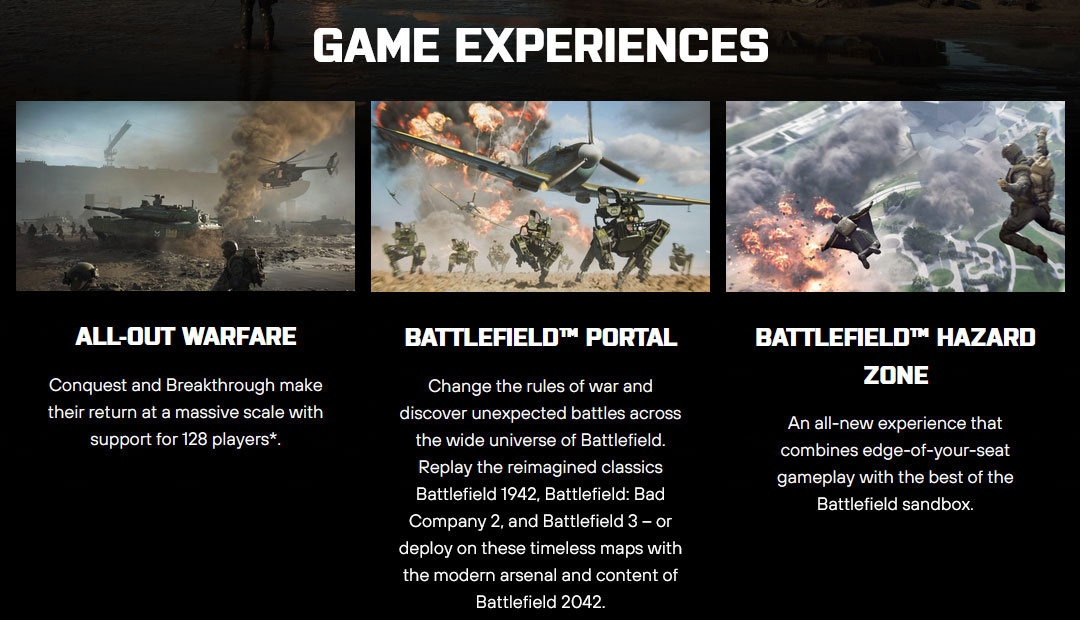
The open beta served as a critical crucible for DICE. Players were dropped into the "Orbital" map, a sprawling, cinematic environment set in French Guiana. The primary goal was to test the engine’s capability to support 128-player battles—a cornerstone feature of Battlefield 2042 on next-generation hardware.
While the scale was undeniably impressive, the beta was not without its friction points. Players reported issues ranging from UI clutter and movement inconsistencies to balance concerns regarding the newly introduced "Specialist" system. The beta acted as a high-stakes stress test, not just for the game’s servers, but for the fundamental design philosophy that EA is pushing for the series’ future.
The Specialist Controversy: Evolution or Dilution?
Perhaps the most significant point of contention following the beta was the departure from the traditional, rigid class system. For nearly two decades, Battlefield players have relied on the distinct archetypes of Assault, Medic, Support, and Recon. These roles created a symbiotic ecosystem where team-based synergy was not just encouraged; it was mandatory for success.
In Battlefield 2042, DICE has pivoted to "Specialists." These unique characters come equipped with specific gadgets and traits, while retaining the ability to use any primary weapon. DICE maintains that this is an "evolution" of the class system, designed to provide players with more autonomy and tactical versatility. However, a vocal segment of the player base argued that this shift eroded the sense of role-based identity, potentially leading to a more disjointed "lone wolf" style of play.
Putting All the Cards on the Table
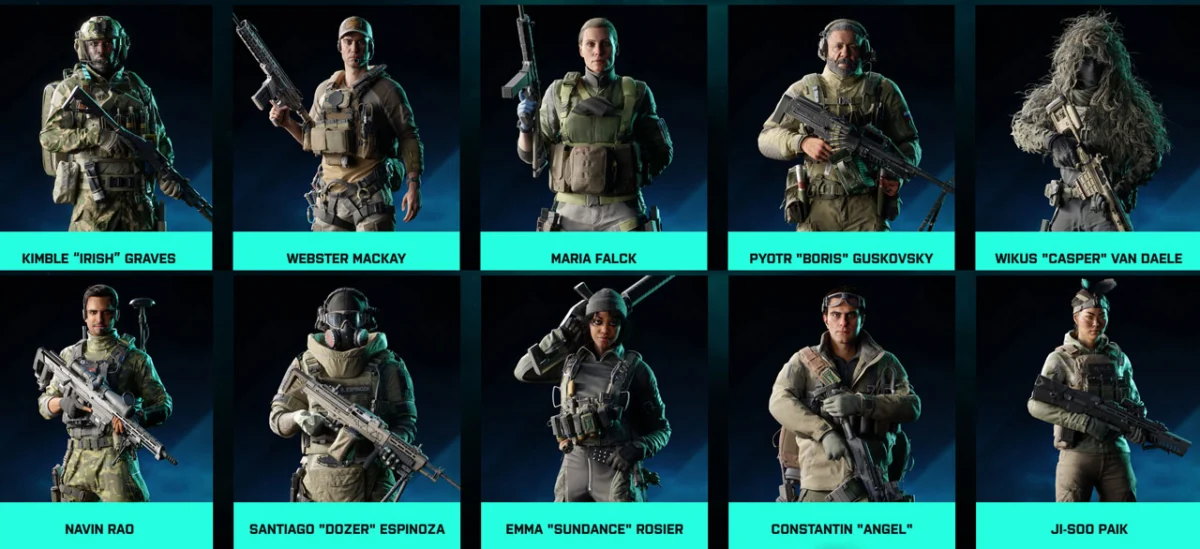
To address these concerns, DICE has unveiled the full roster of ten Specialists, effectively doubling the number available during the beta. The studio argues that the limited pool of characters during the trial period created a skewed perception of how the system would function in the full game.
By expanding the roster, DICE hopes to demonstrate that the synergy players crave is still very much alive. Each specialist is designed with a specific utility in mind, covering the traditional roles while allowing for the "flexible loadouts" that define the 2042 experience. Whether it is a specialist designed for rapid deployment, area denial, or high-intensity healing, the goal is to provide a more nuanced tactical layer than the legacy systems ever allowed.
A Comprehensive Patch List: Beyond the Specialists
The "Battlefield Briefing" released by the developers serves as a manifesto of sorts for the post-beta development cycle. It is not just the Specialists that are receiving attention; DICE has confirmed a wide-ranging list of improvements based on the community’s bug reports and suggestions.
1. UI and HUD Refinements
During the beta, many players found the heads-up display to be overly intrusive, often obscuring the action rather than aiding it. DICE has committed to a complete overhaul of the UI, focusing on clarity, improved iconography, and a more streamlined presentation that keeps the player focused on the battlefield.
2. Map and Movement Overhauls
The Orbital map was a technical marvel, but navigation proved difficult for some. The developers are refining traversal mechanics, making movement more fluid and responsive. Furthermore, mission entry and exit points—often criticized for feeling disjointed—are being tightened to ensure a more cohesive flow across the massive, multi-sector environments.
3. Server-Side and Performance Optimization
Perhaps the most critical aspect of the post-beta work is the optimization of the backend. With 128 players per map, server stability is paramount. DICE has indicated that they have implemented numerous "code-side" adjustments to minimize desync, reduce stuttering, and ensure that the "massive-scale" promise of the game is met with stable, high-fidelity performance.
The Developer Perspective: Bridging the Gap
In official communications, the team at DICE has maintained a tone of transparent accountability. Acknowledging that the feedback was a "mountain" of data to process, the studio has emphasized that the beta was a vital component of their development lifecycle, not a marketing demo.
The developers have specifically reached out to those who found the beta experience lacking in depth. They have pointed out that the beta represented a highly restricted slice of the game. In the final release, players will have access to fully customizable loadouts and an expanded array of specialized hardware. This level of customization is intended to reward progression and allow players to fine-tune their Specialist to suit their specific playstyle, whether they are playing as part of a tightly coordinated squad or as an independent operator.
Implications for the Battlefield Franchise
The stakes for Battlefield 2042 are immense. In an era where the first-person shooter market is more crowded than ever, Battlefield must prove that it can offer a unique, large-scale experience that its competitors cannot replicate.
The Balancing Act
The primary implication of the current feedback loop is the delicate balance between innovation and tradition. If DICE pushes too hard into the "Specialist" era, they risk alienating the veteran player base that keeps the franchise alive. Conversely, if they cling too tightly to the past, they risk being perceived as stagnant. The upcoming launch will be the ultimate litmus test to see if the studio has successfully navigated this divide.
The Role of Community Feedback
The responsiveness of EA and DICE signals a shift in how major publishers handle AAA releases. By publicly documenting their reaction to beta feedback, they are attempting to foster a more collaborative relationship with their players. Whether this builds enough goodwill to overcome the technical hurdles remains to be seen, but it is a clear departure from the "launch first, patch later" mentality that has plagued the industry in recent years.
Looking Ahead: The November 19 Launch
As the clock ticks down to November 19, the gaming world will be watching closely. The promises made by DICE—the smoother movement, the clearer UI, the deeper tactical synergy, and the refined server architecture—are all necessary to deliver the definitive Battlefield experience.
The transition from a beta trial to a full-scale release is rarely seamless, but the focus on granular improvements suggests that the development team is not merely reacting to complaints, but actively refining the game’s core identity. If these adjustments land correctly, Battlefield 2042 has the potential to redefine the genre, turning the chaotic, high-player-count vision into a polished reality.
For now, the burden of proof rests with the final build. The feedback has been logged, the bugs are being squashed, and the rosters are set. All that remains is for the servers to go live and for the community to decide if the "evolution" of Battlefield is one they are ready to embrace. Regardless of the outcome, the process surrounding the 2042 beta will likely be studied as a case study in modern game development, highlighting the immense difficulty of modernizing a legacy franchise while keeping its heart intact.
As players prepare to drop into the varied theaters of war that 2042 will offer, the hope remains that the lessons learned from the French Guiana beta will serve as the foundation for a launch that finally delivers on the immense ambition of the Battlefield series.










No comments yet. Be the first to join the conversation!