

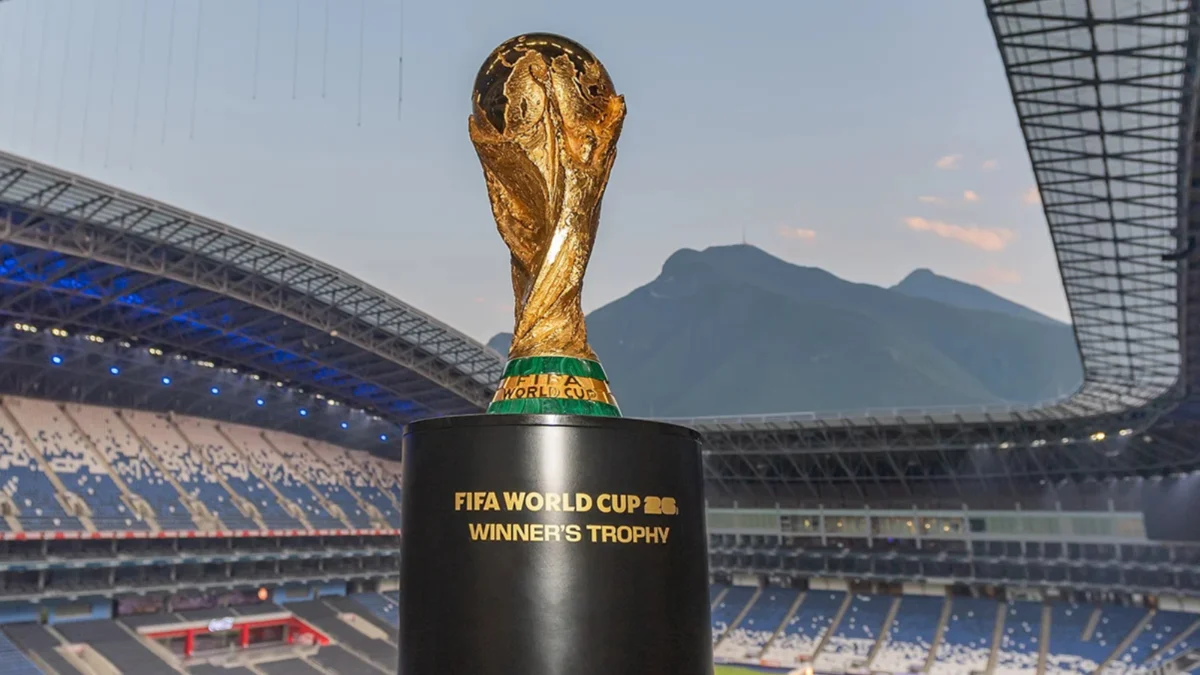
As the global football community prepares for the 2026 FIFA World Cup—a massive, expanded tournament hosted across the United States, Canada, and Mexico—the excitement is being heavily overshadowed by a growing crisis of affordability. While FIFA touts this as the "biggest and most inclusive" tournament in history, featuring 48 teams and a record number of matches, a stark reality has emerged: for the average fan, the dream of attending a game is rapidly becoming a financial impossibility.
New data has laid bare the staggering economic disparity between the tournament’s pricing strategy and the reality of the global working class. Perhaps most shocking is the revelation that a citizen of Haiti, earning the local minimum wage, would have to work for nearly 25 years to afford a single ticket to their nation’s opening match against Scotland in Foxborough, Massachusetts.
The Economic Chasm: A Quarter-Century of Labor for One Match
The 2026 World Cup is set to be a commercial juggernaut, but at what cost to the spirit of the game? According to recent research conducted by AskGamblers, the financial barrier to entry for fans from lower-income nations is not just high—it is insurmountable.
When calculating the total cost of attendance—including the cheapest available ticket (currently listed at $774 via Ticketmaster), international travel, lodging in the Boston area, and basic sustenance like a meal and a drink—the numbers are staggering. For a Haitian fan, these expenses represent roughly 24.6 years of continuous labor at the local minimum wage. To put that in perspective, this translates to 9,040 days of work for 90 minutes of football.
This is not an isolated phenomenon. The report highlights that fans from other nations face similarly prohibitive hurdles. An Iranian citizen would need to work for approximately 6 years to afford the same experience, while a Panamanian fan would be looking at 8.9 years of wages. These figures underscore a growing divide between the tournament’s "global" branding and the reality that, for many, the World Cup has become a luxury product reserved for the global elite.
Chronology of a Pricing Controversy
The lead-up to the 2026 tournament has been marked by a series of escalating concerns regarding accessibility.
- The Announcement of the 48-Team Format: When FIFA first confirmed the expansion of the tournament, the governing body promised that the increased capacity would democratize access to the game.
- The Initial Ticket Launch: As ticket portals opened, fans were met with dynamic pricing models and "platinum" tier tickets that surged in value based on demand. This sparked early outcry on social media platforms.
- The Secondary Market Explosion: As official tickets sold out, the secondary market took over. Reports surfaced of tickets for the final in New Jersey being listed at astronomical prices, with some resellers asking for upwards of $2 million per seat.
- Logistical Pushback: Beyond ticket prices, fans began to voice concerns about the "fan experience." In cities like Foxborough and Miami, the lack of pedestrian-friendly infrastructure and the high cost of local transport have forced organizers to suggest unconventional solutions, such as shuttle buses, which have further dampened the enthusiasm of traveling supporters.
Supporting Data: By the Numbers
To understand the scale of the financial exclusion, one must look at the intersection of FIFA’s pricing and global economic indicators.
The Cost of Entry
The $774 entry point for the Haiti-Scotland match is not the ceiling; it is the floor. In many cases, tickets are being bundled with hospitality packages that push the price into the thousands. When factoring in the current inflationary climate in the United States, where hotel prices in host cities are expected to triple during the tournament window, the "total cost of attendance" for an international visitor becomes a significant barrier to entry, even for middle-class fans from wealthier nations.
The Comparison of Wealth
The AskGamblers data provides a sobering look at how "purchasing power parity" (PPP) is being ignored by the event’s organizers. While a ticket costing $774 might represent a significant but manageable expense for a fan in a G7 nation, it represents a generational financial burden for those in developing economies.
Infrastructure and Hidden Costs
The problem is compounded by the geography of the tournament. The United States is a vast country with expensive domestic travel. Unlike the 2022 World Cup in Qatar, where all stadiums were within a relatively small radius, the 2026 tournament requires fans to cross time zones, significantly increasing the cost of flight, accommodation, and food.

Official Responses: FIFA’s Stance and the "Hot Dog" Controversy
FIFA has found itself in an uncomfortable position as public criticism mounts. When confronted with the reality of $2 million tickets, the organization has consistently attempted to deflect blame toward the secondary market.
FIFA President Gianni Infantino has adopted a tone that some fans have characterized as tone-deaf. In a widely criticized moment, Infantino suggested that he would personally deliver a "hot dog and a Coke" to any fan who paid the $2 million asking price for a seat at the final. While likely intended as a lighthearted joke, the comment was viewed by many as a mockery of the economic struggles facing the average football fan.
Furthermore, FIFA has attempted to frame its corporate social responsibility (CSR) initiatives as a response to these concerns. The governing body has pledged to donate $1 from every ticket sold to global education programs. While this is a noble cause, critics argue that it is a "drop in the ocean" compared to the record-breaking revenues the tournament is expected to generate, and that it does little to address the core issue of fan exclusion.
Implications for the Future of the Sport
The 2026 World Cup serves as a litmus test for the future of international football. There are several long-term implications to consider:
The Erosion of Fan Culture
Football is a sport built on the passion of the masses. By pricing out the working-class supporters—the "ultras" and the die-hard fans who create the atmosphere that makes the World Cup a spectacle—FIFA risks turning the tournament into a sanitized, corporate event. A quiet stadium, filled with tourists rather than chanting fans, could fundamentally alter the broadcast quality and the prestige of the sport.
The "Super Bowl-ification" of Football
The move toward halftime shows featuring global pop stars (such as BTS and Shakira) and the high-ticket, high-status nature of the event suggests that FIFA is moving toward an American-style "Super Bowl" model. While this is highly profitable, it alienates the traditional football fan base that values the sport’s history, accessibility, and community roots.
The Rise of Regional Rivalries
As the World Cup becomes harder to attend, we may see a shift in viewership habits. Fans who cannot afford to travel to North America may increasingly turn their attention to regional tournaments like the Copa América or the UEFA European Championship, where travel is often more feasible and ticket prices are sometimes better regulated by regional confederations.
Institutional Reform
There is growing pressure for FIFA to implement a more equitable ticket distribution system. This could include a lottery system that specifically reserves a percentage of tickets for fans from participating nations at a price point pegged to their local currency or cost-of-living index. Without such reforms, the "World Cup" risks becoming a title that reflects only the reach of its broadcast, not the inclusivity of its audience.
Conclusion
The 2026 World Cup will undoubtedly be a financial success for FIFA and its commercial partners. However, the cost of this success is the alienation of the very people who built the game’s global popularity. When a fan from a participating nation must choose between feeding their family for a decade or attending a single match, the social contract of the sport has been broken.
As the tournament approaches, the governing body faces a critical choice: continue down the path of hyper-commercialization, or acknowledge that a "World Cup" is only as meaningful as the fans who are actually present in the stands. For now, the dream of a truly inclusive global celebration remains, for many, exactly that—a dream, deferred by a price tag that has outpaced the reality of the world it claims to represent.











No comments yet. Be the first to join the conversation!