Nila Kartika Wati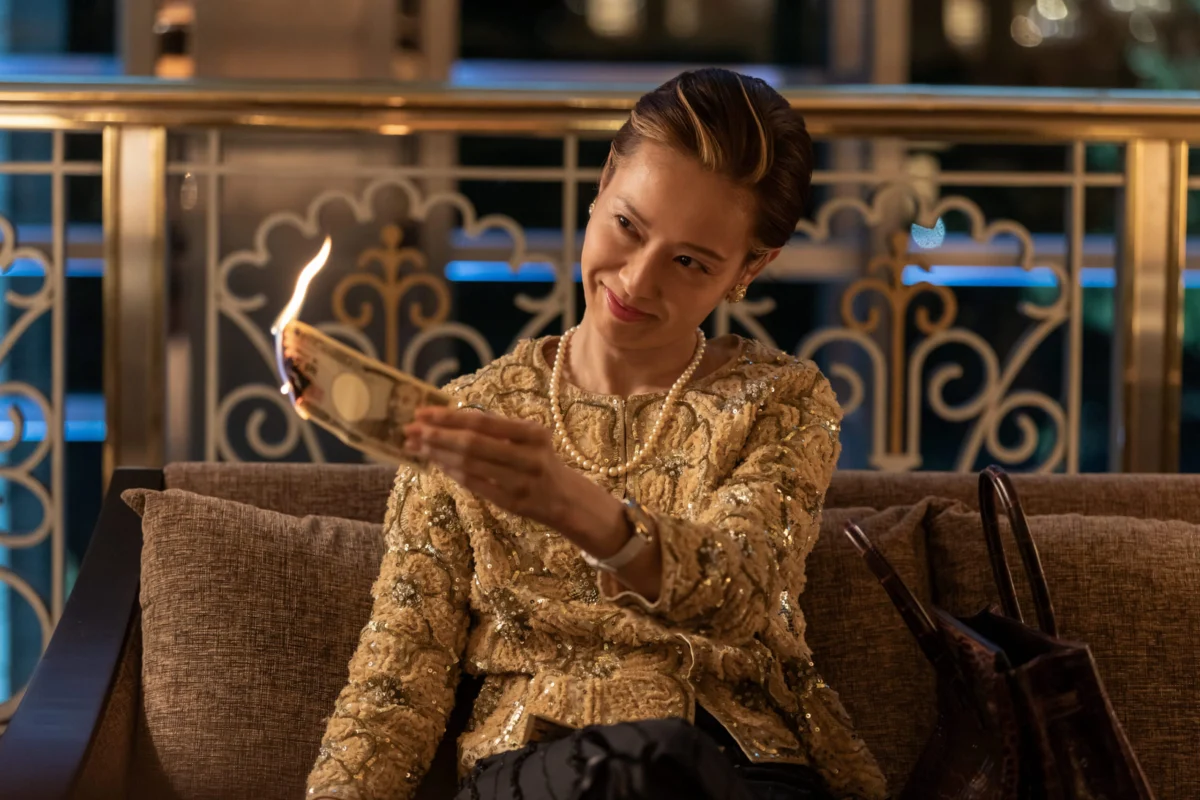
Since its global debut on April 27, the Netflix original series Straight to Hell has not merely climbed the streaming charts in Japan—it has sparked a profound cultural excavation. The series, which charts the meteoric and often ruthless rise of Japan’s most polarizing spiritual icon, Kazuko Hosoki (細木数子), has captivated audiences across Asia, turning a new generation onto the life of the woman who once famously told the Japanese public that if they ignored her counsel, they were “going to hell.”
Portrayed with a chilling, multi-layered intensity by Erika Toda, the real-life Hosoki was a media juggernaut who defied every archetype of the Japanese television personality. She was not the demure, soft-spoken psychic one might expect; she was a firebrand—a woman who wielded blunt traditionalism like a cudgel and navigated the shadows of post-war society with the instincts of a predator. As Straight to Hell continues to dominate the discourse, viewers are left grappling with a singular question: Where does the fictionalized "Hell Lady" end, and the real-life architect of a spiritual empire begin?
The Crucible of Post-War Survival
To understand the woman who would eventually command the nation’s attention, one must understand the environment that forged her. Born in 1938, Kazuko Hosoki was a child of the rubble. She grew up in the suffocating, desperate poverty of post-war Tokyo, an era defined by hunger and the collapse of the old social order.
For the young Hosoki, life was a zero-sum game. Her early memories were not of comfort, but of scouring the ruins of Tokyo for sustenance for herself and her siblings. This childhood trauma became the bedrock of her lifelong philosophy: survival of the fittest. It was a cold, pragmatic worldview that she would carry with her from the ruins of her youth to the velvet-lined boardrooms of her later years. She learned early that authority was not granted; it was seized.
The Queen of Ginza
By her teenage years, Hosoki had migrated to the neon-lit, high-stakes world of Tokyo’s Ginza district. It was here that her natural charisma and iron-willed ambition began to manifest. Rising from the humble management of coffee shops to the ownership of high-end, exclusive nightclubs, she quickly earned the moniker "Queen of Ginza."
The Ginza of the mid-20th century was a murky ecosystem where high finance, backroom politics, and organized crime intersected. Navigating this labyrinth required a unique blend of toughness and discretion. Hosoki flourished in this environment, building a network of connections that would provide the foundational capital—both social and financial—for her future ascent. However, this life was not without its costs.

In a moment of vulnerability that would later become a pivot point in her life, Hosoki fell victim to a massive financial betrayal. A con artist allegedly swindled her out of ¥1 billion—a staggering sum at the time. The loss left her saddled with crippling debt and under the predatory gaze of the yakuza. It was a moment of absolute existential crisis, one that forced a total reinvention of the self. Abandoning the nightlife, she turned toward the study of Chinese divination and philosophy, effectively weaponizing her trauma to create a new, impenetrable identity.
Chronology of a Spiritual Empire
The trajectory of Kazuko Hosoki’s life is a masterclass in opportunistic reinvention. Below is a timeline of the events that shaped the "Hell Lady."
- 1938: Born in Tokyo, beginning a childhood defined by post-war deprivation.
- 1950s-1960s: Emerges as the "Queen of Ginza," managing exclusive nightclubs and cultivating ties with the political and criminal elite.
- 1970s: Faces a catastrophic financial collapse, losing ¥1 billion to a scam. This period marks her retreat from hospitality into the study of fortune-telling.
- 1983: Marries Masahiro Yasuoka, a legendary spiritual advisor to multiple Japanese Prime Ministers. Though the marriage lasts only until his death later that year, it grants her immense intellectual credibility in elite circles.
- 1980s-1990s: Develops "Six Star Astrology" (Rokusei Senjutsu), a systematic approach to divination that she markets aggressively.
- 2000s: Reaches the zenith of her television career. Appears on Iron Chef and anchors several prime-time programs, becoming a household name.
- 2008: Begins a gradual withdrawal from public life due to health concerns and mounting criticism regarding the high fees for her consultations.
- 2021: Passes away on November 8 at the age of 83 from respiratory failure.
The Business of Destiny: Supporting Data
The sheer scale of Hosoki’s influence is difficult to overstate. Her "Six Star Astrology" system was not merely a hobby; it was a publishing juggernaut.
According to Guinness World Records, Hosoki set the record for the most fortune-telling books sold, with a staggering 34 million copies in circulation. This was not just a literary achievement; it was a data-driven phenomenon. By standardizing human experience into six distinct categories, she created a framework that allowed millions of people to feel seen and understood during Japan’s period of prolonged economic stagnation.
Her television appearances were equally dominant. During the early 2000s, she was arguably the most visible woman in Japanese media. Her shows were characterized by a performative, often aggressive, "scolding" style. She didn’t offer gentle encouragement; she offered harsh, absolute dictates. Her presence as a judge on Iron Chef—an unexpected role for a fortune teller—only cemented her status as a cultural arbiter whose opinion held weight regardless of the subject matter.
Official Responses and Public Scrutiny
The cultural impact of Hosoki was always accompanied by a chorus of criticism. As her fame grew, so did the skepticism regarding her methods.

Throughout the mid-2000s, legal and media scrutiny began to mount regarding the "consultation fees" charged by her organization. Critics argued that she was exploiting the anxieties of the vulnerable, turning spiritual guidance into a high-profit business model. Furthermore, her outspoken social commentary—which often emphasized traditional, patriarchal gender roles—frequently drew the ire of feminists and social progressives.
Despite this, her organization remained remarkably resilient. After she stepped away from the spotlight in 2008, the mantle was passed to her adopted daughter, Kaori Hosoki. Today, the digital empire continues to thrive, utilizing the same fundamental divination systems that Kazuko perfected, proving that the demand for "destiny" remains a lucrative commodity in the digital age.
Implications: The Antihero of the Modern Age
The success of Netflix’s Straight to Hell highlights a contemporary fascination with "dark antiheroes." The series utilizes a narrative framing device involving a novelist, Minori (played by Sairi Ito), who is hired to ghostwrite Hosoki’s biography. Through Minori’s eyes, the audience sees the duality of the Hell Lady: the woman who lived in a cavernous, lonely mansion, surrounded by opulence but haunted by the ghosts of her past.
While the show takes creative liberties—specifically regarding the dramatic, investigative downfall of her career—it succeeds in capturing the essence of the real woman. Hosoki was not a saint, nor was she a simple villain. She was a survivor who weaponized her own darkness to illuminate a path for others, even if that path was paved with fear and intimidation.
The series implies that Hosoki’s appeal was not despite her "hellish" personality, but because of it. In a society that demands polite conformity, Hosoki provided a cathartic outlet for raw, unfiltered power. She was a woman who dared to tell a nation to "go to hell," and for a time, they followed her there, believing that she—and only she—had the map to navigate the abyss.
Whether one views her as a spiritual charlatan or a visionary psychologist, Kazuko Hosoki remains a vital, if uncomfortable, window into the post-war Japanese psyche. She was the mirror in which a nation saw its own anxieties reflected, scolded, and ultimately, sold back to them in a bookstore. As Straight to Hell continues to resonate, it is clear that while the Hell Lady may be gone, the cultural void she filled remains as wide and hungry as ever.


 Neng Nana
 Asro
Asro