

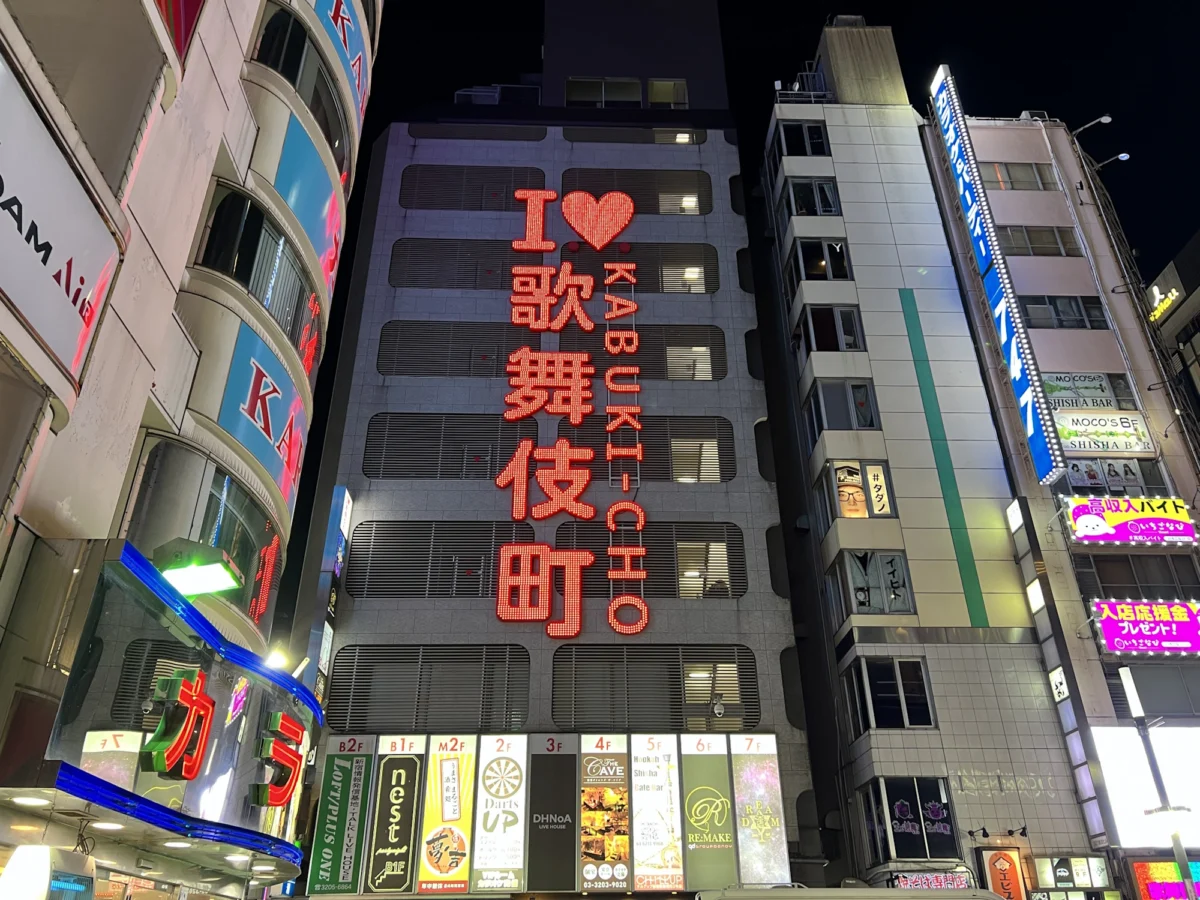
Whenever a tourist family with wide-eyed children steps out of a hotel in Kabukicho, the neon-drenched heart of Shinjuku, the sight triggers an immediate, visceral reaction among long-term Tokyo residents: What were they thinking?
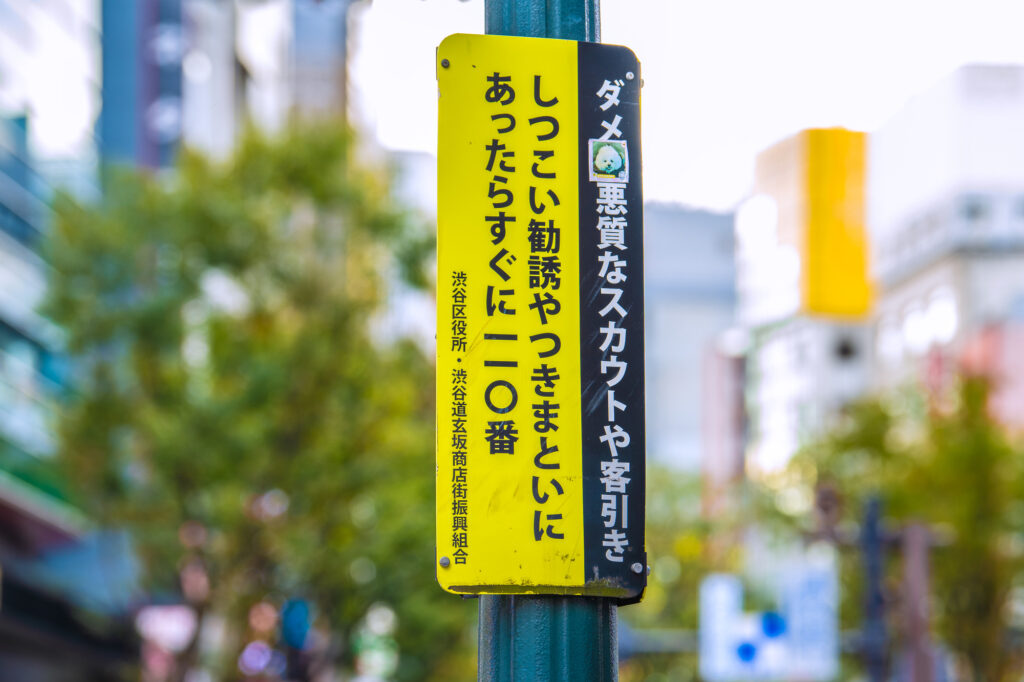
Kabukicho is, by design and historical reputation, Tokyo’s premier "cesspool of sin." It is a labyrinth of red lights, host clubs, soaplands, and back-alley izakayas that has served as the city’s nocturnal pressure valve since the post-war era. However, in recent years, the district has arguably entered a new, more aggressive era of "family-unfriendliness." The street-level experience for the uninitiated is increasingly fraught with the presence of illegal touts (catch), predatory scouts, and aggressive solicitation.
Yet, whispers from the Japanese media suggest that a quiet, unannounced, and systematic cleanup is currently underway. Reports indicate that police are conducting "daily roundups" of barkers and recruiters, prompting comparisons to the infamous 2004 "Kabukicho Cleansing Operation." As Tokyo braces for a new wave of record-breaking tourism, the question remains: Is this a genuine shift toward safety, or merely another temporary performance of order?
The Crosshairs: Targeting Touts and Scouts
The current police crackdown is primarily focused on two distinct, yet often overlapping, predatory forces: the "catch" (touts) and the "scouts."
The "Catch" (Touts)
Barkers, known in Japanese as kyaku-hiki, are the primary point of friction for the average tourist. Their modus operandi is simple but invasive: they corner passersby, attempting to lure them into bars, restaurants, or adult entertainment venues. While some are merely persistent, others are known to physically block paths or "herd" victims into establishments. Once inside, these customers are frequently subjected to extortionate "hidden" door charges, inflated drink prices, or, in more severe cases, forced into debt-traps. Despite barkering being illegal under local ordinances, the 30% commission rates on brought-in customers make it a high-stakes, high-reward profession that thrives in the shadows.
The Scouts
If the touts are the nuisance, the scouts are the predators. These individuals operate with the primary goal of recruiting young women into the sex industry. Their methods are increasingly sophisticated, often leveraging the crushing debt burdens that many young women accumulate through the high-pressure environment of Tokyo’s host club scene. Scouts recruit for everything from "delivery health" services to full-scale prostitution, both domestically and abroad. By targeting vulnerable individuals, they turn the social crisis of "host-club debt" into a lucrative supply chain for illicit businesses.
A Brief Chronology of Kabukicho’s "Cleansing"
To understand the current operation, one must view it through the lens of history. Kabukicho has been a perpetual thorn in the side of Tokyo’s authorities since it emerged from the ashes of World War II.

- 1980s: The Era of Excess: The district became a flashpoint for gang-related violence and the infamous "No-Panties Shabu-Shabu" era, characterized by a complete lack of public regulation.
- 2004: The First "Cleansing": Under Governor Ishihara Shintaro, the Metropolitan Police Department (MPD) launched the "Kabukicho Cleansing Operation." It was a textbook application of "broken windows policing"—the theory that addressing minor public order offenses would deter more serious organized crime.
- 2005: The Legislative Hammer: In the wake of the 2004 operation, Japan outlawed barkering entirely. Thousands of security cameras were installed, ordinances were tightened, and nearly 200 businesses were shuttered. The crackdown was severe, resulting in the arrests of over 1,000 foreign residents, many of whom were involved in the touting trade.
- 2024–2025: The Rise of Tokuryu: As traditional yakuza structures weakened due to anti-gang laws, a new, decentralized criminal entity emerged: the tokuryu (anonymous, fluid crime groups). These groups coordinate via encrypted messaging apps, making them significantly harder to police than the rigid, hierarchical yakuza families of the past.
Supporting Data: The Scale of the Shadow Economy
The difficulty in cleaning up Kabukicho lies in the sheer scale of the decentralized criminal networks. According to data from 2024, police arrested approximately 10,000 individuals linked to tokuryu organizations. However, the operational masterminds—those who orchestrate the recruitment and the exploitation—remain largely untouched.
Only about 10% of those arrested were identified as core leaders. The vast majority of the "workforce" consists of underlings recruited through yami-baito (dark-side part-time jobs) advertisements on social media. These ads promise high wages for "simple work," often masking the illegal nature of the tasks, such as acting as a scout or a tout, until the worker is already deep within the system.
This current crackdown is notable for its specific focus: the Kohei-ikka, a child organization of the Sumiyoshi-kai yakuza. For the first time, the MPD has established a "Special Countermeasures Headquarters" dedicated to dismantling a specific branch of a criminal organization. This signals a strategic shift: instead of playing whack-a-mole with street-level barkers, the police are attempting to cut the financial arteries that feed these groups.
Official Responses and Tactical Shifts
The Metropolitan Police Department’s current strategy is a direct response to the mounting pressure of international reputation. With Japan expecting over 40 million tourists annually, the presence of predatory gangs in one of Tokyo’s most famous districts is no longer just a local nuisance—it is a diplomatic and economic liability.
Sources from within the industry, speaking to the tabloid FRIDAY, have confirmed the intensity of the current sweep. One source, identified only as "A," noted that "two or three people are being arrested every day." This is not a sporadic patrol; it is a sustained, systematic pressure campaign.
However, the police face a significant hurdle: the adaptability of the tokuryu. When the police saturate the main thoroughfares, these groups simply retreat into the secondary and tertiary networks of side streets. They utilize Telegram, Signal, and other encrypted platforms to maintain communication, ensuring that if one scout is arrested, a replacement is already waiting in the wings.
The Implications: Is Real Change Possible?
The "Second Cleansing" of Kabukicho brings with it a host of complex implications for the future of Tokyo’s nightlife.
1. The Displacement Effect
History suggests that crackdowns rarely eliminate illegal activity; they merely displace it. As police tighten the screws on Kabukicho, there is a high probability that these criminal networks will migrate to other districts—such as Ikebukuro or Ueno—effectively exporting the "Kabukicho problem" to quieter parts of the city.
2. The Victimization Narrative
A critical aspect of the current policy is the distinction between the exploiters and the exploited. The police are increasingly positioning themselves to target the "scout" infrastructure rather than the sex workers themselves. This is a vital distinction, as many of these workers are trapped in cycles of debt and coercion. By focusing on the recruiters, the state hopes to dismantle the predatory pipeline without criminalizing the victims.
3. The Tourism Paradox
Kabukicho’s allure is, for many tourists, precisely its "seedy" reputation. It is a cinematic, neon-lit version of the underworld. However, there is a fine line between "gritty atmosphere" and "actual physical danger." The government is betting that it can strip away the organized crime element while leaving the "excitement" of the nightlife intact. Whether that is possible is the subject of much debate.
4. The Resilience of the Shadow Economy
As expert Sasaki Chiwawa has noted in previous interviews, Kabukicho is a living, breathing organism. Every time the government attempts to regulate it, the district evolves. The shift from traditional yakuza-run businesses to decentralized tokuryu networks is the most recent proof of this. The money—fueled by millions of tourists and a desperate local population—is too significant for the trade to simply vanish.
Conclusion: The Cycle Continues
As we look at the current state of Kabukicho, we see a familiar cycle. The police are doing what they must to maintain the appearance of law and order in the face of massive tourism. They are arresting the low-level touts, putting pressure on the yakuza, and sending a message that the streets are not a free-for-all.
Yet, those who know the district best understand that this is likely a temporary lull. The structures that underpin the "sin city" are built into the very architecture of the district. The cleanup may indeed make the streets safer for the casual, confused tourist family in the short term, but as long as the demand for illicit services remains, the shadows of Kabukicho will always find a way to adapt.
The "Second Cleansing" might change the faces of those standing on the corners, but it is unlikely to change the soul of the district itself. For now, the neon continues to glow, the police continue their rounds, and the cycle of Kabukicho persists—ever-changing, yet fundamentally the same.












No comments yet. Be the first to join the conversation!