Siti Muinah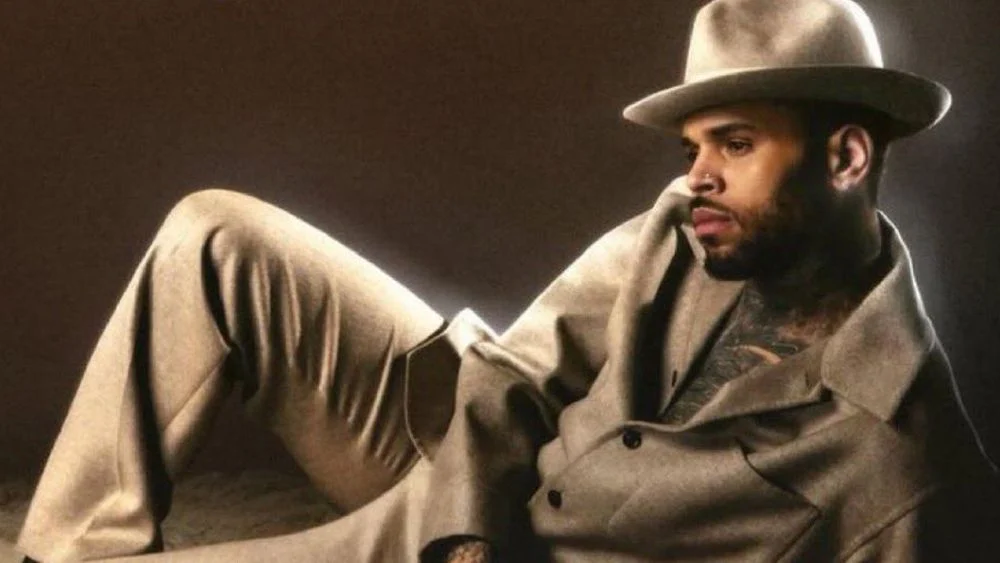
Chris Brown has never been a stranger to controversy, but his latest project, the 27-track behemoth titled BROWN (Break Rules Only When Necessary), has ignited a discourse that transcends the music itself. While the sheer volume of tracks on the album has prompted the usual industry chatter, it is the visual presentation—specifically the cover art—that has become the epicenter of a heated debate regarding artistic legacy, creative derivative, and the role of homage in contemporary R&B.
Featuring the singer in a tan suit and fedora, reclining with a soft, dreamlike bloom effect, the artwork has been branded by critics and fans alike as a hollow imitation of 1980s pop iconography. As social media platforms like X (formerly Twitter) erupt with comparisons to the legendary covers of Michael Jackson, Luther Vandross, and Teddy Pendergrass, the industry is left to grapple with a pressing question: When does artistic inspiration cross the line into self-aggrandizing parody?
A Chronology of the Controversy: From Release to Backlash
The discourse began almost immediately upon the album’s announcement in late April 2026. The initial reveal of the cover art was met with a swift, visceral reaction from music aficionados.
- April 30, 2026: The album artwork is unveiled. Within hours, users on social media identify the specific pose—the “reclining on one elbow” aesthetic—as a hallmark of 1980s R&B and Pop cover art.
- May 1, 2026: Comparisons begin to surface alongside side-by-side images of Michael Jackson’s Thriller (1982), Luther Vandross’s Give Me the Reason (1986), and Teddy Pendergrass’s It’s Time for Love (1981).
- May 2, 2026: The conversation shifts from simple identification to critical analysis. Critics begin questioning the “soft bloom” lighting, which many suggest is an attempt to artificially manufacture a vintage, high-budget aesthetic that feels disconnected from the modern production of the album.
- May 3, 2026 – Present: The debate expands into broader cultural commentary, with users accusing Brown of “lowest vibrational art” and mocking the cover as an example of AI-generated malaise, where the image looks more like a YouTube "lo-fi" playlist thumbnail than a major label release.
Anatomy of the Pose: The 1980s Visual Language
The "reclining figure" is more than just a pose; it is a semiotic marker of the 1980s R&B superstar. In an era before digital saturation, the album cover was the primary point of contact between an artist and their audience. The specific stance—leaning back, often with a slight tilt of the head and a relaxed, debonair expression—signified a specific type of approachable, yet aspirational, masculinity.
When Brown chose this composition, he was consciously or subconsciously tapping into the visual language of the “Greats.” The comparison to Michael Jackson’s Thriller is the most damaging for Brown, as the expectations for that specific visual are tied to arguably the most significant cultural shift in music history. Similarly, the references to Lionel Richie and Teddy Pendergrass invoke a sense of romantic, soulful legitimacy.
However, visual communication relies on context. When these poses were used in the 80s, they were revolutionary because they were new. When used today, without a subversive twist, they risk being seen as a costume rather than a creative choice.
The "AI-Generated" Criticism and the Crisis of Authenticity
One of the most recurring criticisms of the BROWN cover art is that it lacks a "soul" or a "subversive" element. In the age of AI-generated content, audiences have become hyper-vigilant about visual authenticity.
Critics have pointed out that the lighting and the texture of the cover feel eerily similar to the stock imagery found on streaming platforms that curate “Old School R&B” playlists. By leaning into this aesthetic, Brown has inadvertently invited comparisons to the very machines that threaten the human artistry he claims to represent.
"He’s the most boring person to ever enter art," one viral post stated, echoing a sentiment that the album’s visual identity is merely a "Shade Room" demographic play—designed to be aesthetically pleasing in a superficial sense, but devoid of the intellectual depth that defines true musical innovation.
The History of Pastiche: Where Does BROWN Fit?
It is vital to note that referencing past album covers is a time-honored tradition in music. The industry has a long, storied history of both parody and homage.
- The Clash and Elvis: The cover of London Calling (1979) was a direct, iconic pastiche of Elvis Presley’s 1956 debut album, meant to signal the transition from the rockabilly era to the punk explosion.
- Frank Zappa’s Satire: We’re Only in It for the Money (1968) was a biting, direct parody of The Beatles’ Sgt. Pepper’s Lonely Hearts Club Band, used to critique the commercialization of the counter-culture.
- Eminem’s Homage: The cover of Kamikaze (2018) was a calculated tribute to the Beastie Boys’ Licensed to Ill, acknowledging a lineage of hip-hop that Eminem felt was being forgotten.
The difference, according to contemporary critics, lies in the intent. Where The Clash and Zappa used these covers to make a statement—either to signal a new movement or to ridicule the status quo—critics argue that Brown’s cover lacks an "angle." It is not parodying the 80s, nor is it subverting them. It is simply wearing them, which, to many, feels like a hollow attempt to borrow the prestige of the titans who came before him.
Implications for Modern R&B Aesthetics
This controversy raises significant questions about the future of visual design in the music industry. As we move further into a digital-first landscape, the importance of physical-era aesthetics (like the fedora-and-suit look) is being challenged by the need for viral, eye-catching digital design.
- The Pressure of Legacy: Modern artists feel an immense pressure to compete with the "Golden Age" of their genre. This often leads to a reliance on nostalgia-baiting, which can be a double-edged sword.
- The Death of Subversion: If pop music is meant to move the culture forward, then a reliance on visual mimicry might signal a stagnation in the genre. If R&B artists are looking backward to define their present, what does that say about the future of the sound?
- The Audience’s New Power: The speed with which social media dismantled the artistic "integrity" of the BROWN cover shows that artists can no longer rely on label-sanctioned imagery to define their narrative. The audience is now the ultimate arbiter of authenticity.
Official Responses and Industry Silence
As of the time of writing, Chris Brown’s camp has remained largely silent regarding the specific criticisms of the artwork. In the modern music industry, this silence is a calculated strategy. By not addressing the "AI-generated" accusations, the artist allows the conversation to continue, which—in the age of algorithmic engagement—still counts as a form of promotion.
However, some industry insiders argue that this silence is also a sign of a disconnect between the artist and a more critical, internet-savvy audience. The "Shade Room" demographic mentioned by critics is one that values engagement and drama; by providing them with a "cringe" moment, Brown may have succeeded in generating buzz, even if that buzz is largely negative.
Conclusion: A Mirror of the Artist
Whether the BROWN album cover is a masterclass in nostalgic marketing or a miscalculated attempt at legacy-building remains a matter of perspective. What is undeniable is that the reaction to the cover art has become more interesting than the music itself.
Chris Brown’s attempt to place himself in the pantheon of MJ and Luther Vandross serves as a stark reminder that legacy is not something that can be worn or posed for. It is earned through the tension between tradition and innovation. By choosing to mirror the icons of the past so closely, Brown has inadvertently highlighted the very gap he is trying to bridge.
In the final analysis, the controversy surrounding BROWN serves as a mirror to the current state of pop culture: a landscape caught between a desperate need to reclaim the "glory days" and an increasingly cynical audience that refuses to accept the imitation for the real thing. Whether the music on the 27 tracks can redeem the visual presentation remains to be seen, but the conversation surrounding the album has already secured its place in the 2026 cultural timeline.



 Reynand Wu