

In an era defined by the frantic consumption of short-form video and algorithmic content, Brooklyn-based filmmaker and artist Derek Beck is championing a deliberate, multisensory approach to visual storytelling. His ongoing project, a synthesis of 35mm analog photography and ambient field recording, seeks to bridge the gap between the static image and the fleeting, auditory reality of a moment. By pairing captured film frames with the precise soundscapes—the ambient city noise, snippets of overheard dialogue, and the rhythmic pulse of urban life—Beck creates a "living photograph" that invites the viewer into the specific geography of his experience.
The Core Methodology: A Symphony of Sight and Sound
At its heart, Beck’s creative process is deceptively simple, yet technically rigorous. Each installment of the project is governed by a singular rule: he shoots one roll of 35mm film while navigating a random route through a city or engaging in a candid interview. The resulting archive is not merely a collection of photographs, but a synchronized sensory map.
The technical apparatus remains consistent: a Canon AE-1 35mm camera, a reliable workhorse of the film photography world, paired with the unobtrusive digital recording capabilities of an iPhone. This combination allows Beck to remain mobile and reactive, capturing the world as it unfolds rather than staging it. The result is a documentary practice that favors authenticity over composition, prioritizing the raw, unpolished sincerity of a location over the glossy aesthetic often demanded by modern digital platforms.
A Decade of Exploration: The Chronology of a Project
The genesis of this ambitious endeavor dates back over a decade, rooted in a moment of personal rediscovery. Beck, who had been a resident of New York City for five years, found himself experiencing the metropolis through the eyes of a visitor.
The Genesis: Central Park, 2014
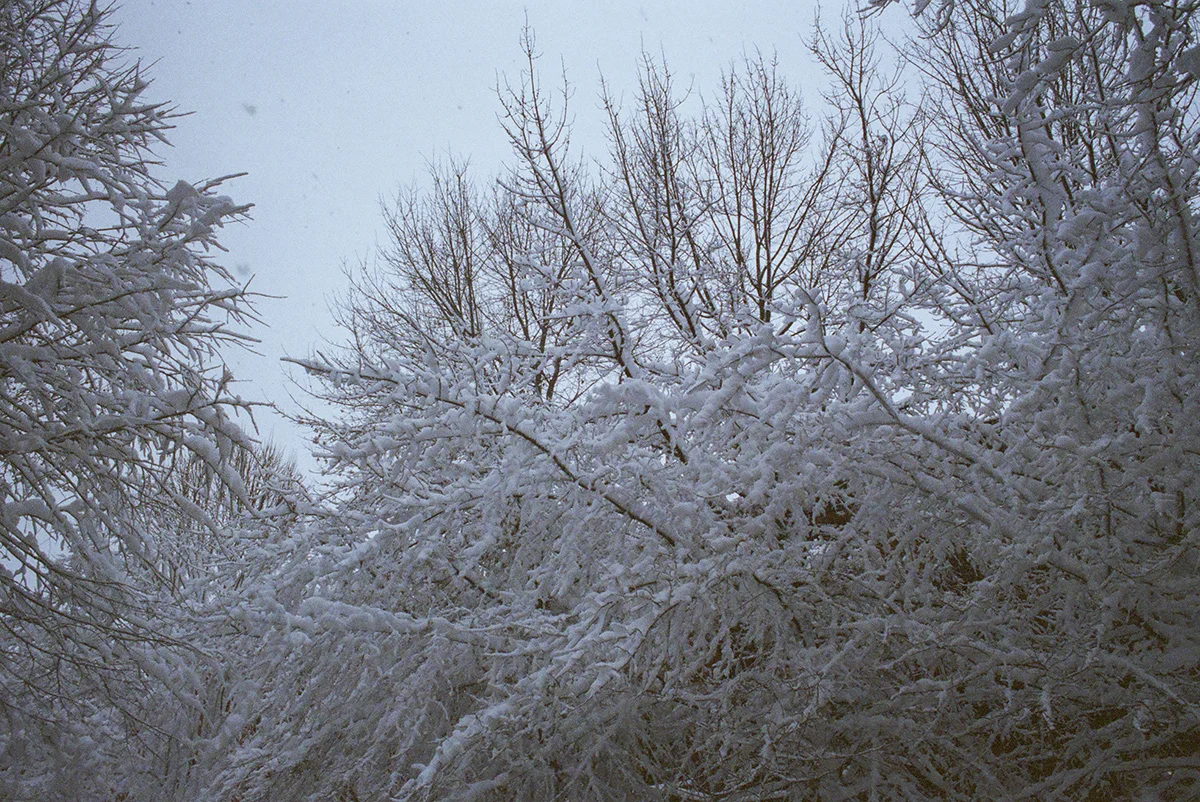
On a frigid Saturday afternoon, Beck wandered into the Ramble—a dense, wooded section of Central Park known for its winding paths and relative seclusion. Overwhelmed by the sensory input of the city, he sat on a bench to gather his thoughts. As he listened to the passing conversations of strangers, a spark of inspiration occurred. He reached for his Canon AE-1, pulled out his phone to record the ambient chatter, and snapped a photograph of the benches. That single frame, layered with the audio of that cold afternoon, became the blueprint for a decade-long exploration of urban existence.
Scaling the Vision: 40 Cities and 50 Rolls
Following the initial success of the Central Park session, Beck scaled his practice. Over the subsequent ten years, he traversed 40 different cities across the globe. His portfolio grew to include over 50 rolls of film, each representing a unique, unrepeatable journey. From the bustling corridors of Tokyo to the quiet, forgotten corners of smaller American towns, Beck has walked hundreds of miles, meeting scores of strangers whose voices now inhabit his archive.
The New York Homecoming: 2024 and Beyond
In a reflective turn, Beck has returned to the site of his creative inception. Starting in 2016 and accelerating through the present year, he has embarked on a project to "revamp" the original vision. This current phase involves revisiting the five boroughs of New York City, contrasting the city he captured ten years ago with the city it has become today. By layering old recordings with new imagery—and vice versa—he is creating a temporal dialogue, exploring how environments evolve and how memory is physically mapped onto architecture.
Supporting Data: The Anatomy of an Urban Archive
The scale of Beck’s project is significant not just in artistic reach, but in the sheer volume of cultural data he has accumulated.
- Geographic Reach: Covering 40 distinct urban environments, the project serves as a proto-ethnographic survey of 21st-century city life.
- The Medium: By committing to 35mm film, Beck ensures a tactile, granular quality that defies the compression of social media. The "grain" of the film acts as a metaphor for the noise of the city, creating a cohesive aesthetic identity for the collection.
- Audio Fidelity: The field recordings are not high-fidelity studio productions; they are raw, binaural-adjacent captures. They include the "hiss" of the city, the screech of subway brakes, and the indiscernible whispers of passersby—elements that would be erased in traditional photography but are essential to Beck’s storytelling.
Beck’s work provides a rare window into the "background noise" of the world. In an age where we are conditioned to ignore the ambient, Beck forces us to listen, transforming the mundane—a park bench, a street corner, a subway platform—into a profound site of human observation.
Official Perspectives: The Philosophy of the "Slow Image"
In discussions regarding his artistic philosophy, Beck emphasizes the concept of "sincerity." In a digital landscape where photography is often synonymous with performance and high-gloss editing, Beck’s work serves as a recalibration.
"I am not interested in the perfect frame," Beck noted in a recent exchange regarding his revisit to New York. "I am interested in the moment where the visual and the audible collide to tell a story that neither could convey alone."
Critics and observers of his work have noted that Beck’s methodology is an act of defiance against the "scroll culture" of Instagram and TikTok. By demanding that the viewer pause to listen to a full audio track while observing a single image, Beck creates a contemplative space. His work functions as an antidote to the "fast-fashion" approach to photography, where images are consumed in milliseconds and discarded just as quickly.
Implications: The Future of Documentary Art
The implications of Beck’s work for the field of documentary art are twofold: the preservation of ephemeral soundscapes and the evolution of the narrative portrait.
The Preservation of Atmosphere
Cities are dynamic, changing rapidly through gentrification, urban planning, and cultural shifts. Beck’s archive acts as an informal historical record. A photograph of a bench in the Ramble is a static historical object, but when paired with the specific audio of that day—the wind, the specific cadence of the passersby—it becomes a time capsule. As he revisits these locations, he is documenting not just the physical decay or growth of the city, but the subtle, sonic changes in the human environment.
A New Narrative Model
Beck’s project suggests a viable path forward for photographers struggling with the limitations of the still image in a video-centric world. By incorporating audio, he provides the context that a still frame often lacks, effectively creating a "slow-cinema" experience within the confines of a browser or gallery.
This model challenges the traditional gallery format as well. How do we display a photograph that is also an audio recording? Beck’s website, walk-photo.com, serves as a digital gallery that solves this by allowing the user to control the playback, effectively placing the viewer in the shoes of the artist.
Conclusion: The Unfinished Walk
Derek Beck’s project remains an open-ended inquiry. With three new installments already released as part of his New York homecoming and dozens of rolls of film awaiting development, the project shows no signs of concluding.
As we look toward the future of media, projects like Beck’s remind us of the value of the "long view." In the friction between the silver-halide grain of a 35mm negative and the digital waveform of a street conversation, there is a profound truth. By slowing down, walking without a destination, and listening to the world as intently as he watches it, Derek Beck offers us a way to reconnect with the physical reality of the cities we inhabit. He is not just taking photos; he is building a comprehensive, multisensory archive of the human experience, one street corner and one roll of film at a time.
For those looking to engage with his work, the project serves as a reminder that the most significant moments in life often occur in the pauses—the time spent sitting on a bench, the time spent waiting for a train, or the time spent simply walking through a city, listening to the echoes of a world in motion.










No comments yet. Be the first to join the conversation!