Asep Darmawan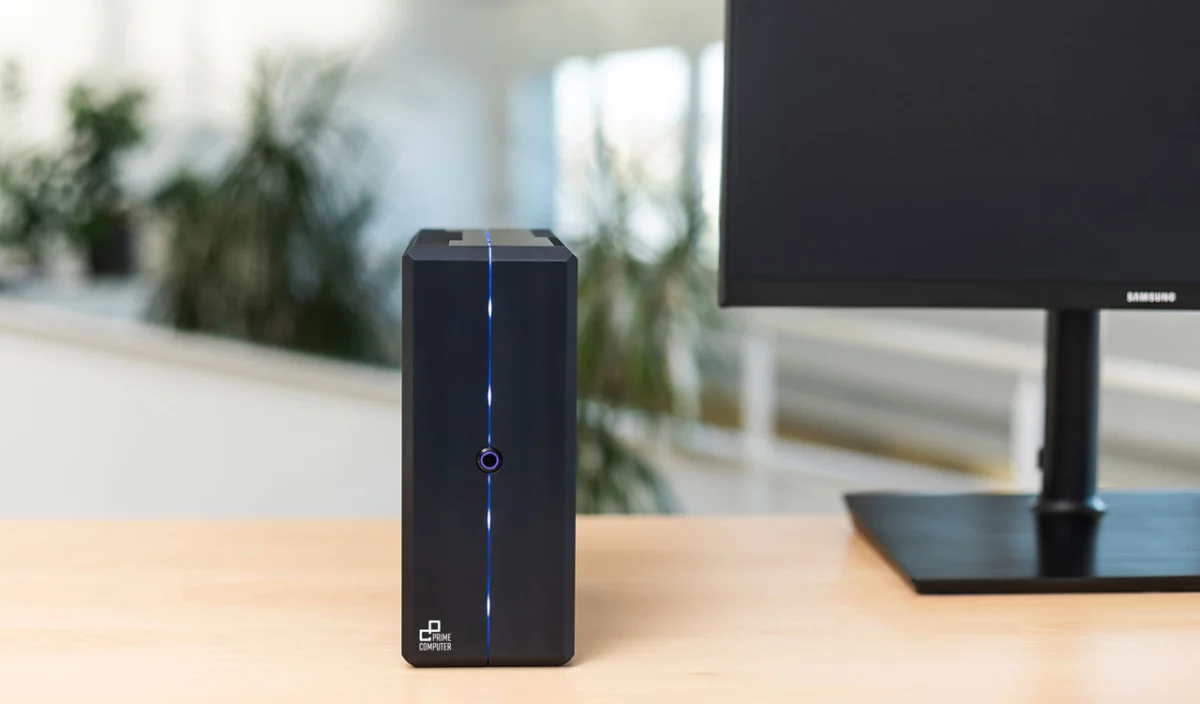
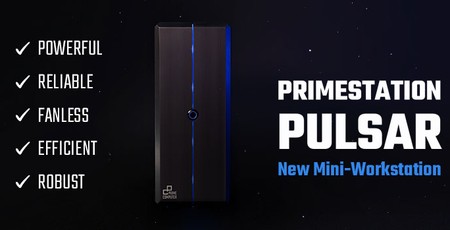
In an era where high-performance computing is often synonymous with the intrusive whir of cooling fans and the environmental footprint of global hardware logistics, Swiss manufacturer Prime Computer has introduced a disruptive alternative. The newly launched PrimeStation Pulsar is not merely another entry in the crowded mini-PC market; it is a meticulously engineered, fanless workstation that promises to reconcile the demands of professional-grade processing power with the urgent necessity of ecological sustainability.
By leveraging passive thermal dissipation and a commitment to 100% climate-neutral operations, Prime Computer is challenging the industry standard of "performance at any cost."
Main Facts: Engineering Silence and Sustainability
The PrimeStation Pulsar distinguishes itself through a design philosophy that prioritizes both acoustic silence and carbon responsibility. At its core, the system utilizes a high-performance AMD Ryzen 7 Pro 5750G APU. While many mini-PCs opt for low-power mobile chips to manage thermal output, the Pulsar integrates a 65W desktop-class processor.
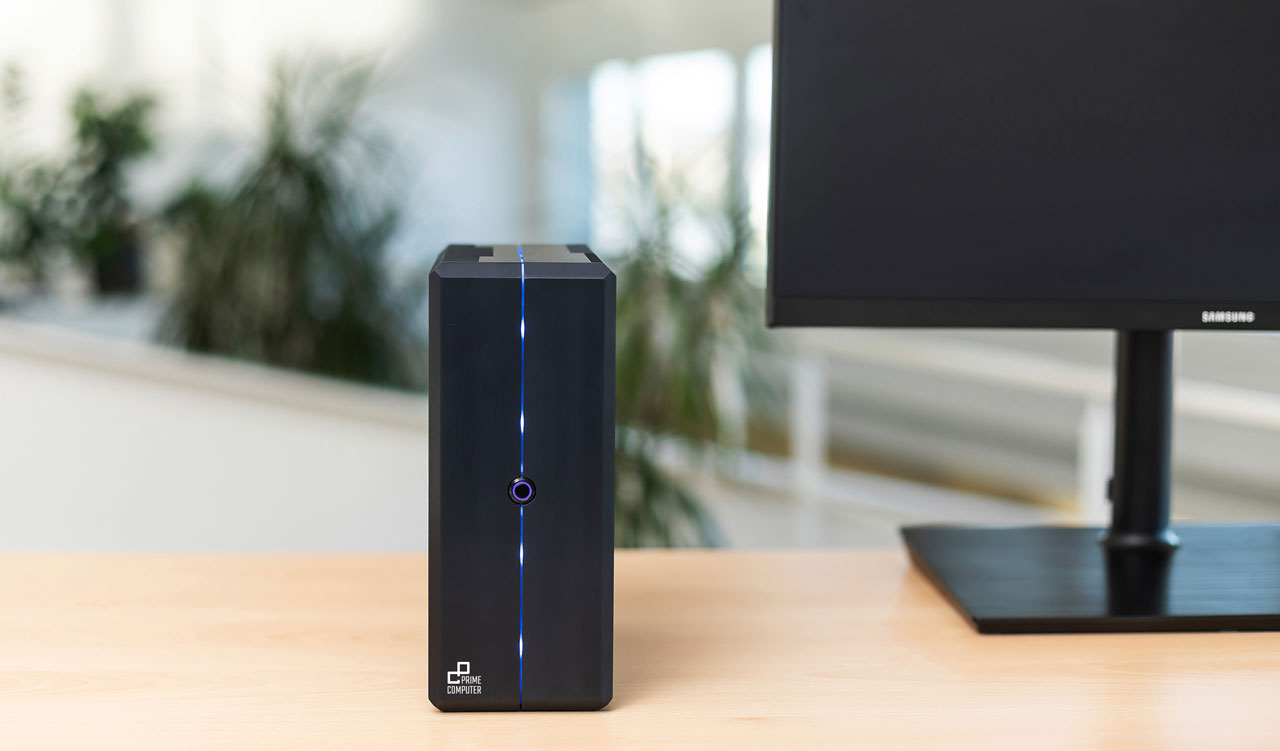
The feat of running a 65W TDP processor without active cooling is achieved through an innovative chassis design. The entire external aluminium housing of the Pulsar functions as a massive, monolithic heatsink. The heavy-duty metal enclosure draws heat away from the internal components, dissipating it into the environment through a series of precision-machined cooling fins. This eliminates the need for mechanical fans, which are not only potential failure points but also contribute to ambient noise pollution in professional environments—a significant benefit for audio engineers, creative professionals, and researchers working in sensitive acoustic spaces.
Beyond the hardware, Prime Computer has positioned the Pulsar as a "climate-neutral" product. This entails a comprehensive approach to the product lifecycle, from the sourcing of raw materials and manufacturing processes to the carbon offsetting of the unit’s shipping and end-of-life recycling.
Chronology: The Evolution of Fanless Workstations
The journey toward the Pulsar reflects a broader shift in the computing industry over the last decade. Historically, "fanless" was a label reserved for low-power, embedded systems or underpowered netbooks. The chronology of this evolution can be traced through three distinct phases:
- The Early Era (2010–2015): Fanless technology was primarily limited to industrial PCs and thin clients. These systems were characterized by extremely low power draw and significant performance limitations, often unable to handle modern multitasking or heavy computation.
- The Rise of the APU (2016–2020): With the refinement of Accelerated Processing Units (APUs) from companies like AMD, the thermal efficiency of chips reached a point where moderately powerful systems could operate without active cooling, provided the chassis was sufficiently large.
- The Professional Pivot (2021–Present): Prime Computer represents the vanguard of this third phase. By combining the 7nm architecture of the AMD Ryzen 5000 series with industrial-grade passive cooling, the company has proven that "fanless" can now effectively mean "workstation-class." The announcement of the Pulsar follows the industry’s growing interest in solutions like MonsterLabo’s "The Beast," which, while more modular and physically massive, underscored the growing demand for silence among high-end enthusiasts.
Supporting Data: Technical Specifications and Performance
The technical backbone of the PrimeStation Pulsar is designed to meet the rigorous demands of a modern professional workspace.
The Engine: AMD Ryzen 7 Pro 5750G
The choice of the Ryzen 7 Pro 5750G is a strategic one. Built on TSMC’s 7nm FinFET process, this APU features 8 cores and 16 threads. With a base clock of 3.8GHz and a boost capability reaching 4.6GHz, it provides sufficient single-threaded performance for responsive applications and multi-threaded throughput for rendering or data analysis. The 16MB of L3 cache further ensures that data-heavy workloads remain fluid. Furthermore, the integrated Radeon Vega graphics (8 cores at up to 2.0GHz) negate the need for a power-hungry, heat-generating discrete graphics card for most productivity-focused workflows.
System Scalability and Connectivity
The Pulsar does not sacrifice connectivity for its compact form factor:
- Memory: Two DIMM slots support 8GB, 16GB, 32GB, or 64GB of DDR4 3200MHz RAM.
- Storage: The chassis accommodates a hybrid storage solution, featuring 1 x NVMe slot for high-speed boot drives and 1 x 2.5-inch SATA III port for additional bulk storage.
- Networking: Modern connectivity is handled via the Intel Wireless AX200 (Wi-Fi 6) and Bluetooth 5.2, alongside a 2.5Gbps Ethernet port for high-speed wired networking.
- I/O Array: The unit is well-equipped with HDMI 2.1 and DP 1.4 for display output, three USB 3.2 Type-A ports, one USB 3.2 Type-C, and a dedicated USB Type-C audio port, ensuring compatibility with modern professional peripherals.
Dimensions and Physical Presence
The Pulsar measures 9.1cm in width, 22.5cm in height, and 20.3cm in length. Despite its compact footprint, the unit carries a substantial weight of 4.3kg—a direct consequence of the dense aluminium heatsink chassis required to manage the thermal load.
Official Responses and Market Positioning
Prime Computer’s marketing strategy for the Pulsar is inherently value-driven. By pricing the unit at approximately $2,179, the company is targeting a specific professional niche.
In response to inquiries regarding the cost-to-performance ratio, industry analysts note that the price point is not merely a reflection of the silicon, but of the research, development, and environmental certifications involved. Unlike mass-market consumer PCs, the Pulsar is marketed as a "long-term investment." The fanless nature of the machine significantly reduces dust accumulation and mechanical wear, potentially extending the operational lifespan of the components beyond the standard three-year replacement cycle typical of office desktops.
The company has emphasized that the Pulsar is not intended to compete with DIY "gaming rigs" that prioritize modularity above all else. Instead, it serves those who require a set-and-forget solution that is as reliable as it is quiet.
Implications: The Future of "Green" Computing
The arrival of the PrimeStation Pulsar carries significant implications for the future of enterprise and personal computing.
1. The Death of Acoustic Pollution
In the modern workplace, the cumulative hum of dozens of cooling fans contributes to fatigue and reduced concentration. The Pulsar demonstrates that silence is a design choice that is finally viable for high-performance workstations, potentially setting a new standard for office hardware requirements.
2. Environmental Accountability as a Competitive Advantage
By framing the Pulsar as "100% climate-neutral," Prime Computer is tapping into a growing corporate mandate. Many firms are now required to report on their Scope 3 emissions—the indirect emissions that occur in the value chain. Hardware that comes with a verified climate-neutral pedigree offers a tangible benefit to companies looking to improve their ESG (Environmental, Social, and Governance) ratings.
3. The Shift in Thermal Management
The Pulsar is a testament to the fact that we have hit a ceiling in terms of active cooling requirements for general professional computing. As processors become more efficient per watt, the need for loud, moving mechanical parts decreases. We are likely to see a trend toward larger, passive-dissipation chassis in the coming years, even among mainstream manufacturers.
4. Niche vs. Mainstream
While the $2,179 price tag keeps the Pulsar firmly in the "premium workstation" category, the technology it employs is likely to trickle down. As TSMC and other foundries continue to shrink node sizes, the thermal density of chips will drop, making fanless high-performance systems cheaper and easier to manufacture. The Pulsar is a precursor to a future where the desktop PC is silent, efficient, and ecologically responsible by default.
Conclusion
The PrimeStation Pulsar is an ambitious project that successfully bridges the gap between high-performance computing and environmental stewardship. While it may not be the optimal choice for the hardware enthusiast who enjoys frequent component upgrades or the extreme performance afforded by liquid-cooled, high-TDP systems, it is a triumph of design for the professional. By choosing to prioritize silence and sustainability, Prime Computer has created a machine that serves as a benchmark for what the next generation of workstations should look like: powerful, reliable, and—perhaps most importantly—entirely unobtrusive.


 Layla Zulfa
 Nana Wu