Suro Senen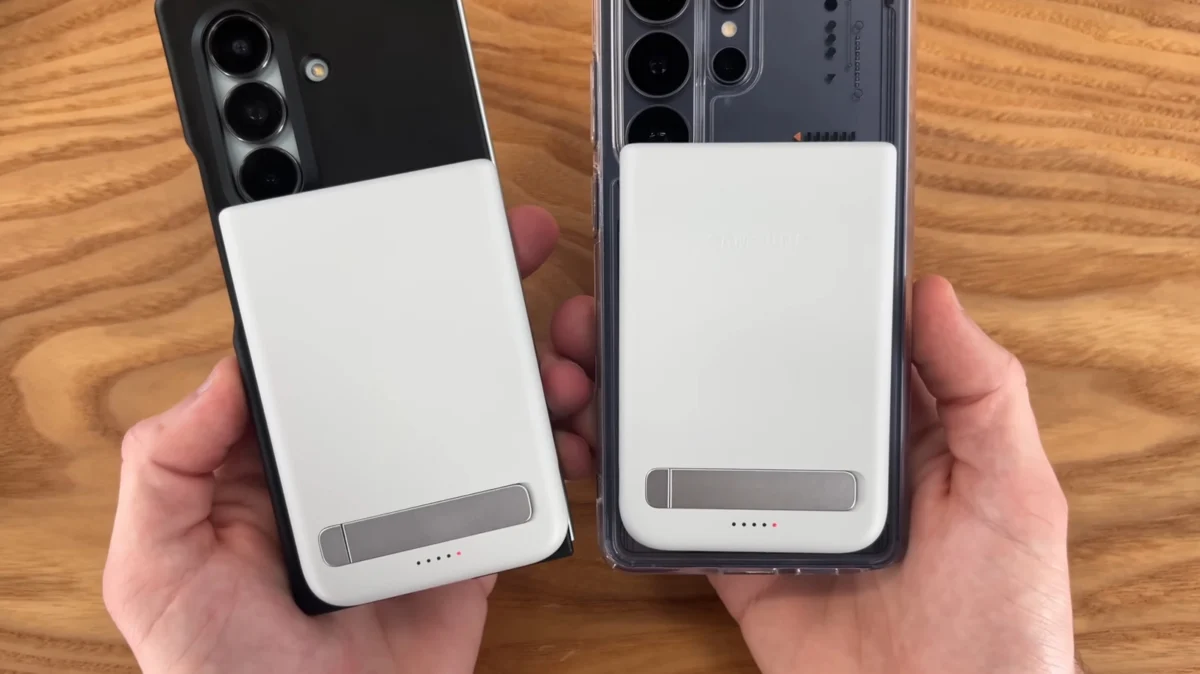
For the modern mobile user, battery anxiety is more than a minor inconvenience—it is a pervasive reality of the digital age. As we integrate smartphones deeper into our professional and personal lives, the necessity for reliable, portable, and efficient power has never been greater. While power banks have long served as the industry-standard solution for those away from a wall outlet, they often tether users to clunky cables. Samsung, a titan in the mobile hardware sector, recently entered the magnetic wireless charging arena with its 5,000 mAh Magnetic Battery Charging Pack, aiming to eliminate the "cable clutter" that has plagued portable power for years. However, early reception suggests that Samsung’s first attempt at this technology may face significant hurdles before it can be considered a true essential.
Main Facts: Breaking Down the Hardware
Released in March, Samsung’s Magnetic Battery Charging Pack represents the company’s first major pivot toward magnetic, cable-free power solutions. Designed with a sleek, minimalist aesthetic, the device aims to complement the design language of the Galaxy series.
At its core, the unit offers a 5,000 mAh capacity and supports 15W wireless charging. The primary selling point is its convenience: by utilizing magnetic alignment (Qi2-compatible), users can snap the pack onto the back of their device, allowing for "on-the-go" charging without the need for a physical tether. Beyond its wireless capabilities, the device includes a USB-C port, which serves a dual purpose: charging the power bank itself and facilitating wired charging for a second device, allowing for simultaneous power delivery to two units.
Practical design features include a built-in kickstand—a nod to power users who consume media on the go—and a form factor engineered to ensure the pack does not obstruct the camera lenses on Galaxy smartphones. Despite these thoughtful additions, the hardware requires a specific ecosystem to function optimally: because most Samsung Galaxy phones lack built-in magnets, users are forced to purchase a compatible magnetic phone case to achieve the necessary magnetic attachment.
Chronology: A New Entry in a Competitive Market
The road to this product launch began as the industry shifted toward universal magnetic standards. As Apple’s MagSafe ecosystem gained massive market share, the demand for a standardized, interoperable magnetic wireless solution grew.
- Pre-March 2024: Samsung observed the market’s pivot toward magnetic accessories, identifying a gap in their own first-party accessory catalog.
- March 2024: The Magnetic Wireless Power Bank officially hit the market, marking Samsung’s entry into this competitive space.
- Q2 2024: As the product reached consumers, the initial wave of real-world testing began. Early adopters quickly populated retail pages on Samsung’s official site, Amazon, and Best Buy, providing the first objective look at the device’s performance.
- Present Day: The device remains available across major retail channels, though it currently sits at a crossroads of polarized consumer feedback and evolving price points.
Supporting Data: The Disparity Between Promise and Performance
In the tech industry, the gap between "on-paper" specifications and user-experience reality is often where reputations are built or broken. For Samsung’s new power bank, the data suggests a product that is currently underperforming relative to its brand pedigree.
Currently, the device holds a modest 3.1-star rating on Samsung’s official product page. While third-party retailers like Amazon and Best Buy show slightly more favorable ratings (3.9 and 4.2 stars, respectively), these metrics are tempered by low sample sizes, with no platform logging more than 22 reviews to date.
The primary complaints center on three critical areas:
- Thermal Efficiency: Numerous users report that the device generates excessive heat during operation, a common, albeit frustrating, side effect of inefficient wireless charging.
- Reliability: Reports of the unit failing to maintain a charge or stopping altogether after a few uses have emerged, raising questions about long-term durability.
- Charging Velocity: While rated for 15W, users have noted that the real-world charging speed is noticeably slower than traditional wired alternatives, leading to frustration for those expecting rapid, high-performance power delivery.
Official Responses and Pricing Strategy
Pricing has become a focal point of the contention surrounding this product. When it launched, the device was pegged at a premium price point of $64.99 on Samsung’s website. Recently, the price saw a slight dip to $61.74, though the permanence of this adjustment remains unclear.
In contrast, third-party retailers have fluctuated in their pricing strategies. Amazon has listed the unit as low as $51.99, creating a discrepancy that makes the official Samsung storefront a less attractive option for budget-conscious consumers. This price sensitivity is exacerbated by the fact that many users perceive the device as a "first-generation" product, noting that cheaper, more mature alternatives from established third-party accessory manufacturers offer similar, if not superior, features at a lower price point.
Implications: The Future of Samsung’s Magnetic Ecosystem
The lukewarm reception of the Magnetic Battery Charging Pack carries significant implications for Samsung’s broader strategy. If Samsung intends to compete with the seamless magnetic ecosystems of their rivals, they must address several fundamental issues.
The "Case" Problem
The most significant barrier to entry is the hardware limitation. Because Galaxy devices do not have internal magnets, the requirement to buy an additional magnetic case acts as a "hidden tax" on the consumer. If Samsung wishes to see mass adoption of their magnetic accessories, future hardware iterations may need to integrate magnetic components directly into the chassis of the phone, or they must improve the bundling of their accessories to make the transition less costly for the user.
Thermal and Efficiency Hurdles
Wireless charging is inherently less efficient than wired charging due to energy loss as heat. However, consumers have little tolerance for devices that feel "hot to the touch." Samsung’s engineers will likely need to refine the power management firmware or the heat dissipation materials in future generations of the charging pack to improve the user experience.
The Need for Iteration
It is common for "Version 1.0" products to face criticism. Samsung has a long history of iterating on its hardware based on user feedback. The current low review scores serve as a vital data set for the company. If they choose to pivot—perhaps by introducing a larger capacity model or a more efficient cooling system—they could turn this initial stumble into a successful product line.
Conclusion: Is It Worth the Investment?
For the average consumer, the current iteration of the Samsung Magnetic Battery Charging Pack is a niche purchase. It is a stylish, well-integrated solution for those who are already deeply embedded in the Samsung ecosystem and are willing to pay a premium for official branding and a matching aesthetic. However, for those who prioritize efficiency, speed, and long-term durability, the market currently offers more robust solutions.
As we look toward the future—including upcoming flagship releases like the Galaxy S26—the question remains whether Samsung will double down on its magnetic ecosystem. For now, the Magnetic Battery Charging Pack serves as a reminder that even for the world’s largest tech companies, entering a new hardware category requires more than just a sleek design; it requires a deep commitment to solving the core frustrations of the end-user. Until Samsung addresses the heat, the charging speed, and the price-to-value ratio, this device will likely remain a "wait-and-see" product for the majority of the market.

 Iffa Jayyana
 Asep Darmawan