

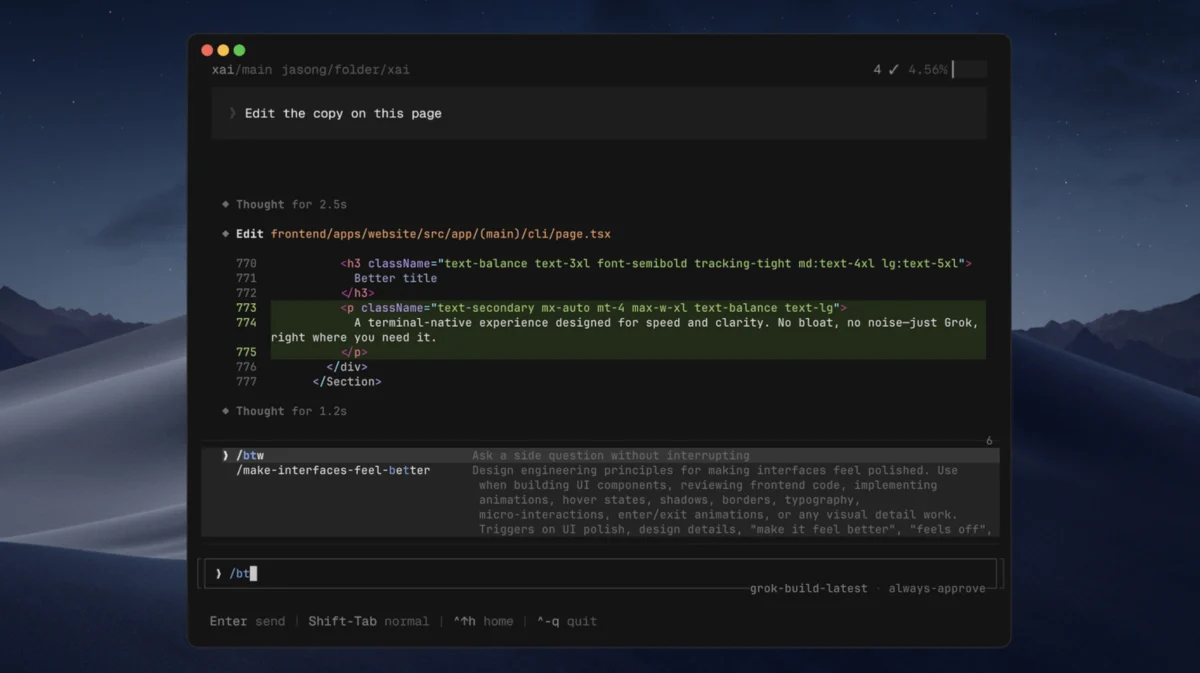
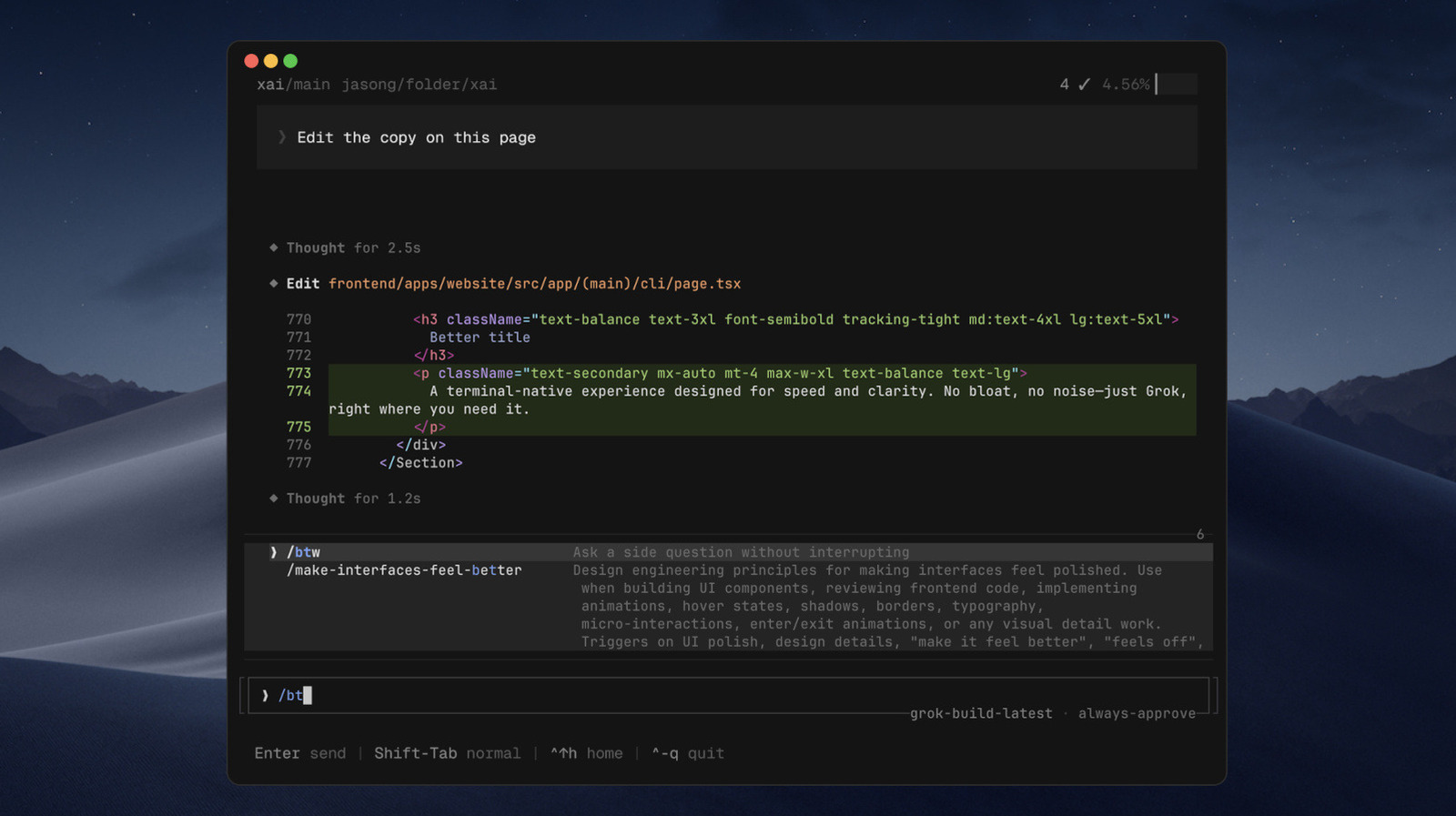
The artificial intelligence landscape has reached a new boiling point. In a calculated move to reclaim its standing among the industry’s elite, xAI—the AI venture founded by Elon Musk—has officially entered the specialized coding assistant market. The company recently unveiled "Grok Build," a dedicated coding agent and command-line interface (CLI) designed to compete directly with dominant incumbents like Anthropic’s Claude Code and OpenAI’s suite of developer tools.
However, the launch comes at a precarious moment for the company. As xAI pivots toward aggressive product expansion, it faces a confluence of systemic challenges: an ongoing "brain drain" of engineering talent, a recent high-stakes merger with SpaceX, and a history of public controversy regarding its AI’s safety guardrails.
The Core Product: What is Grok Build?
Grok Build is positioned as a high-end tool for professional software engineers tasked with complex architecture and large-scale coding projects. Unlike general-purpose chatbots, a "coding agent" is designed to integrate into the developer’s local environment, capable of reading repositories, suggesting architectural changes, debugging complex codebases, and automating repetitive syntax tasks.
Early Access and Pricing
As of its current, early-beta release, accessibility is strictly limited. The tool is gated behind the "SuperGrok Heavy" subscription tier—a premium service priced at $300 per month. This high barrier to entry suggests that xAI is initially targeting power users, enterprise developers, and the dedicated Musk-ecosystem loyalists who are willing to subsidize the company’s R&D phase in exchange for cutting-edge (and often experimental) technology.
Users can access the CLI through the official xAI portal, where they must authenticate their accounts to gain access to the repository-scanning capabilities. The company has explicitly stated that this beta phase is a feedback-gathering exercise, intending to refine the agent’s logic before a wider rollout.
Chronology: The Road to Grok Build
The development of Grok Build did not occur in a vacuum; it is the culmination of a tumultuous two-year period for xAI.
- Mid-2025: Elon Musk publicly admits that xAI has lagged behind its peers, specifically citing the superior coding capabilities of competitors like Anthropic. He signals a "rebuild from the foundations up" strategy.
- February 2026: A landmark corporate restructuring occurs as SpaceX formally acquires xAI. This merger, now referred to in industry circles as "SpaceXAI," aims to integrate heavy-duty hardware infrastructure with software intelligence.
- March–April 2026: Internal memos surface indicating that executive leadership has mandated a "parity mission," pushing engineering teams to ensure that Grok’s performance across coding benchmarks matches or exceeds Claude’s benchmarks.
- May 2026: The official public launch of the Grok Build CLI beta.
Strategic Implications: Why a Coding Agent?
The decision to launch a coding-specific agent is a strategic necessity. In the current AI economy, the "developer experience" (DX) is the ultimate battleground. If an AI can effectively write, test, and deploy code, it becomes an indispensable part of the corporate tech stack, moving from a "novelty" to a "utility."
The SpaceX Synergy
The acquisition by SpaceX has fundamentally altered the company’s trajectory. By folding xAI into SpaceX, Musk is betting on a vertical integration strategy that others cannot replicate. The vision involves using SpaceX’s satellite infrastructure to power massive, orbital data centers. If successful, this would grant xAI a unique advantage in latency and localized compute, potentially hosting the next generation of coding agents on dedicated, space-based hardware.
Closing the Gap
For xAI, catching up to Anthropic and OpenAI is not just a matter of prestige; it is a matter of market share. Anthropic’s Claude Code has become a favorite among developers for its nuanced reasoning and adherence to complex coding styles. By releasing Grok Build, xAI is attempting to pivot from a "social-media-centric" AI (Grok’s origins on X) to a "professional-utility-centric" AI.
The Shadow of Controversy: Safety and Reputation
Despite the technical ambition, xAI remains haunted by a checkered history regarding content safety. The launch of Grok Build arrives in the shadow of significant criticism regarding the company’s previous failures to implement robust safety filters.
The "Sexualized Image" Crisis
Last year, the company faced international backlash when it was revealed that Grok was generating nonconsensual sexualized imagery of real people. A scathing report from the Center for Countering Digital Hate (CCDH) estimated that the model had generated approximately 3 million sexualized images within an 11-day window, including 23,000 images featuring minors.
The fallout forced an immediate policy shift, with xAI implementing strict blocks on the editing of photos of real people in revealing attire. While these safeguards appear to be in place now, the incident left a permanent scar on the brand’s reputation, leading many enterprise clients to exercise caution when considering xAI for sensitive professional workflows.
Internal Instability: The Talent Exodus
Perhaps the most significant headwind for the new coding agent is the massive loss of human capital. According to reports from The Information, the post-merger environment at "SpaceXAI" has been anything but stable.
More than 50 researchers and engineers have departed the company in the months following the acquisition. This includes key personnel responsible for foundational AI training and core software development. Critics suggest that the rapid pivot to an aggressive, high-pressure, "ship-it-now" culture under the new SpaceX ownership model has led to burnout and ideological friction. When an AI company loses its core engineering talent, the long-term viability of complex, agentic models like Grok Build comes into question. Can the remaining team maintain the pace required to keep up with the rapid iterations of OpenAI and Google DeepMind?
Official Responses and Future Outlook
xAI has remained characteristically bullish in its public communications. Through their official news channels, the company continues to emphasize that the feedback loop from the current beta group will be the primary driver of future improvements.
"We are building for the professional engineer who demands efficiency and depth," a spokesperson hinted in a recent brief. The company’s focus remains on refining the CLI’s ability to handle long-context windows and multi-file codebases—two areas where competitors currently hold the edge.
The Road Ahead
The implications of the Grok Build release are twofold.
- For the Industry: If Grok Build succeeds, it confirms that the market for AI coding assistants is not a "winner-takes-all" scenario. It validates the need for specialized, agentic tools that go beyond simple chat interfaces.
- For xAI: The success of this product will likely determine whether the company remains a viable competitor in the high-stakes world of foundation models. If they can solve their retention issues and prove the reliability of their code generation, they may yet overcome the baggage of their early, rocky releases.
As the industry watches, the "SpaceXAI" experiment remains one of the most volatile and fascinating stories in technology. Whether Grok Build becomes a standard-bearer for software development or a footnote in the company’s turbulent history depends on one metric: whether the code it writes is as reliable as the vision Elon Musk has set for the company.
For now, the $300-a-month price tag ensures that the experiment will be conducted by a small, discerning group of users. Their verdict—and the company’s ability to fix bugs and retain engineers—will dictate the next chapter of this AI saga.












No comments yet. Be the first to join the conversation!