Nana Muazin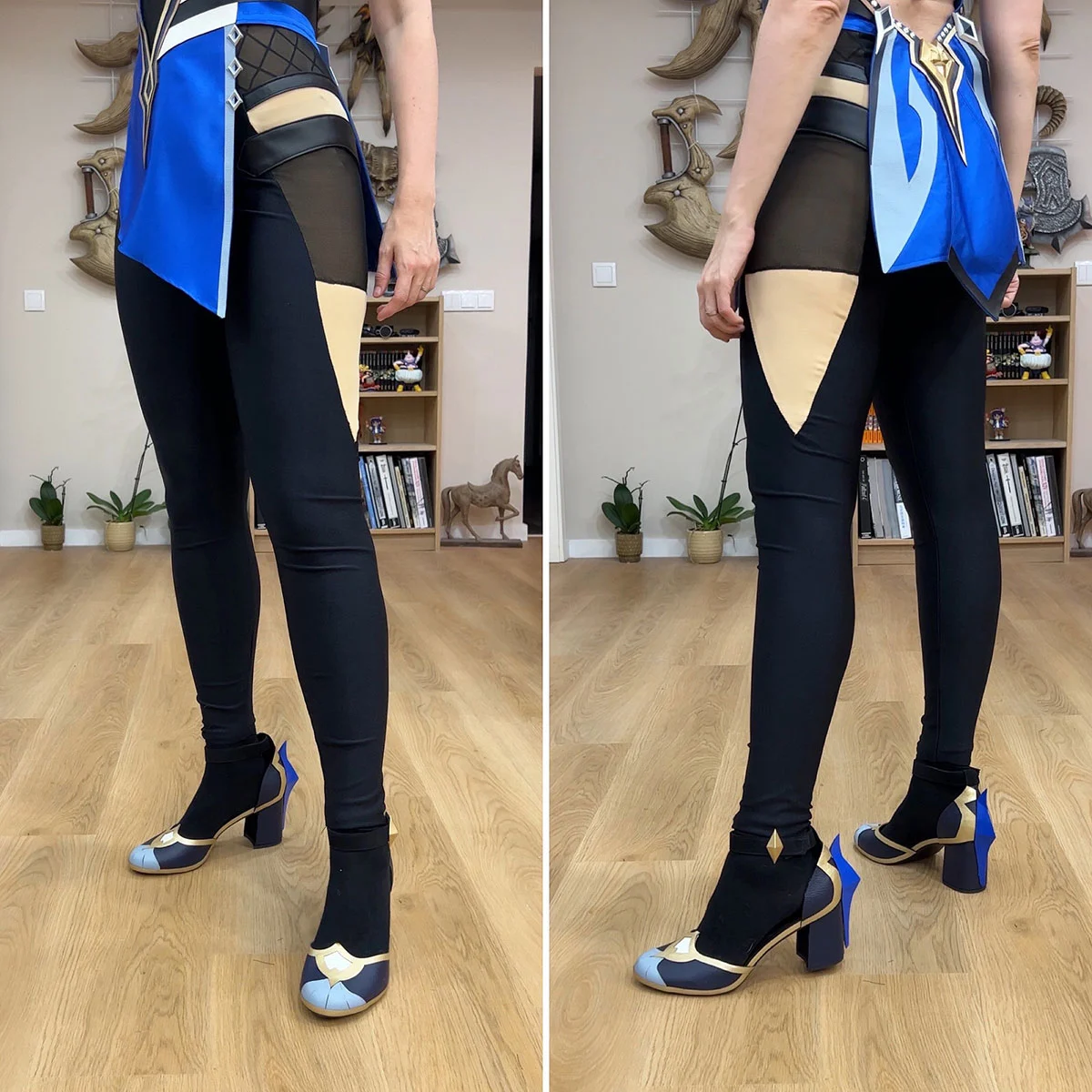
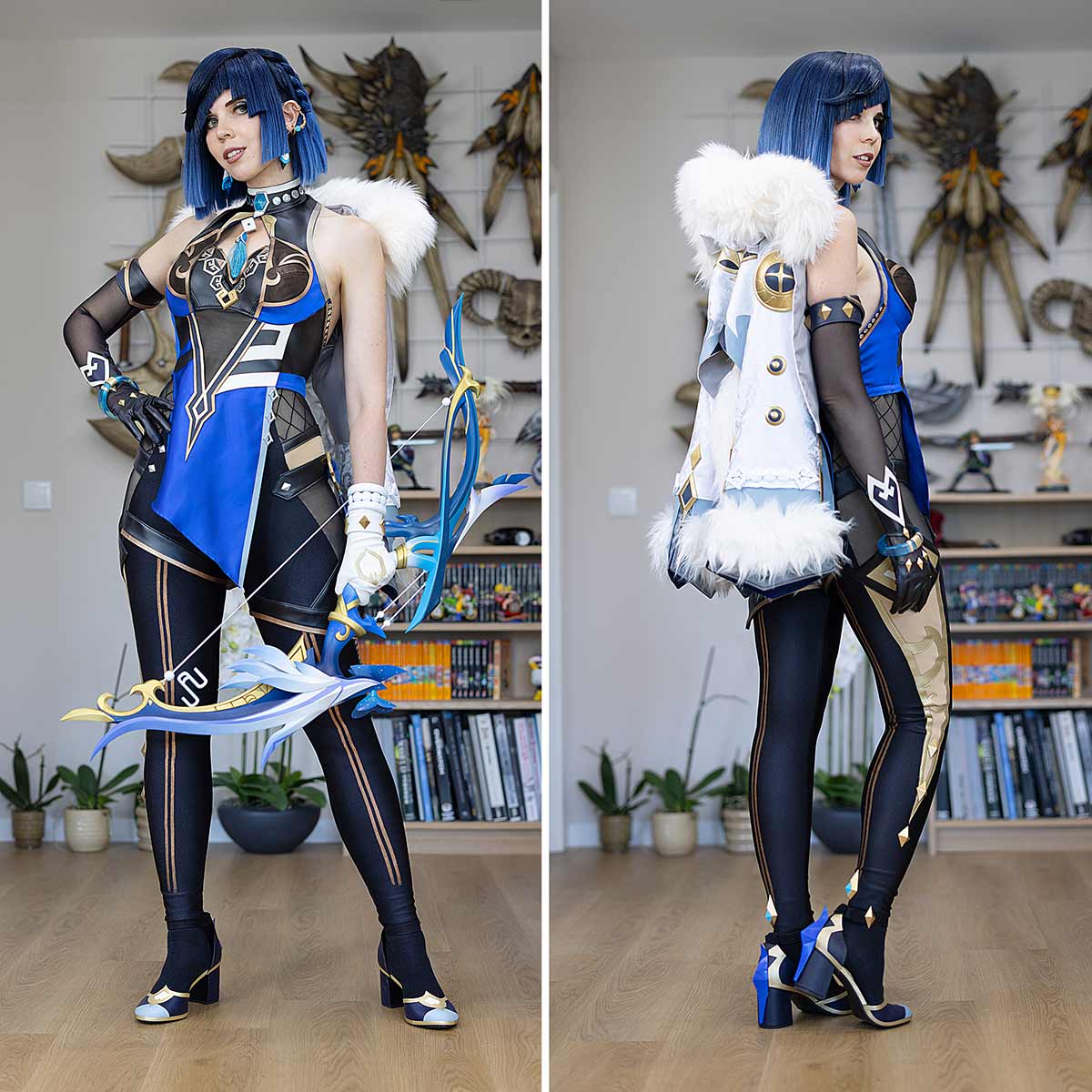
The world of Genshin Impact is vast, filled with intricate character designs that challenge the limits of physical craftsmanship. For veteran cosplayer Svetlana Quindt, known globally as Kamui Cosplay, the decision to recreate the mysterious Liyue operative Yelan for Gamescom 2023 was not merely a creative choice—it was a deep-dive technical challenge. Following a successful collaboration with HoYoverse on a Beidou project, Quindt was invited back to bring another of the game’s iconic figures to life. The resulting endeavor stands as a testament to modern cosplay engineering, blending traditional sewing techniques with cutting-edge 3D printing and digital modeling.

The Technical Foundations: From Digital Assets to Physical Reality
The primary hurdle in high-fidelity cosplay is bridging the gap between a 3D-rendered character model and the limitations of human anatomy and fabric physics. For this project, Quindt leveraged an invaluable resource provided by HoYoverse: official 3D character models.

By utilizing the files available on Aplaybox, creators can access the exact proportions and geometric data of their favorite characters. This practice, which Quindt has championed in her tutorials, represents a shift in the community, moving from “guesstimation” to precision manufacturing. Accessing these models allows for accurate pattern creation, ensuring that the silhouette of the costume remains true to the source material even when scaled to a real-world human frame.

A Chronological Breakdown: Five Weeks of Intensive Craft
The creation of the Yelan ensemble was a five-week marathon that demanded a rigorous, piece-by-piece approach to avoid being overwhelmed by the project’s scope.

Week 1: The Foundation of the Dress
Quindt began with the most intimidating aspect: the dress. Recognizing that sewing was not her primary strength, she employed the "duct tape pattern" technique. By wrapping her torso in tape and drafting the dress’s complex seams directly onto her own form, she created a bespoke template. This process, assisted by her partner Benni, ensured a perfect fit. The choice of material—a heavy, non-stretch royal blue satin—presented significant challenges, particularly regarding the open-back design. To maintain the structural integrity of the dress without sacrificing the character’s elegant look, she integrated a hidden harness system, utilizing a modified bra structure to secure the garment to her neck and lower back.

Week 2-3: The Jacket and Asymmetric Details
The white jacket, which appears to "float" on Yelan’s shoulders in-game, required a masterclass in garment construction. Quindt first drafted a mock-up to refine the sleeve geometry before cutting into the final fabric: a white brocade with subtle floral detailing. To ensure the piece felt authentic rather than "costumey," she opted for a grey lining and accented the sleeves with heavy faux leather. The jacket eventually became an assemblage of mixed media, featuring laser-cut pleather, faux fur, and various 3D-printed resin components.

Week 4: The Complexity of Leggings and Gloves
Yelan’s design is famously asymmetric. The leggings were not a simple mirrored pair; rather, they were two distinct projects. One leg featured intricate cut-outs and golden hardware, while the other utilized complex netting. Quindt noted that the leggings alone required five different types of fabric. Similar attention was paid to the gloves, which were treated as individual pieces of engineering. By the end of the process, the costume incorporated over 20 different materials, ranging from delicate mesh to heavy-duty upholstery vinyl.

Week 5: Weaponry and Final Assembly
While Quindt tackled the textiles, her collaborators Benni and Jakob focused on the Aqua Simulacra, Yelan’s signature bow. The weapon was built from scratch in Blender, 3D-printed in sections, and reinforced with an internal PVC pipe to ensure durability during a crowded convention. The paint job, executed via airbrush, utilized multiple layers of metallic pigments to mimic the weapon’s ethereal, crystalline appearance.

Supporting Data and Collaborative Synergy
The success of the Yelan project underscores the importance of interdisciplinary collaboration in modern cosplay. Quindt’s team functioned like a micro-studio:

- Engineering: Jakob handled the 3D modeling and structural reinforcement.
- Styling: Krystl Cosplay was commissioned to handle the complex wig work, ensuring the character’s iconic, gravity-defying hairstyle remained intact throughout the event.
- Manufacturing: The use of a Flux Beambox Pro for laser cutting and an Anycubic Photon Mono M5s for high-resolution resin printing provided the crisp details necessary to match in-game assets.
The logistical challenge of living on the island of Madeira also meant that material procurement often required weeks of planning, forcing the team to rely on existing workshop inventory—a constraint that ultimately pushed them to find more innovative uses for the materials at hand.

Official Relations and Community Impact
HoYoverse’s active participation in the cosplay community—by providing 3D assets and fostering collaborations—has significantly elevated the ceiling for what is achievable by fans. Quindt’s work serves as a prime example of how developers and creators can work in tandem to celebrate a game’s aesthetic.

The inclusion of these characters at major events like Gamescom 2023 acts as a bridge between digital fandom and real-world presence. For the community, seeing a high-fidelity recreation of a character like Yelan is more than just a costume; it is a validation of the time, skill, and dedication invested by the fanbase. Quindt’s open-source approach—sharing her methods, including how to find official models and the specific tools used for assembly—has helped democratize these high-level techniques for newcomers.

Implications for the Future of Cosplay
The Yelan project highlights a significant evolution in the hobby. As high-end manufacturing tools like resin printers and laser cutters become more accessible to the consumer market, the distinction between "professional" and "amateur" costuming continues to blur.
The project also illustrates a shift in how cosplayers interact with intellectual property. Rather than simply mimicking a character, creators are now utilizing the same digital assets as the developers, essentially "modding" the real world to match the game. This level of technical engagement suggests that the future of cosplay lies in the intersection of traditional needlework and digital fabrication.

Quindt’s experience serves as a cautionary tale for those expecting "easy" results, but also as an inspiration for the sheer potential of the craft. By breaking down a monumental task into manageable steps—focusing on the dress today, the bow tomorrow—she proved that even the most complex digital designs are achievable. For the thousands of fans who follow her work, the Yelan cosplay stands as a benchmark of what happens when passion meets professional-grade persistence.

 Siti Muinah
 Azzam Bilal Chamdy