

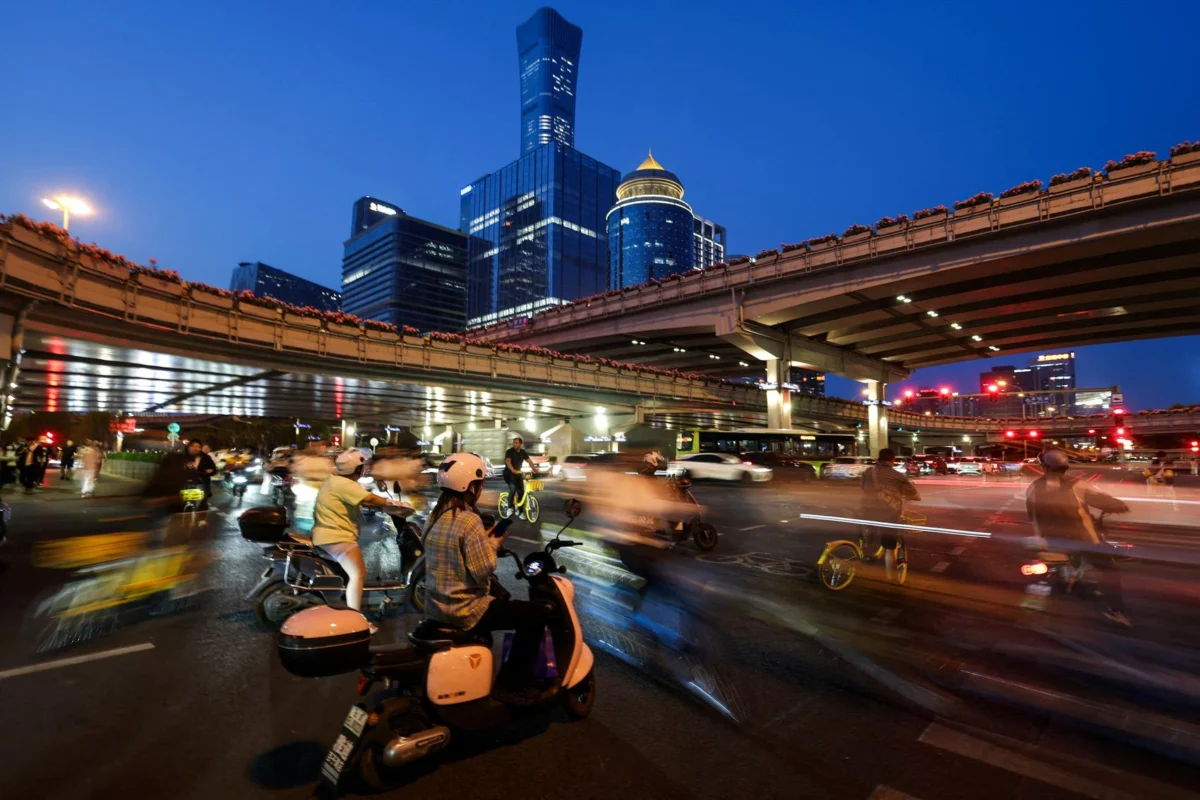
BEIJING — In a pivotal moment for the global geopolitical order, U.S. President Donald Trump is set to touch down in Beijing this Wednesday for a high-stakes, two-day summit with Chinese President Xi Jinping. The meeting marks the first face-to-face engagement between the leaders of the world’s two largest economies in over six months, a period characterized by heightened military friction in the Middle East and an increasingly fragile international trade environment.
As the administration prepares for what officials describe as a "frank and wide-ranging" dialogue, the agenda is dominated by a volatile mix of immediate crisis management—specifically regarding the ongoing conflict involving Iran—and long-term structural competition in artificial intelligence and nuclear proliferation.
The Agenda: Navigating a Fractured Global Landscape
The summit, which represents President Trump’s first visit to China since 2017, serves as a critical stress test for U.S.-China relations. White House officials briefing reporters on the eve of the trip characterized the talks as an essential mechanism to prevent "miscalculation" in an era where domestic political pressures in both capitals have led to a more assertive, and at times confrontational, foreign policy.
The Iran-Israel Conflict and Regional Security
Central to the discussions is the ongoing war between the U.S.-Israel coalition and Iran, which erupted in late February. The U.S. is expected to exert maximum pressure on Beijing to leverage its significant economic influence over Tehran. China remains the primary consumer of Iranian oil, a lifeline that Washington argues sustains the regime’s military capabilities.
"The President has spoken multiple times with General Secretary Xi Jinping about the topic of Iran," a senior administration official noted. "We are looking for concrete shifts in how China manages its energy trade and its broader support for regimes that challenge regional stability."
The AI Frontier: Establishing Guardrails
Beyond conventional warfare, the administration is prioritizing the creation of a formal "communication channel" to manage the rapid, unchecked evolution of artificial intelligence. U.S. intelligence circles have expressed profound concern over China’s development of advanced, high-compute AI models, fearing that the lack of standardized protocols could lead to unintended escalation in military or autonomous systems. The goal for this week’s meeting is not an immediate treaty, but the establishment of a working group that can begin to define what "responsible use" looks like in a digital arms race.
Economic Stabilization: Trade, Minerals, and Growth
While security issues dominate the headlines, the economic dimension remains the bedrock of the relationship. Despite the lingering animosity from years of tariff battles, both nations appear motivated to find a path toward economic equilibrium.
Rare Earth Minerals and the Trade Truce
A major point of discussion is the potential extension of the "rare earth truce," a delicate agreement reached last autumn that stabilized the flow of critical minerals from China to the U.S. These materials are vital for everything from electric vehicles to advanced semiconductor manufacturing. While the current agreement has not yet expired, officials are eager to secure a long-term extension to reassure global markets that the supply chain will not be weaponized as a retaliatory measure.
New Mechanisms for Trade
The summit is expected to see the formal proposal of a "Board of Trade" and a "Board of Investment." These initiatives are designed to act as institutional forums for resolving disputes before they escalate into protectionist cycles. While these mechanisms may require significant follow-up negotiations to become operational, their announcement would signal a symbolic return to a more rule-based approach to bilateral commerce.
Furthermore, Beijing is expected to signal goodwill through large-scale procurement pledges, focusing on Boeing aircraft, American agricultural products, and energy exports—key sectors that represent the backbone of the U.S. export economy.
The Thorn in the Side: Taiwan and Nuclear Proliferation
Despite the push for economic cooperation, the summit faces significant headwinds, particularly regarding territorial sovereignty and strategic deterrence.
The Taiwan Question
The status of Taiwan remains the most sensitive issue on the table. Beijing, which views the democratically governed island as a rogue province, has intensified its military posturing, with frequent incursions into Taiwan’s air defense identification zone. President Xi is expected to express strong dissatisfaction with the U.S. role as the primary arms supplier and political backer of Taipei. However, the U.S. delegation has signaled that it will remain firm on its "One China" policy framework, ensuring that while the rhetoric may be heated, the fundamental U.S. commitment to the island’s defense will not be compromised.
The Nuclear Standoff
Perhaps the most difficult conversation will involve nuclear arms control. Washington has consistently pushed for transparency regarding China’s rapidly expanding nuclear arsenal. To date, Beijing has shown little interest in engaging in formal arms control talks, maintaining that its nuclear program is strictly defensive and proportionate to its security needs. U.S. officials acknowledge the resistance, noting that the Chinese government has privately indicated a total lack of interest in "sitting down and discussing any kind of nuclear arms control" at this stage.
Chronology of Recent Tensions
The trajectory leading to this week’s summit has been defined by a cycle of aggressive trade maneuvers and geopolitical crises:
- 2017: President Trump’s last official visit to China, which focused on establishing personal rapport with President Xi.
- Late 2025: The initiation of a "bruising" trade war characterized by triple-digit tariffs on Chinese goods and Beijing’s threat to choke off global supplies of rare earth minerals.
- October 2025: A breakthrough meeting in South Korea, where both leaders agreed to a temporary trade truce, allowing for a cooling-off period.
- February 2026: A major legal setback for the Trump administration when the Supreme Court ruled that the President lacked the legal authority to impose certain global import tariffs. This prompted a vow from the White House to find alternative legal avenues to protect American industries.
- Late February 2026: The eruption of the U.S.-Israel war with Iran, which fundamentally altered the diplomatic landscape, forcing China to take a more active, albeit cautious, stance on Middle Eastern energy flows.
Official Responses and Diplomatic Implications
The official silence from the Chinese embassy in Washington has been notable, reflecting the cautious nature of the preparation. Analysts suggest that Beijing is waiting to see if President Trump’s domestic political challenges—specifically his struggle to uphold tariff authority through the courts—will weaken his negotiating position.
"The Chinese are very patient observers," says Dr. Elena Vance, a senior fellow at the Center for International Strategic Studies. "They are looking at a U.S. president who is fighting battles on both the domestic legal front and the international military front. The success of this summit depends entirely on whether they see this as a moment of weakness to be exploited or a moment of necessity for cooperation."
Implications for Global Markets
For global investors and international businesses, the summit is being viewed as a "make or break" event. The potential for a solidified agreement on rare earth minerals would provide the stability needed to continue the transition to green energy, while any breakdown in communication on AI or military issues could trigger a swift flight to safety in the financial markets.
As Air Force One prepares for the trans-Pacific flight, the stakes could not be higher. The world is watching to see if the two superpowers can compartmentalize their intense competition long enough to prevent the current regional conflicts from spiraling into a broader, systemic collapse.
While the rhetoric in the coming days will likely be measured and diplomatic, the underlying reality remains: the U.S. and China are engaged in a fundamental contest for influence that will define the remainder of the decade. Whether this meeting serves as a turning point toward managed competition or merely a brief pause in a long-term descent remains to be seen.
© Thomson Reuters 2026.












No comments yet. Be the first to join the conversation!