Evan Lee Salim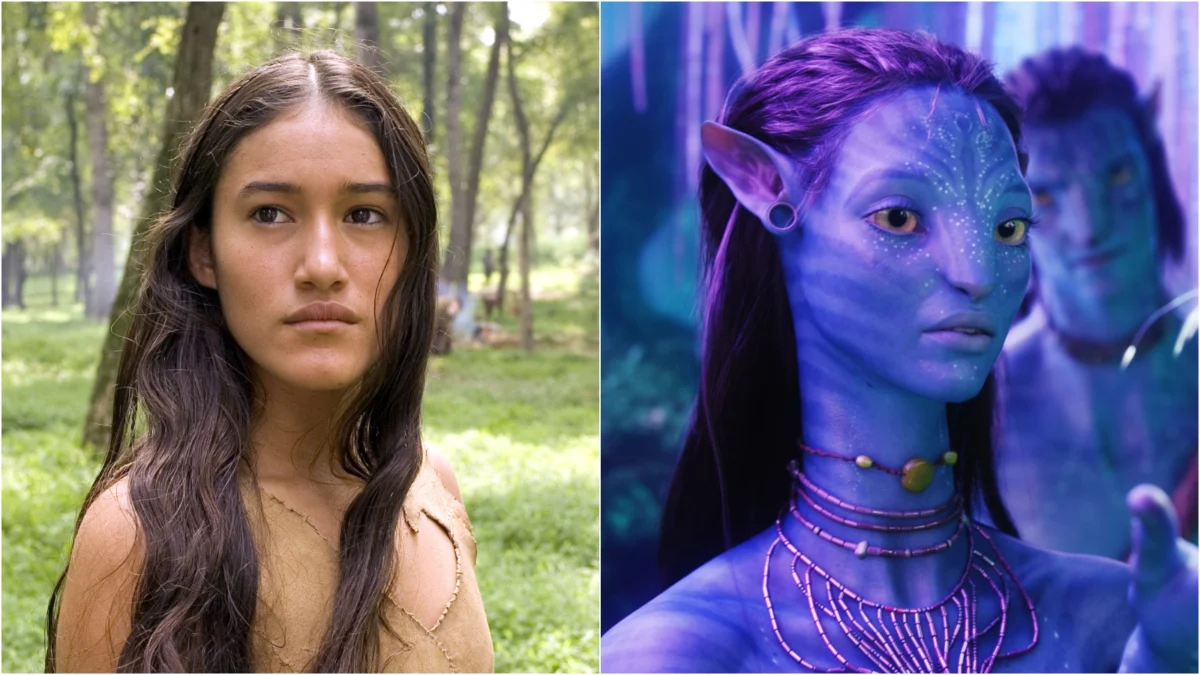
For over a decade, the Avatar franchise has been a fortress of intellectual property, weathering numerous copyright infringement lawsuits that ultimately collapsed under the scrutiny of the courts. James Cameron, the visionary behind the Na’vi, has successfully defended his billion-dollar empire against claims of stolen scripts and uncredited concepts. However, a new legal challenge filed on May 5 by actress Q’orianka Kilcher has shifted the battlefield from the realm of creative ideas to the intimate, precarious world of physical identity.
Kilcher, best known for her portrayal of Pocahontas in Terrence Malick’s The New World and her recent work on Yellowstone, is suing James Cameron, The Walt Disney Company, Twentieth Century Fox, and Lightstorm Entertainment. The core of her grievance is not a plot point or a screenplay element; it is her own face. Specifically, Kilcher alleges that Cameron misappropriated her unique facial features—particularly her chin—to design the iconic Na’vi lead, Neytiri.
While legal experts have labeled the suit "frivolous" and fraught with "serious weaknesses," the case has ignited a firestorm of media attention. It arrives at a critical juncture in Hollywood history, where the rise of artificial intelligence has turned the concept of a "digital likeness" into the industry’s most volatile legal and ethical flashpoint.
The Allegations: From Inspiration to "Extraction"
In a 99-page legal filing, Kilcher’s legal team, led by Arnold P. Peter of the Peter Law Group, outlines a narrative of technological appropriation. According to the lawsuit, Cameron’s design team did not merely draw inspiration from Kilcher; they allegedly engaged in a systematic "extraction" of her features. The filing claims that the production team utilized a specific image of Kilcher from her performance in The New World—taken when the actress was just 14 years old—as the digital blueprint for Neytiri.
"What Cameron did was not inspiration, it was extraction," Peter stated in a press release. "He took the unique biometric facial features of a 14-year-old Indigenous girl, ran them through an industrial production process, and generated billions of dollars in profit without ever once asking her permission. That is not filmmaking. That is theft."
The lawsuit draws heavily on the history between the two figures. Before the 2009 release of Avatar, Cameron met with Kilcher and presented her with a sketch of the character Neytiri. At the time, Kilcher viewed the gesture as a professional tribute to her casting and her work as an activist. However, in 2024, when Cameron spoke publicly about the design process, Kilcher’s interpretation of that meeting shifted dramatically.

"When I received Cameron’s sketch, I believed it was a personal gesture, at most a loose inspiration tied to casting and my activism," Kilcher said in an official statement. "I never imagined that someone I trusted would systematically use my face as part of an elaborate design process and integrate it into a production pipeline without my knowledge or consent. That crosses a major line. This act is deeply wrong."
Chronology of the Dispute
- 2005: Q’orianka Kilcher gains international acclaim for her role in The New World.
- 2009: Avatar is released to global success. During the promotional phase, James Cameron provides Kilcher with a sketch of the character Neytiri.
- 2024: James Cameron makes public comments regarding the character design process of Avatar, triggering a re-evaluation of the origin of Neytiri’s features by Kilcher’s team.
- May 5, 2026: Kilcher officially files suit against James Cameron, Disney, Fox, and Lightstorm Entertainment, alleging violation of the Right of Publicity.
Legal Analysis: A "Non-Starter" or a Precedent-Setter?
The legal hurdles facing Kilcher are formidable. Because the suit cannot claim copyright over a human face, it relies on "Right of Publicity" laws. These statutes typically govern the unauthorized use of a person’s name, image, or likeness for commercial gain.
Attorney Ray Seilie of Kinsella Holley Iser Kump Steinsapir notes that there is a significant statute of limitations problem. "The movie came out in 2009," Seilie explains. "One of the specifics in her case is that her jaw is, supposedly, very easily noticeable. So why did it take until James Cameron said it out loud for her to realize it was her jaw? Jurors are going to be thinking about that."
Furthermore, the character of Neytiri is a blue-skinned, seven-foot-tall CGI creation voiced and performed by Zoe Saldana. Legal experts argue that the average viewer would not reasonably identify Kilcher when looking at the Na’vi character. Simon Pulman, an attorney with Pryor Cashman, points out that the connection is tenuous at best. "I don’t think that anybody involved in this, any member of the public, would have taken a look at this character and have made the connection that it was this actress, including, by the way, it seems, the actress herself."
The lawsuit also attempts to invoke deepfake "revenge porn" statutes due to a romantic scene involving Neytiri. Most experts agree this is a "non-starter" that will likely be dismissed by the court, as the legal framework for such laws was intended to protect individuals from explicit, non-consensual content, not to address the nuances of character animation in science fiction films.
The AI Age: The Future of Synthetic Likeness
While the Kilcher case may struggle in a courtroom, it serves as a vital case study for the evolving ethics of AI in film. As studios increasingly rely on generative AI, the lines between original performance and synthesized data are blurring.

We are entering an era where "synthetic actors"—such as the widely discussed Tilly Norwood—can be generated by training AI models on thousands of images of real humans. Even if a synthetic actor is not a carbon copy of one individual, they may possess the "chin of an actor," the "eyes of a model," or the "gestures of a dancer."
"What if you could somehow prove and reverse-engineer the creation process and figure out that, yes, in fact, Tilly Norwood uses the chin of a particular famous actor?" Seilie muses. "That’s a question that hasn’t been answered yet."
Pulman adds that the industry is moving toward a world of "smoking gun" litigation. Courts have recently begun subpoenaing prompts used to generate AI images. If an artist were found to have explicitly prompted an AI to "use the facial structure of [Actor Name]," that would constitute a clear violation of the Right of Publicity.
Implications for the Industry
The Kilcher lawsuit, regardless of its outcome, has sounded an alarm for actors and their representatives. As studios move toward high-resolution scanning of performers for motion pictures, video games, and visual effects, the risk of "digital identity theft" is becoming a standard contract negotiation point.
Key Takeaways for Talent:
- Contractual Clarity: Actors must ensure that contracts explicitly define how digital replicas are stored, used, and, most importantly, destroyed after a project wraps.
- Fragmented Rights: The legal system must determine if "likeness" applies to specific features or the whole person. As Seilie notes, we have never had technology capable of isolating individual parts of a human face for digital reuse until now.
- Bargaining Power: Performers are now in a position to demand compensation for the use of their "digital biometrics." Agencies are already beginning to scan clients to ensure the performer—not the studio—retains control over their digital clone.
If the Kilcher case manages to reach a trial, it would force a long-overdue legal definition of what constitutes a "likeness" in the age of digital synthesis. For now, it stands as a reminder that in an industry fueled by the imagination, the most valuable assets—the faces and features of the actors—require more protection than ever. As Pulman aptly puts it, "These are questions all actors should be prepared for. The technology is moving faster than the law, and the burden is falling on the individual to protect their own image."


 Pevita Pearce
 Nana
Nana