

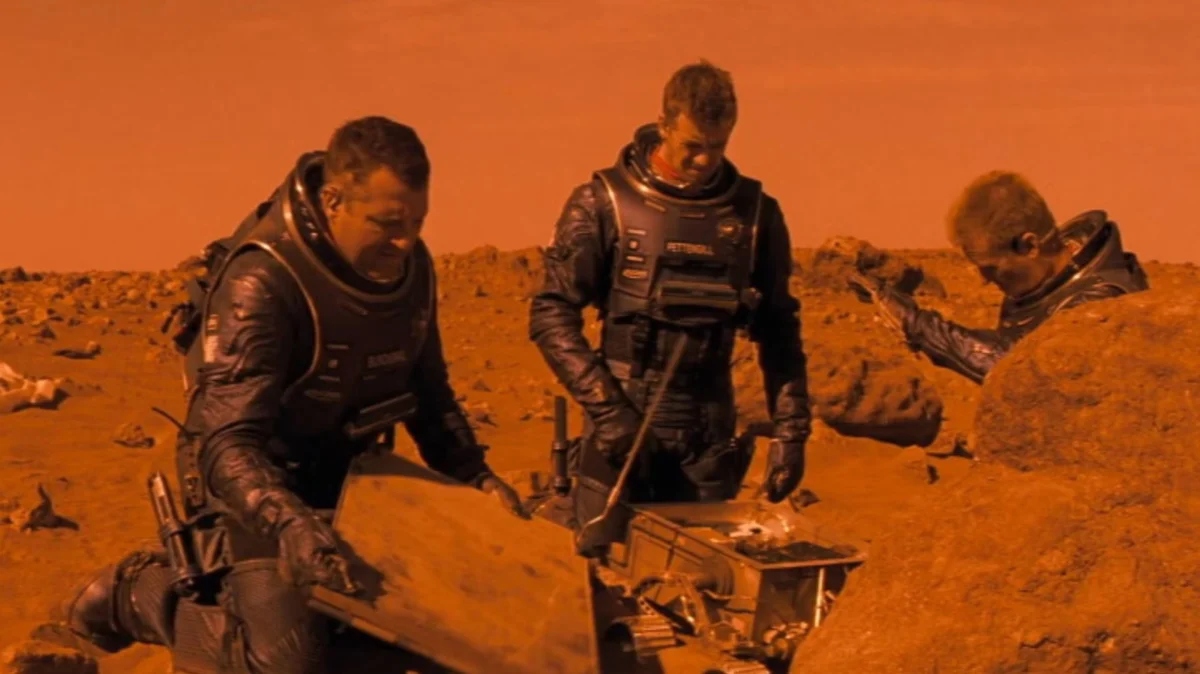
For nearly three decades, the red planet served as a graveyard for Hollywood’s most ambitious science fiction projects. From the chaotic camp of the 1990s to the staggering, studio-shattering financial losses of the early 2010s, Mars was widely considered box-office poison. So profound was this collective industry anxiety that it nearly derailed the development of one of the most successful hard-sci-fi films in modern history: Ridley Scott’s 2015 adaptation of Andy Weir’s The Martian.
In a recent interview with Lightspeed Magazine, author Andy Weir opened up about the palpable trepidation surrounding the project. While the world now views The Martian as a triumphant marriage of scientific realism and blockbuster appeal—earning $630 million worldwide and seven Academy Award nominations—the path to the screen was paved with the wreckage of its predecessors.
The Chronology of the "Mars Curse"
The industry’s phobia of the fourth rock from the sun was not born from superstition, but from a consistent, painful pattern of failure. Throughout the late 20th and early 21st centuries, the "Mars Curse" became a recognized phenomenon among studio executives.
The 90s: A Premature Liftoff
The decline began in earnest with Tim Burton’s 1996 satire, Mars Attacks!. Despite a star-studded cast and a director at the height of his powers, the film’s erratic tonal shifts failed to resonate with audiences. It barely scraped by, earning $101 million on a $100 million budget—a figure that, when accounting for marketing costs, resulted in a significant financial loss.
The 2000 "One-Two Punch"
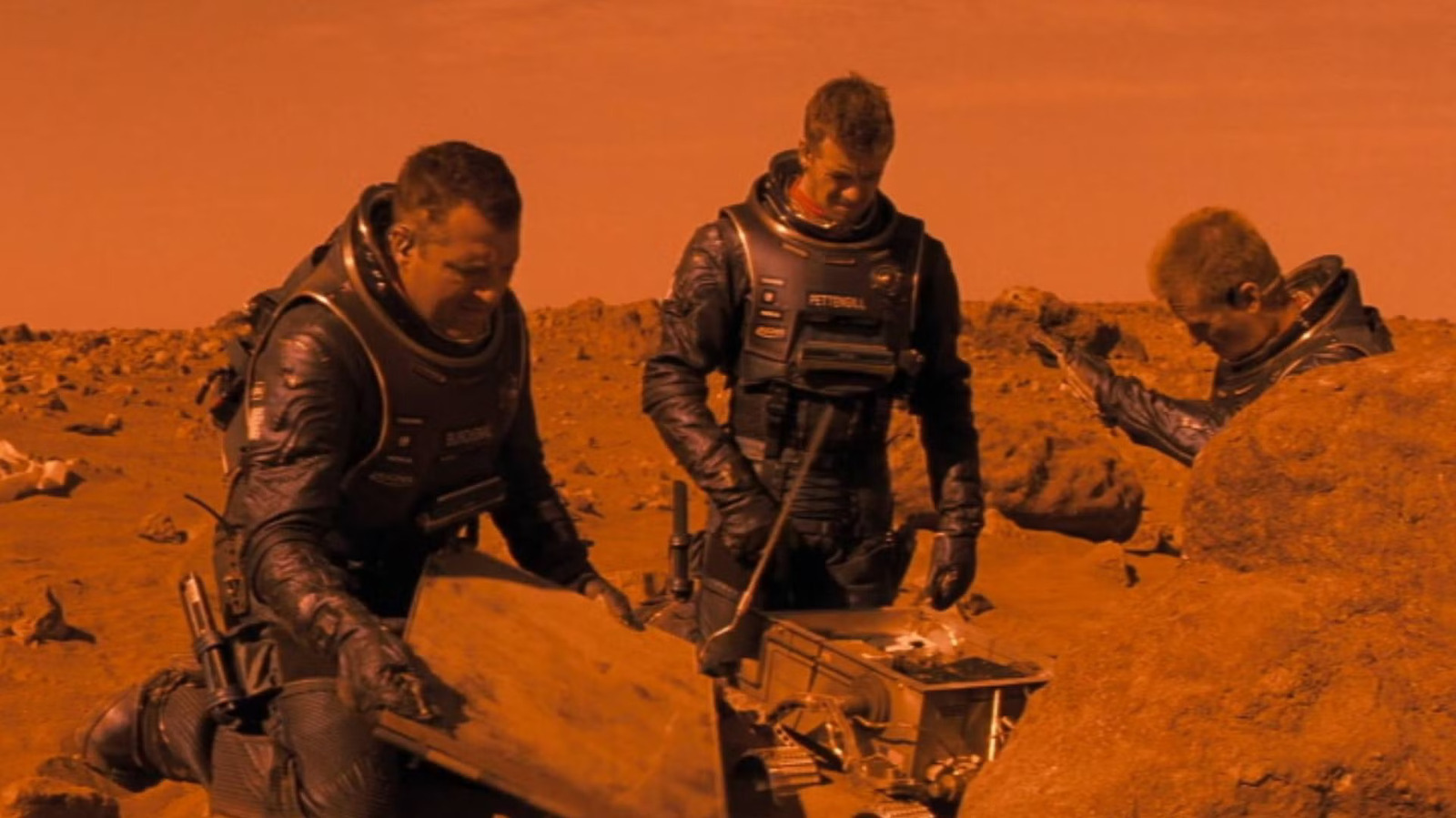
The turn of the millennium was particularly brutal. In 2000, two major studio productions arrived in quick succession: Anthony Hoffman’s Red Planet and Brian De Palma’s Mission to Mars. Red Planet, starring Val Kilmer, was a critical and commercial disaster, grossing just $33.5 million against an $80 million production budget. Mission to Mars, a high-concept film based on a Disneyland attraction, fared slightly better but still struggled, grossing $111 million on a $100 million budget. These two films solidified the perception that, regardless of the budget or the talent involved, Mars-set narratives were fundamentally unmarketable.
The Disastrous 2010s
The most catastrophic failures arrived in the early 2010s, leaving lasting scars on the balance sheets of major studios. The animated feature Mars Needs Moms (2011) was a legendary bomb, earning only $39 million against a $150 million budget. This was followed by Andrew Stanton’s John Carter (2012), a massive epic that was originally intended to be titled John Carter of Mars. Disney, fearful of the "Mars" association, stripped the planet from the title—a desperate maneuver that failed to prevent the film from becoming one of the most expensive box-office failures in cinema history.
The Data: Why Studios Were Terrified
The industry’s caution was grounded in hard numbers. Between Paul Verhoeven’s 1990 hit Total Recall—the last truly successful film set on the planet—and the release of The Martian in 2015, there was a staggering absence of commercial winners.
Smaller, lower-budget projects like John Carpenter’s Ghosts of Mars (2001) and Doom (2005) failed to gain traction, while niche experiments like The Flaming Lips’ Christmas on Mars remained relegated to the fringes of independent cinema. For an executive looking at a spreadsheet in 2013, "Mars" was not a location; it was a red flag. As Weir noted, "The last significant commercial success that took place on Mars was Total Recall… There’s what they call ‘The Mars Curse’ in the movie industry; that was actually something that was going to, potentially, be a problem in getting The Martian greenlighted."
Expert Perspectives: Andy Weir’s Analysis
Andy Weir, whose meticulous research for his novel provided the blueprint for the film’s success, remains diplomatic yet analytical regarding the "curse." In his view, the failure of these films was never about the planet itself, but about the lack of coherent storytelling and the failure to ground the environment in reality.
"I think Mars is a big topic," Weir explained. "Comparing movies that take place on Mars is not that productive. It’s like saying Cloverfield took place in New York City and so does the TV show Friends; let’s compare them."
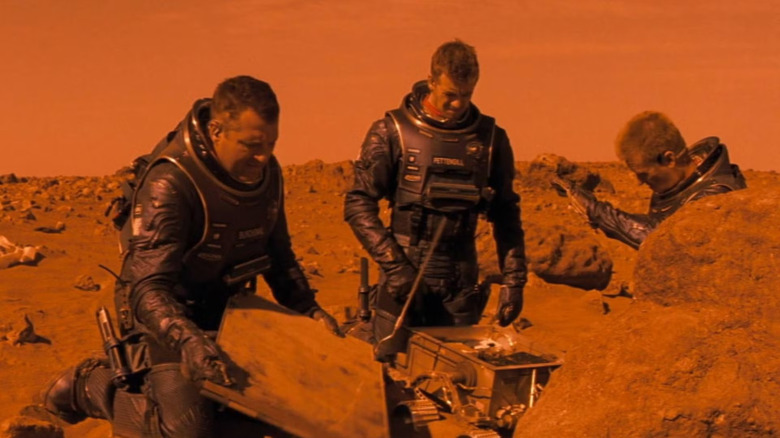
Weir’s core argument centers on the suspension of disbelief. In many of the failed films, characters were written as archetypal "action heroes" rather than trained professionals. In Red Planet, for instance, the tension is driven by interpersonal conflict, with astronauts shouting, punching, and killing one another. For Weir, this is a fatal flaw in the genre.
"Real astronauts don’t get into screaming matches like in the movies, because they have to work as a team to survive in space," Weir remarked. "They are psychologically vetted and wouldn’t be getting into action-packed fights. Fighting is a movie thing."
Implications for Future Filmmaking
The massive success of The Martian essentially broke the curse, but it did so by changing the narrative framework. The film succeeded not by leaning into the "alien" or "supernatural" elements that plagued films like Mission to Mars, but by leaning into the "human" elements.
1. Authenticity as a Selling Point
The Martian succeeded because it focused on the "how" of survival. By adhering to actual scientific principles—orbital mechanics, botany, and engineering—the film provided a texture of authenticity that audiences had been starved of. It replaced the "Mars as a haunted house" trope with "Mars as a complex engineering puzzle."
2. Character-Driven Competence
Modern audiences proved they were interested in watching competent professionals solving problems. Ridley Scott’s direction, coupled with Matt Damon’s charismatic, isolated performance, transformed a story about a man alone in the dirt into a global celebration of human ingenuity.
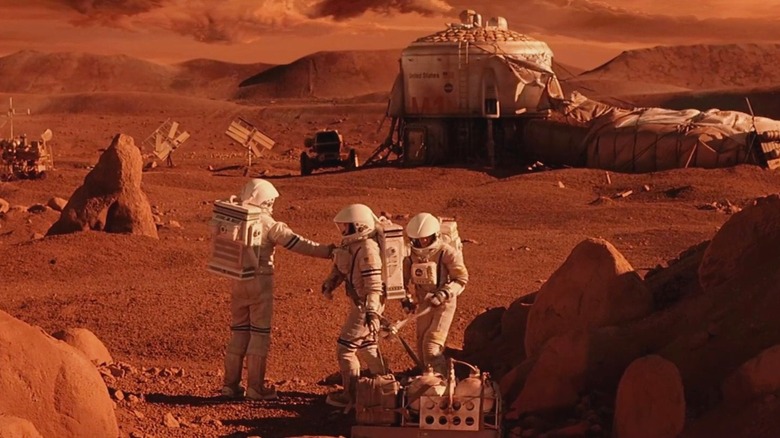
3. The End of the "Curse" Mentality
Ultimately, the success of The Martian suggests that the "Mars Curse" was a self-fulfilling prophecy born of lazy screenwriting. By treating the planet as a background for standard action tropes rather than a unique, hostile environment that demands specific human responses, previous filmmakers had alienated the very audience they hoped to capture.
As we look toward the future of space-faring cinema, the lesson from Andy Weir’s experience is clear: the setting is secondary to the stakes. Audiences are not afraid of Mars; they are simply allergic to poorly realized science fiction. By prioritizing "astronaut things"—collaboration, logic, and realistic survival—rather than manufactured conflict, filmmakers can successfully take us to the stars, and back again, without triggering a box-office disaster.
The curse is dead. What remains is the vast, challenging, and cinematically fertile ground of the red planet, waiting for the next storyteller who respects the science as much as the spectacle.











No comments yet. Be the first to join the conversation!