Muslim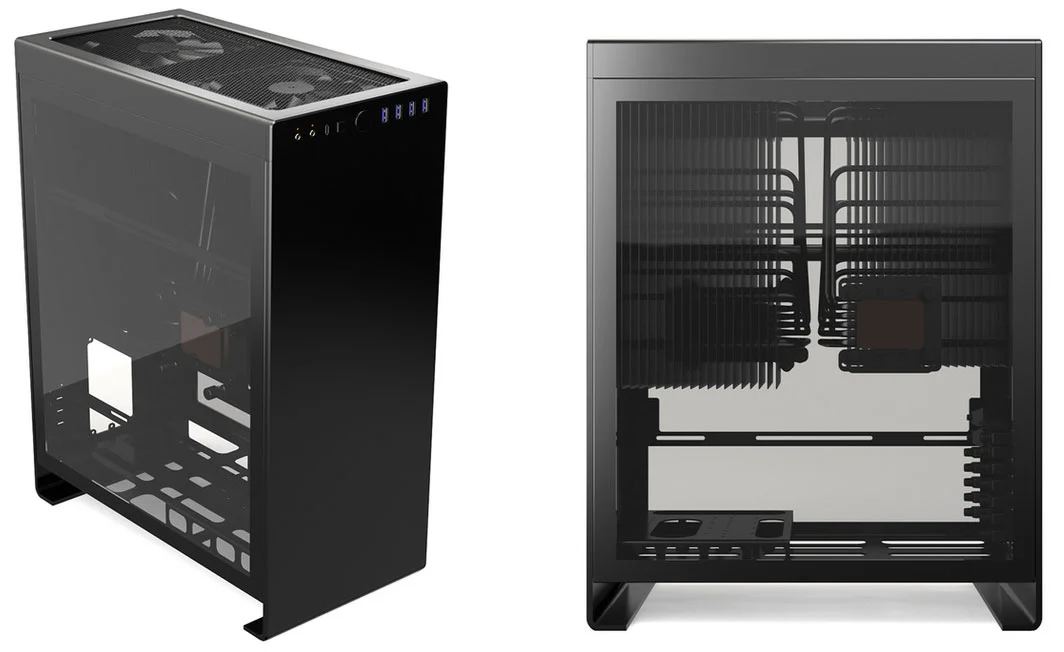
The pursuit of the "perfect" PC is a journey often defined by a trade-off: high performance typically mandates high-decibel cooling solutions. For years, enthusiasts have wrestled with the hum of fans and the whir of pumps. However, French boutique manufacturer MonsterLabo has spent the last several years challenging this paradigm. With the launch of the updated iteration of their signature chassis, "The Beast," the company is once again proving that raw, high-end computing power does not require a hurricane of airflow to remain stable.
Main Facts: A Masterclass in Passive Thermal Engineering
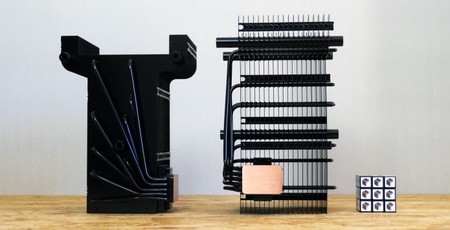
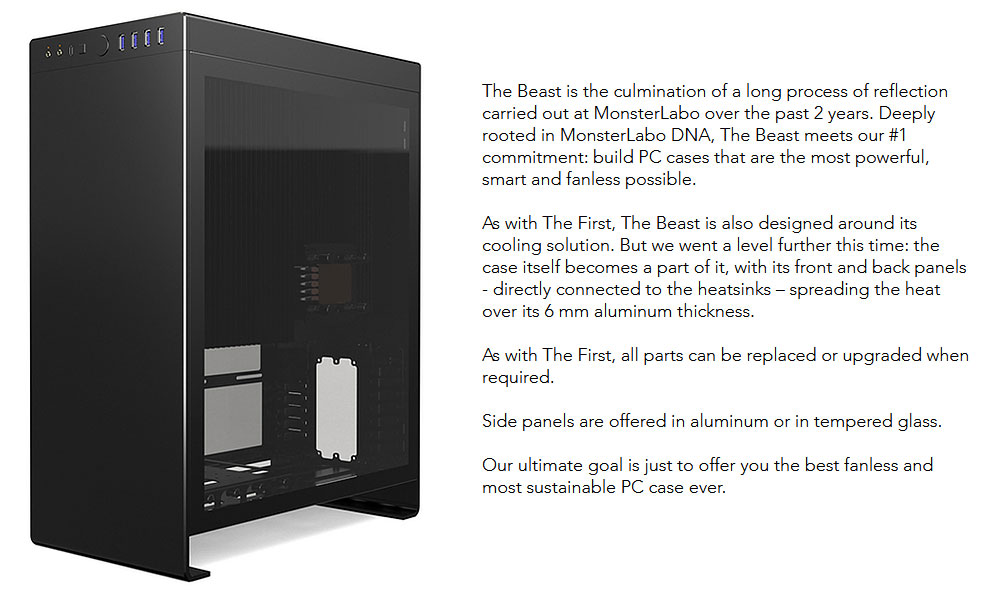
MonsterLabo’s latest campaign on Indiegogo marks a significant milestone in the evolution of fanless computing. At its core, The Beast remains a behemoth of passive cooling. The design philosophy centers on "The Heart²"—a massive, dual-section heat sink assembly that occupies nearly half of the internal chassis volume. This engineering marvel is split into two distinct thermal zones: one dedicated to the CPU and the other to the GPU. By utilizing the chassis itself as a massive radiator, the system dissipates heat through convection and radiation, entirely eliminating the need for mechanical cooling components.
The updated design focuses on versatility. Recognizing the shifting landscape of high-TDP (Thermal Design Power) components, MonsterLabo has broadened the compatibility of the chassis to accommodate a wider array of modern graphics cards. Furthermore, the company has introduced a suite of aesthetic customization options, including bespoke paint finishes and personalized laser-engraved logos, moving the product from a niche engineering experiment toward a luxury consumer item.
Chronology: From Concept to Silent Reality
The journey of The Beast has been one of iterative refinement. Back in March 2021, the system gained significant industry attention when it was demonstrated running Microsoft Flight Simulator 2020. During that test, the system—outfitted with an AMD Ryzen 3800X and an Nvidia GeForce RTX 3080—delivered a shock to the PC enthusiast community. While running the title at 1440p on an ultrawide monitor, the CPU held a steady 75°C, while the GPU maintained a cool 65°C. These figures were unprecedented for a system devoid of active fans.
Following that success, MonsterLabo took feedback from early adopters and professional reviewers to refine the chassis architecture. This period of R&D culminated in the current "The Heart²" iteration. While the sub-component architecture remains largely similar to its predecessor, the updated model introduces refined mounting mechanisms and optimized heat-transfer paths. Most notably, the company forged a strategic partnership with EKWB to provide specialized heat spreaders for memory and for high-draw GPUs exceeding 220W TDP, ensuring that these components do not suffer from thermal throttling even under sustained, heavy-duty workloads.
Supporting Data: Pushing the Limits of Fanless Performance
To understand the capabilities of The Beast, one need only look at the recent testing performed by industry-leading enthusiast outlet Optimum Tech. In a rigorous stress test, the team pushed the limits of the chassis by installing an Intel Core i9-10900K—a notoriously hot-running chip—overclocked to 4.5GHz across all 10 cores at 1.13V.
The results were impressive: the CPU hovered at 89°C, which, while high, is well within the operational limits of the silicon, proving that even power-hungry flagship CPUs can be tamed in a fanless environment. The GPU, an RTX 3080, was tuned via MSI Afterburner with a slight undervolt and a 150–200MHz reduction in the base clock. Under these conditions, the card maintained a stable temperature of sub-80°C.
To achieve this level of performance, the build utilized a SilverStone NightJar power supply—a gold standard in fanless PSU technology. The testing also highlighted a critical requirement for prospective builders: the importance of the motherboard’s Voltage Regulator Module (VRM). Because there is no ambient airflow to cool the motherboard components, MonsterLabo and reviewers strongly recommend selecting a motherboard with over-specced VRM heatsinks, as these components must rely entirely on the limited natural convection inside the case.
Official Responses and Service Expansion
MonsterLabo is positioning The Beast not just as a case, but as a comprehensive service ecosystem. In a statement regarding the new Indiegogo campaign, the company emphasized that they are moving away from being a "parts supplier" to a "system integrator."
"We are offering a bespoke experience," the company stated in their project documentation. "From custom paint finishes to personalized engraving, we want every user to feel that their machine is unique."
The expansion of their services includes the introduction of pre-built systems starting at €2,850. For those who prefer to source their own components, MonsterLabo now offers a professional assembly service. Their technicians will take client-supplied parts and perform "fanless optimization"—a process involving specialized thermal paste application, mounting adjustments, and BIOS tuning to ensure the system is perfectly balanced for a silent operation.
Implications: The Future of the Silent PC
The implications of MonsterLabo’s latest work are profound. The PC industry has been trapped in a "more is more" cycle—more fans, more RGB, more power consumption, and consequently, more noise. The Beast represents a quiet rebellion against this trend. By proving that high-end gaming and professional-grade workstation tasks can be performed in total silence, MonsterLabo is catering to a growing demographic of users who value the focus and calm that a silent workspace provides.
However, the barrier to entry remains high. The cost of such engineering is substantial, and the patience required for a fanless build is significant. Users must be willing to engage in the "art of the undervolt"—a process that requires technical knowledge to ensure components run efficiently without losing too much performance. Furthermore, the physical size of the chassis, necessitated by the massive cooling fins, means this is not a PC for the space-constrained desktop.
Despite these hurdles, the success of The Beast suggests a shift in how we perceive high-end computing. It is no longer just about the raw frames per second (FPS) or the highest benchmark scores; for many, it is about the quality of the computing experience. Whether it is a studio engineer working in a sound-sensitive environment or a power user seeking a minimalist aesthetic, the market for "The Beast" is proof that there is still a place for uncompromising engineering in a world of commoditized tech.
Logistics and Availability
For those looking to secure a unit, the Indiegogo campaign provides a clear roadmap. Early backers could secure a chassis for €790 with a targeted delivery window around the Christmas holidays. For those who missed the initial window, the company has slated an Easter 2022 release for the next batch, with 197 units currently allocated.
A notable addition to the lineup is the "Brass Edition," a premium, limited-run aesthetic option that carries a certain prestige. While the company has assured users of the quality of the finish, the aesthetic allure of raw brass in a high-thermal environment will be a fascinating case study in material science and long-term patina management for the PC enthusiast community.
In conclusion, MonsterLabo’s latest update to The Beast is more than just a cosmetic refresh. It is a refinement of a vision that puts silence and stability at the forefront of the high-end computing experience. As the company continues to bridge the gap between boutique engineering and accessible consumer products, they are setting a new standard for what a PC can be when the noise is finally turned off.

 Iffa Jayyana
 Laily UPN