

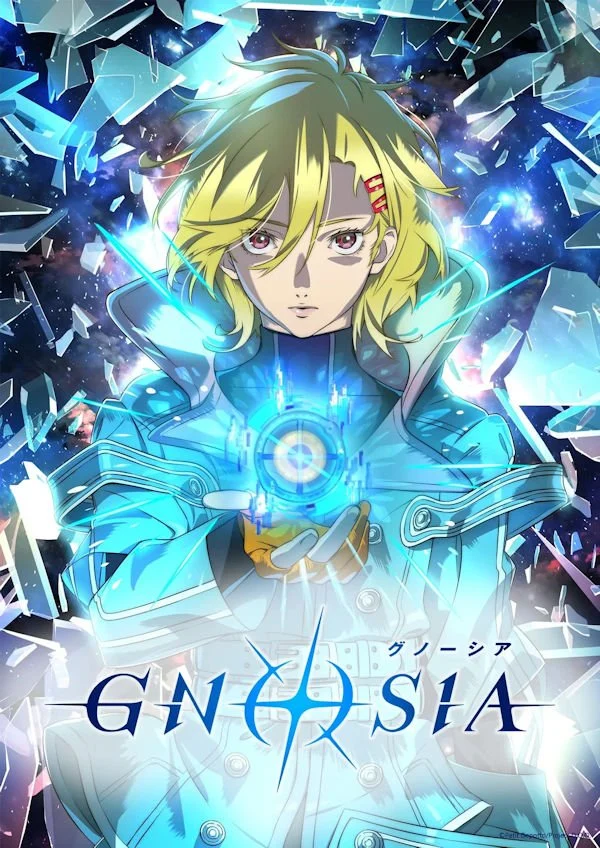
My quarterly anime watchlist is usually a chaotic, overflowing ecosystem. Balancing returning heavy-hitters with the season’s fresh offerings often feels like a logistical nightmare; it is notoriously difficult to curate a concise list without succumbing to the temptation of adding every visually arresting title that crosses my desk. Last autumn, however, one specific title slipped through my radar—despite being consistently hailed by my cohort of seasoned anime aficionados. This winter, I finally cleared the slate, dove into the series, and proceeded to binge the entire production with an intensity usually reserved for life-or-death situations.
That show was Gnosia.
The Evolution of the Game-to-Anime Adaptation
The vast majority of my anime consumption is tethered to manga source material. While original anime—works created specifically for the screen without prior literary or illustrated roots—are a vibrant and vital part of the medium, they remain rare outliers. When it comes to video game adaptations, I have historically maintained a policy of skepticism. Too often, these projects fall into a predictable trap: they are glutted with repetitive, low-stakes battle sequences, stagnant narrative arcs, and archetypal characters that lack depth.
The 2025 anime adaptation of Gnosia, based on the 2019 cult-classic visual novel, shatters these preconceptions. It is not merely a successful adaptation; it is a reinvention that proves the "gaming" genre can offer psychological complexity, provided the studio prioritizes atmosphere over mere mechanics.
Chronology and Narrative Framework: The Loop of Suspicion
Gnosia plunges the viewer into a high-stakes "whodunnit"—or more accurately, a "who is going to do it" scenario. The premise is a sophisticated evolution of social deduction games like Werewolf or the 2018 pop-culture phenomenon Among Us.
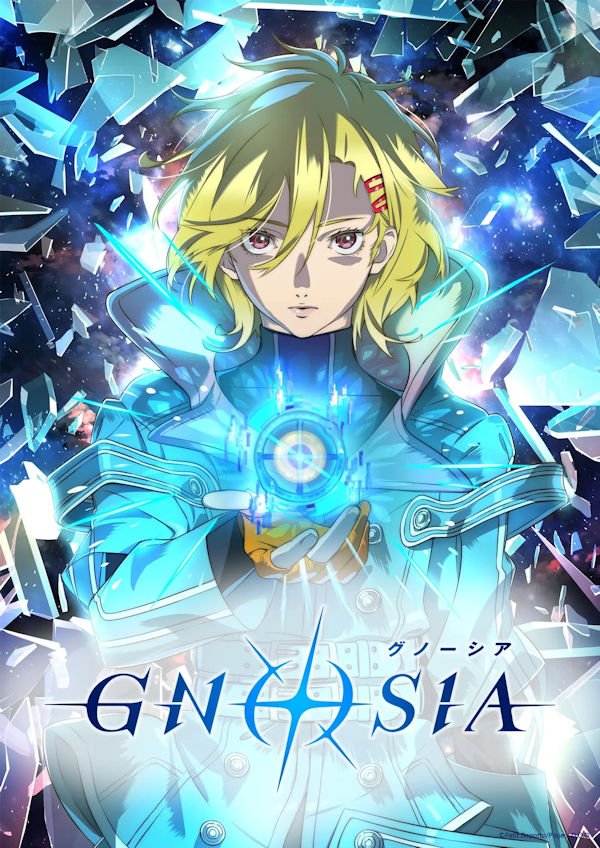
The protagonist, Yuri, is a nonbinary individual who awakens in a medical pod following a harrowing escape from a planet overrun by a mysterious, murderous threat. Suffering from acute, disorienting amnesia, Yuri finds themselves aboard a decrepit, decaying spaceship. They are quickly introduced to their fellow refugees, who deliver the grim news: the ship’s AI, LeVi, has detected an infiltration. A lethal, transmittable disease known as "Gnosia" has taken root among the crew.
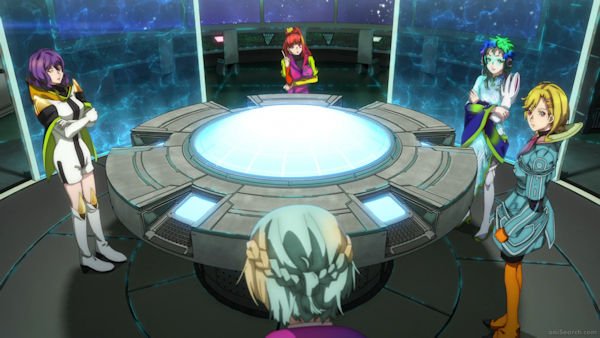
The rules are simple, yet brutal: the crew must identify the Gnosia-infected individuals and consign them to "cold storage" (cryogenic sleep) before the imposters reach numerical parity with the humans. If the balance tips, the Gnosia—a parasitic, reality-warping threat—assume total control, leading to the ship’s inevitable self-destruction via LeVi’s protocol.
The Mechanism of the Time Loop
The narrative’s genius lies in its structural conceit. Yuri is trapped in a recursive time loop. Each time the crew fails to identify the infiltrators, the loop resets. Yuri wakes up in the same medical pod, but with the distinct advantage of retained knowledge from previous iterations.
This creates a haunting, agonizing experience. Trust becomes a liability; a character who was an ally in one loop might be the primary antagonist in the next. The emotional toll is palpable, particularly in the relationship between Yuri and Setsu, a military officer who acts as the protagonist’s anchor. Witnessing Setsu reveal themselves as a Gnosia in a late-season episode is a masterstroke of character-driven tragedy. It turns the trope of "time travel" into an existential prison.
Supporting Data: Character Dynamics and Inclusive World-Building
One of the most refreshing aspects of Gnosia is its commitment to diverse representation. In an industry that often relies on recycled gender dynamics, Gnosia breaks the mold. From the pilot episode, we are introduced to a cast where nonbinary representation is not a novelty, but a baseline.
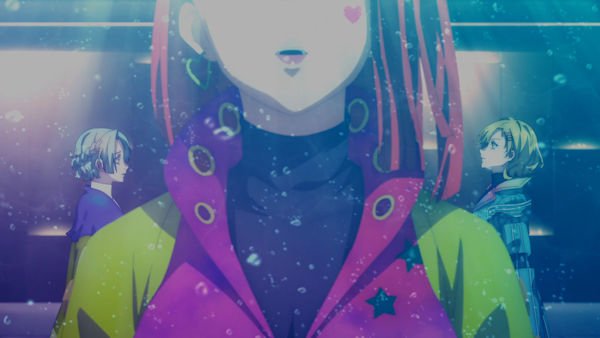
The core cast is a study in personality contrasts:
- Setsu: The stoic, reliable military officer.
- Racio: A "tsundere" intellectual whose arrogance frequently lands them in cold sleep.
- Jina: A soft-spoken, observant traffic controller.
- SQ: A hyper-energetic, flirtatious wildcard.
- Otome and Kukrushka: As the series progresses, the cast expands to fifteen members, including a sentient Beluga whale (Otome) and a mute, enigmatic doll (Kukrushka).
The series cleverly uses "job" archetypes—Engineer, Doctor, Guardian Angel—to fluctuate the flow of information. These roles function as dynamic variables, forcing both Yuri and the audience to recalibrate their investigative strategies with every reset.
Official Critiques and Production Quality
From a technical standpoint, the production is exemplary. The animation is lush, capturing the claustrophobia of a drifting spaceship while maintaining a distinct, neon-tinged aesthetic that leans into cyberpunk sensibilities. The musical score is equally evocative, featuring a high-energy opening theme that contrasts sharply with the haunting, ambient dread that permeates the ship’s corridors.
However, the series is not without minor flaws. Critics and viewers alike have noted that some of the "logic" behind the Gnosia’s movements—such as the limitation of one kill per night during hyperspace travel—serves as a necessary plot device rather than a grounded narrative rule. Additionally, at twenty-one episodes, the show occasionally feels rushed. Several supporting characters are left as mere ciphers, and a major antagonist introduced in the final act feels underserved by the limited runtime. An expanded twenty-four-episode season could have provided the breathing room necessary to flesh out these secondary arcs and deepen the lore.
Implications for the Future of Sci-Fi Anime
The success of Gnosia carries significant implications for the future of the medium. It proves that there is a hunger for "intellectual horror"—stories that demand the audience track clues and evaluate character behavior alongside the protagonist.
Why It Works
- The Mystery Factor: Unlike shows that rely on exposition, Gnosia forces the viewer to guess. The moments where the truth remains elusive until the final reveal are genuinely unsettling.
- The "Gamer" Integration: By keeping the UI and mechanics of the visual novel in the background, the show creates a sense of "real-time" puzzle-solving that keeps the viewer engaged.
- The Emotional Core: Despite the sci-fi setting, the show remains grounded in the vulnerability of its protagonist. Yuri’s earnest, desperate attempt to save their crew in the face of impossible odds is the heartbeat of the show.
Conclusion: A Worthy Investment
Gnosia is a rare gem in the current anime landscape. It manages to balance the cold, clinical nature of a social deduction game with the raw, emotional stakes of a character-driven drama. For those who find themselves fatigued by the standard shonen-battle formula or are simply looking for a series that respects their intelligence, Gnosia is an essential watch.
While it is tempting to lament the missed opportunities of the final few episodes, the overall experience is profoundly rewarding. Investing the time to watch Yuri navigate the cycles of death and rebirth is, in itself, a triumphant experience. If you are a fan of cerebral sci-fi, unsettling horror, or stories that challenge the nature of identity and trust, Gnosia is not just a recommendation—it is a necessity. The final loop is waiting, and the truth, however devastating, is worth finding.










No comments yet. Be the first to join the conversation!