

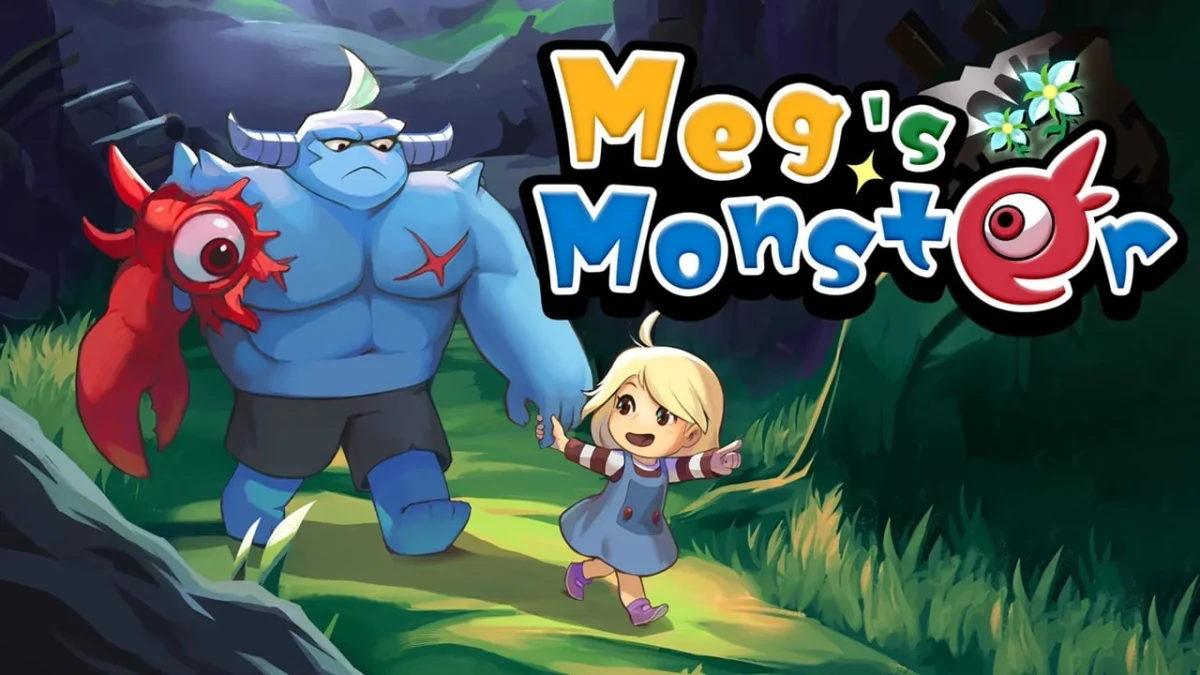
Tokyo, Japan – In a significant move for mobile gamers and fans of unconventional role-playing experiences, Odencat, the acclaimed Japanese independent game developer and publisher, has officially launched its beloved adventure RPG, "Meg’s Monster," on mobile platforms. Arriving three years after its initial PC release, the mobile version has been meticulously rebuilt from the ground up to cater to portrait mode gameplay and intuitive tap controls, offering a fresh, accessible take on its critically lauded narrative and unique mechanics. The game is now available for free on the Google Play Store, notably including the "Lost Memories" DLC content from its PC counterpart, ensuring a complete experience for new players.
"Meg’s Monster" has garnered attention for its distinct blend of heartwarming storytelling and an innovative combat system that subverts traditional RPG tropes. Set in a fantastical yet perilous Underworld inhabited by monstrous creatures who view humans as little more than a food source, the game introduces players to Roy, a giant, soft-hearted ogre, and Meg, a lost human child whose uncontrollable crying has the power to unleash apocalyptic devastation. The core of the gameplay revolves not around conventional monster slaying, but the delicate art of managing Meg’s emotional state, turning combat into a series of frantic, often humorous, mini-games designed to keep her spirits up and avert global catastrophe. This unique premise, coupled with Odencat’s signature pixel-art aesthetic and deeply emotional narrative, positions "Meg’s Monster" as a standout title in the ever-evolving mobile gaming landscape.
A Chronology of Creation and Adaptation
The Genesis on PC: A Narrative-First Approach
"Meg’s Monster" first captivated players on PC platforms approximately three years ago, quickly establishing itself as a hidden gem within the indie RPG scene. From its inception, Odencat, a studio celebrated for its narrative-driven and emotionally resonant titles, aimed to craft an experience that prioritized story and character development over traditional grind-heavy mechanics. The PC version was praised for its innovative combat system, where the player character, Roy, an ostensibly invincible ogre with 99,999 HP, faced no personal threat. Instead, the challenge lay entirely in protecting Meg, a vulnerable human girl, from emotional distress during battles. This radical departure from typical RPG design immediately set it apart, earning it a dedicated following and critical accolades for its refreshing take on the genre.
The game’s success on PC was a testament to Odencat’s vision: to create a game that felt like an interactive storybook, filled with quirky characters, unexpected plot twists, and a profound emotional core. Players were drawn into the unlikely bond between Roy and Meg, navigating a world that was both whimsical and menacing. The pixel art, while retro in style, conveyed a surprising depth of emotion and environmental detail, further enhancing the game’s unique atmosphere. The "Lost Memories" DLC, which expanded upon the game’s lore and provided additional character insights, solidified its position as a complete and compelling narrative experience.
The Decision to Port: Reimagining for Mobile
The transition from PC to mobile platforms for a game like "Meg’s Monster" is a meticulous undertaking, requiring a complete re-evaluation of its design principles. Odencat’s decision to bring the title to mobile was likely driven by a desire to expand its audience and make its unique narrative accessible to a broader demographic accustomed to on-the-go gaming. However, simply porting the PC version would not suffice; the mobile gaming environment presents distinct challenges and opportunities, particularly regarding user interface, control schemes, and play patterns.
The development team at Odencat embarked on a comprehensive "rebuild" of "Meg’s Monster" for mobile. This process involved a fundamental shift in perspective, moving away from the horizontal display and keyboard/controller inputs of the PC version to accommodate the vertical orientation and touch-based interactions inherent to smartphones. The game’s visual presentation was carefully adapted for portrait mode, ensuring that the charming pixel art remained legible and aesthetically pleasing on smaller screens. Crucially, the intricate combat mechanics, which originally relied on more traditional input methods, were re-engineered for intuitive tap controls. This involved simplifying complex actions without diluting the strategic depth or the frantic fun of keeping Meg calm. Every UI element, dialogue box, and interactive prompt had to be redesigned for touch-friendliness, a testament to the studio’s commitment to delivering a polished and authentic mobile experience. The inclusion of the "Lost Memories" DLC from launch further underscores Odencat’s dedication to providing a complete and value-rich package for mobile players, a move that is particularly noteworthy given the game’s free-to-play model.
Odencat’s Legacy: Crafting Heartfelt Indie Experiences
Odencat has carved out a distinctive niche in the independent game development scene, particularly known for its consistent delivery of emotionally engaging, narrative-heavy RPGs and adventure games. Founded in Japan, the studio has cultivated a reputation for crafting titles that often blend whimsical aesthetics with surprisingly deep philosophical themes and poignant storytelling. Their previous works, such as "Bear’s Restaurant" and "Fishing Paradiso," have similarly been praised for their ability to evoke strong emotional responses through simple yet effective gameplay loops and compelling characters.
The studio’s philosophy appears centered on the belief that games can be powerful vehicles for storytelling and emotional connection. They often eschew high-fidelity graphics in favor of a distinct pixel-art style, allowing the narrative, character development, and unique gameplay mechanics to take center stage. This approach resonates strongly with a segment of the gaming community that values originality, artistic integrity, and a focus on meaningful experiences over graphical prowess or competitive multiplayer. "Meg’s Monster" stands as a quintessential example of Odencat’s design ethos, demonstrating their mastery in creating worlds that are both charmingly bizarre and profoundly moving. The studio’s commitment to its unique vision has fostered a loyal fanbase, eager for each new release and confident in the quality and emotional depth of their games.
Supporting Data: A Deep Dive into the Underworld and Its Inhabitants
The Underworld: A Monstrous Mirror
At the heart of "Meg’s Monster" lies its richly imagined setting: the Underworld. Far from a typical realm of fire and brimstone, this Underworld is a vibrant, if dangerous, ecosystem teeming with a diverse array of monsters and mutants. These denizens adhere to a simple, brutal truth: humans are a delicacy, a prime breakfast food. This grim reality immediately establishes a world where Meg, a human child, is an extreme anomaly and a constant target, heightening the stakes of Roy’s protective mission.
Yet, Odencat masterfully injects humor and heart into this seemingly dark premise. The monsters aren’t one-dimensional villains; they possess their own societies, quirks, and even moral codes. The game’s narrative frequently explores the nuances of this monstrous society, revealing that not all creatures are uniformly malevolent. This complex world-building allows for a narrative that delves into themes of prejudice, understanding, and finding common ground between disparate species, mirroring real-world societal issues through a fantastical lens. The Underworld is not just a backdrop but an active participant in the story, full of mysteries for Roy and Meg to uncover as they journey towards finding her way home.
Characters at the Core: Roy, Meg, and Golan
The emotional anchor of "Meg’s Monster" lies squarely with its central trio:
- Roy: A towering, imposing ogre, Roy defies the monstrous stereotype. He is gentle, empathetic, and utterly uninterested in consuming humans. His imposing physique belies a kind heart, making him the perfect guardian for Meg. His character arc is one of selfless protection and growing paternal affection, as he grapples with the immense responsibility of safeguarding a child whose very presence could shatter his world. His quiet strength and unwavering dedication form the emotional backbone of the game.
- Meg: The eponymous "monster" is, paradoxically, a small, lost human girl. Her vulnerability is contrasted by her incredible, world-ending power: her tears trigger apocalyptic events. This unique affliction transforms her into a constant source of tension and a puzzle to be solved. Meg is not merely a damsel in distress; she is the catalyst for the entire plot, a character whose emotional state directly dictates the flow of gameplay and the fate of the Underworld. Her innocence, fear, and eventual trust in Roy drive the narrative forward.
- Golan: Roy’s best friend, Golan, serves as a loyal companion and often a voice of reason (or comedic relief). Their friendship provides a grounding element for Roy, showcasing his existing bonds within the Underworld before Meg’s arrival disrupts everything. Golan’s presence allows for additional dialogue and character interactions, enriching the story and providing further insight into Roy’s personality and the dynamics of the monster world.
The comparison to "Monsters, Inc." is apt in its initial setup – a world of monsters interacting with a human child. However, "Meg’s Monster" swiftly diverges by raising the stakes to an existential level. While Mike and Sulley needed to return Boo and keep her a secret, Roy must prevent Meg from ever crying, lest the entire fabric of reality unravel. This fundamental difference elevates the narrative from a charming adventure to a high-stakes emotional rollercoaster, blending goofy moments with genuinely poignant and tense sequences.
Innovative Gameplay: The Art of Emotional Management
"Meg’s Monster" fundamentally redefines the RPG combat paradigm. Players control Roy, who begins the game with an astonishing 99,999 HP, rendering him virtually invincible. This radical design choice immediately signals that the game’s challenge does not lie in personal survival or direct combat prowess. Instead, the entire combat system pivots around the singular objective of keeping Meg calm.
When battles inevitably occur, Meg’s anxiety levels rise, threatening to trigger her world-ending tears. The player’s role is to engage in a series of "strange little mechanics and mini-games" designed to distract and soothe her. These aren’t generic button-mashing sequences; they are context-sensitive puzzles and quick-time events that integrate directly into the narrative. For instance, players might need to:
- Play with toys: Roy might present one of Meg’s favorite toys, requiring the player to complete a rhythm-based mini-game or a memory challenge to keep her engaged and happy.
- Tell stories: Engaging in dialogue choices that comfort her or divert her attention from the immediate danger.
- Shield her: Physically protecting her from visual threats while simultaneously managing her emotional state.
- Solve environmental puzzles: Using Roy’s strength or wit to quickly eliminate a threat or create a safe space before Meg can fully panic.
Each encounter becomes a delicate balance of strategy and emotional intelligence. Failure to keep Meg calm results in a game over, emphasizing the narrative’s core conflict. This system transforms traditional combat into a series of unique, often humorous, and always tense psychological challenges. It forces players to think beyond typical damage-per-second metrics, instead focusing on understanding and responding to a character’s emotional needs, making for an incredibly fresh and memorable gameplay experience.
Narrative Richness and Aesthetic Charm
Beyond its innovative mechanics, "Meg’s Monster" is a deeply story-driven game. It eschews endless random encounters in favor of carefully crafted dialogue, impactful cutscenes, and scripted encounters that propel the plot forward. The Underworld is not just a place for battles; it’s a world to explore, filled with:
- Strange characters: Each NPC has a unique personality and backstory, contributing to the rich tapestry of the Underworld.
- Optional side events: These provide additional lore, character development, and often humorous diversions, rewarding players who delve deeper into the world.
- Befriending enemies: In a true subversion of RPG tropes, some encounters can lead to unlikely alliances or friendships, reinforcing the game’s themes of understanding and empathy.
The narrative skillfully navigates between moments of genuine levity and profound emotional depth. One moment, players might be chuckling at a monster’s absurd dialogue, and the next, they might be moved by a tender interaction between Roy and Meg. This tonal balance ensures the story remains engaging and unpredictable, keeping players invested in the characters’ journey.
Visually, the game is a "colourful pixel delight." Odencat’s signature pixel art style is not merely nostalgic; it is a deliberate artistic choice that allows for expressive character animations, detailed environments, and a timeless aesthetic. The vibrant color palette brings the Underworld to life, making it feel fantastical and distinct, while the carefully crafted sprites convey a surprising range of emotions, enhancing the narrative impact. The art style is integral to the game’s charm, making every scene a treat for the eyes.
Official Responses and Community Reception
Odencat’s Vision for Mobile Accessibility
While specific direct quotes from Odencat regarding the mobile launch of "Meg’s Monster" are not widely disseminated at the time of this writing, the very nature of the mobile port speaks volumes about the developer’s intent. By undertaking a complete rebuild for portrait mode and tap controls, Odencat signals a clear commitment to delivering a native and optimized mobile experience, rather than a mere rushed port. This strategic decision aligns with the studio’s broader philosophy of making its unique narrative experiences accessible to as wide an audience as possible.
The choice to offer "Meg’s Monster" for free on the Google Play Store, coupled with the inclusion of the "Lost Memories" DLC, further emphasizes a player-centric approach. This model suggests a desire to lower the barrier to entry, allowing a massive new audience to discover the game without an upfront cost. It’s likely that Odencat aims to broaden its reach and potentially introduce players to its other titles, cultivating a new generation of fans on mobile platforms. This move also implicitly addresses the common hesitation of mobile gamers to invest in premium titles, by offering the full experience at no cost, demonstrating confidence in the game’s ability to engage players purely on its merit and unique appeal.
Critical Acclaim and Player Love on PC
Upon its PC release, "Meg’s Monster" was met with overwhelmingly positive reception from both critics and players. Reviewers lauded its fresh take on the RPG genre, praising its innovative combat mechanics for injecting new life into often stale systems. The game’s narrative, characters, and emotional depth were consistently highlighted as major strengths, with many critics commending Odencat for crafting a story that was both deeply moving and surprisingly humorous. Its pixel art style was celebrated for its charm and expressiveness, contributing significantly to the game’s unique identity.
Players echoed these sentiments, often sharing personal anecdotes about their emotional connection to Roy and Meg’s journey. The game fostered a strong community around its themes of unlikely friendship, protection, and overcoming adversity. This established goodwill and critical validation from the PC release undoubtedly provided a strong foundation for the mobile launch, generating anticipation among those who had heard of its quality but lacked the means to play it previously. Early mobile player reactions, while still nascent, are likely to mirror this positive sentiment, especially given the game’s free accessibility and comprehensive content.
Implications: Reshaping Mobile RPGs and Indie Reach
Challenging Mobile RPG Tropes
The arrival of "Meg’s Monster" on mobile carries significant implications for the mobile gaming landscape, particularly within the RPG genre. Mobile RPGs are frequently characterized by free-to-play models heavily reliant on gacha mechanics, energy systems, and endless grinding, often at the expense of deep storytelling or innovative gameplay. "Meg’s Monster" directly challenges this paradigm. By offering a complete, narrative-driven experience with unique mechanics for free and without overt monetization pressure, it sets a new standard for what a mobile RPG can be.
This release demonstrates that high-quality, story-focused games can find a viable home on mobile, potentially inspiring other indie developers to pursue similar paths. It champions the idea that player engagement can be driven by compelling narratives and genuinely innovative gameplay, rather than predatory monetization schemes. "Meg’s Monster" serves as a powerful counter-narrative to the prevailing trends, proving that there is a demand for meaningful, emotionally resonant experiences on mobile devices. Its success could encourage a shift towards more premium-quality, narrative-first titles becoming available to the vast mobile audience.
Expanding Odencat’s Reach and Influence
For Odencat, the mobile launch of "Meg’s Monster" represents a substantial expansion of its audience and, consequently, its influence within the indie gaming community. By making a well-received PC title available to potentially hundreds of millions of mobile users, the studio stands to gain significant exposure. This broadened reach could translate into increased recognition for their unique storytelling style, greater financial stability for future projects, and an enhanced reputation as a studio capable of delivering high-quality experiences across different platforms.
The free-to-play model, while foregoing immediate revenue from sales, acts as a powerful marketing tool. It allows Odencat to showcase its distinct talent to a new demographic, potentially drawing players to their other mobile titles or future PC/console releases. This strategic move could solidify Odencat’s position as a leading purveyor of heartfelt and innovative indie games, reinforcing their brand identity as creators of memorable, narrative-rich adventures.
The Broader Indie Scene and Mobile Gaming’s Evolution
"Meg’s Monster" is part of a larger trend of successful independent games making the leap from PC and console to mobile. This movement signifies the increasing maturity and sophistication of the mobile gaming market. As smartphone technology advances, enabling more complex graphics and gameplay, mobile devices are becoming increasingly viable platforms for experiences traditionally confined to dedicated gaming hardware.
However, porting a game effectively comes with its own set of challenges, particularly in adapting controls and UI for touchscreens and varying screen sizes. Odencat’s "rebuilt" approach for "Meg’s Monster" serves as a valuable case study for other developers considering such a transition, highlighting the importance of thoughtful adaptation rather than direct porting.
The success of titles like "Meg’s Monster" on mobile could further legitimize the platform as a serious contender for innovative and artistic gaming. It encourages a broader dialogue about what constitutes a "mobile game" and pushes the boundaries beyond casual diversions or monetized endless runners. Ultimately, "Meg’s Monster" not only offers a delightful and unique adventure to mobile players but also plays a role in shaping the future trajectory of mobile gaming, emphasizing quality, narrative depth, and player-first design principles.











No comments yet. Be the first to join the conversation!